
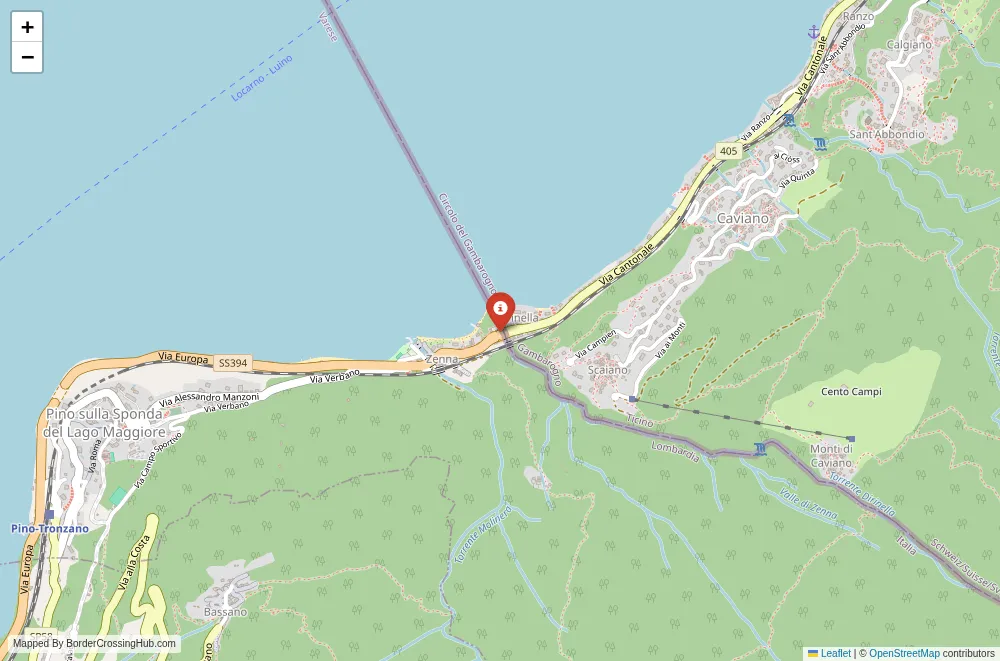
Approximate Border Location
Border Countries
- 🇮🇹Italy
- 🇨🇭Switzerland
Border Cities
- 🇮🇹Zenna
- 🇨🇭Dirinella
Wait Times
Cars 0-10m; peaks 15-45m weekend traffic
Just crossed? Tap to report:
Operating Hours
Open 24 hrs (12:00 AM-11:59 PM)
Crossing Types
Ped,cars,bikes; customs goods
Border Type
Land crossing via lakeside road
Peak Times
Sat-Sun 10:00 AM-04:00 PM
Daily Crossings
1,200-6,500/day
Currency Exchange
EUR; CHF in Locarno/Luino; ATMs
Safety Information
Bridge bottleneck; occasional controls
Languages Spoken
Italian/German
Accessibility Features
Mostly step-free; narrow shoulders
About Brogeda & Chiasso
Monthly Update (March 2026):
As of 03/2026, the Brogeda & Chiasso Border Crossing stays busy but fairly predictable. Trucks and passenger vehicles line up along the motorway crossing, with freight traffic often stacking up on the Italian side during peak hours. Passenger lanes usually move quicker once the line starts flowing. Logistics traffic and weekend travel can stretch the wait.
No Cell Service at the Border? No Problem.
Don’t get caught scrambling for paperwork when you lose signal. Download the complete Europe Transit Guide directly to your device and access every critical detail, fast-track strategy, and border rule – 100% offline.
The Brogeda-Chiasso border stands as the busiest and most important land crossing between Italy and Switzerland, funneling massive daily traffic between the Italian province of Como and the Swiss canton of Ticino along the A9 / A2 motorway corridor.
Alternative Names
This point is widely known as the Brogeda border (Italian side), Chiasso dogana (Swiss side), the Brogeda-Chiasso frontier, the Valico di Brogeda, or simply the Chiasso-Brogeda crossing. It is sometimes called the Chiasso South customs point.
Current Status and Safety Note
Switzerland and Italy are both in the Schengen Area, so there are no permanent passport controls or routine immigration checks for most travelers. You drive straight through without stopping under normal conditions. Switzerland maintains temporary random spot checks at various Italian border points (including this major corridor) for migration, security, and smuggling concerns; these are selective, intelligence-based, and can cause brief delays or lane closures when active. Italian customs occasionally perform targeted checks, especially on freight or vehicles with visible goods. The crossing is heavily policed and generally safe, but it is also one of the most watched borders in Europe due to its high volume and history of smuggling. No widespread scams are reported for ordinary private travelers, though standard border-area caution applies (keep valuables secure, avoid unsolicited “helpers”).
Historical Background
The border line here was fixed in the 19th century between the Kingdom of Italy and the Swiss Confederation. Chiasso grew as Switzerland’s main southern gateway, while Brogeda became the Italian customs village. Before Schengen, this was one of Europe’s most congested land borders with long queues for passport and customs checks. The modern motorway setup (A9 Italy / A2 Switzerland) and removal of permanent controls in the 1990s transformed it into a high-speed transit point. The crossing has long been a focal point for cross-border commerce, commuter flows, and, historically, smuggling of goods ranging from cigarettes to luxury items.
Geopolitical and Economic Role
This is the primary motorway gateway between northern Italy (Milan, Lake Como region) and Switzerland (Lugano, Bellinzona, Gotthard Tunnel, and onward to northern Europe). It handles enormous daily traffic: commuters, tourists, shoppers, and freight trucks. Italians often cross for Swiss wages or banking; Swiss residents cross for cheaper fuel, groceries, cigarettes, and shopping in Italy. The crossing supports one of the strongest cross-border economic zones in Europe, with thousands of people living on one side and working on the other.
Visa Requirements for Foreign Visitors
Schengen rules apply equally to Switzerland and Italy. If your nationality qualifies for visa-free entry, you cross with only a valid passport or national ID card. Most non-EU visitors receive 90 days in any 180-day period across the area. Carry your travel document at all times, as random Swiss spot checks can occur anywhere in the border zone.
Crossing Procedures Step by Step
By car or motorbike, follow the A9 motorway from Como or Milan toward Chiasso. You pass the large Italian customs area (usually empty), drive through the border zone (marked by signs and empty booths), and continue onto the A2 in Switzerland without stopping. The transition is seamless with no barriers. Pedestrians and cyclists have no direct dedicated crossing at this motorway point; they must use nearby smaller roads or public transport. No forms, immigration desks, or queues exist routinely for private vehicles. The reverse direction follows the identical pattern.
Typical Wait Times and Peak Periods
Most crossings take seconds with no wait. However, during peak summer weekends, major holidays (Italian Ferragosto, Swiss National Day, Christmas/New Year), or when Swiss spot checks are active, southbound queues (Italy → Switzerland) can stretch 1–3 hours, sometimes longer. Northbound (Switzerland → Italy) is usually lighter. Early mornings and late evenings tend to move fastest.
Operating Hours
The motorway crossing operates 24 hours a day, every day of the year.
Transportation Options to and From the Border
**Car:** The A9 (Italy) becomes the A2 (Switzerland) directly at the border. **Train:** Frequent regional trains run between Como San Giovanni (Italy) and Chiasso (Switzerland) — a 5–10 minute ride with no border formalities on board. Long-distance EuroCity trains (Milan–Chiasso–Lugano–Zurich) also cross here. **Bus:** Local buses connect Como and Chiasso; international coaches use the motorway. **Cycling/walking:** Not practical on the motorway; use nearby smaller roads or train.
Road Conditions and Scenery
The A9/A2 is a modern, multi-lane motorway with excellent surfaces. The border zone itself is flat, urban-industrial with customs buildings, warehouses, fuel stations, and shopping outlets on both sides. The immediate surroundings show the southern end of Lake Lugano, hills, and suburban development. The scenery becomes more scenic once you continue north into Ticino or south toward Como.
Seasonal Variations and Weather Impacts
Summer holidays create the longest queues. Winter rain, fog, or snow can slow traffic but rarely closes the motorway. The route remains open year-round.
Nearby Attractions
**Italy:** Como city (historic center, Duomo, lakefront, funicular to Brunate) is 10–15 minutes south. **Switzerland:** Chiasso offers shopping malls and outlets popular with Italians. Lugano (15–20 minutes north) provides a beautiful lake promenade, Parco Ciani, museums, and upscale dining. The Mendrisiotto region nearby has vineyards, hiking, and the Monte Generoso viewpoint.
Common Scams and Warnings
Serious scams are uncommon. Watch for: – Fuel stations or shops near the border charging inflated prices – Occasional aggressive parking “assistants” in Chiasso shopping areas – Very long queues during peak holiday periods (plan extra time) Random spot checks are brief but can involve vehicle searches. Keep documents and valuables secure.
Travel Tips and Preparation
Check real-time traffic (TCS.ch for Switzerland, Autostrade.it or Comozero traffic updates for Italy) before departure, especially on weekends or holidays. Carry passport/ID and vehicle papers. Bring euros or Swiss francs (both widely accepted). Avoid crossing on major Italian holiday weekends if possible. The train between Como and Chiasso is often the fastest and most relaxed option.
Cultural and Economic Significance
The Brogeda-Chiasso crossing is the economic heartbeat of the Italy-Switzerland frontier in Ticino-Lombardy. It sustains massive cross-border commuting, shopping, and trade, making the region one of the most integrated border zones in Europe.
Final Planning Advice
Monitor traffic and spot-check alerts before you go. Bring your documents, choose train or off-peak driving to avoid delays, and enjoy the easy hop from Italian Lombardy to Swiss Ticino. This busy yet efficient crossing is the main gateway between northern Italy and Switzerland. Safe travels.
No reviews yet.