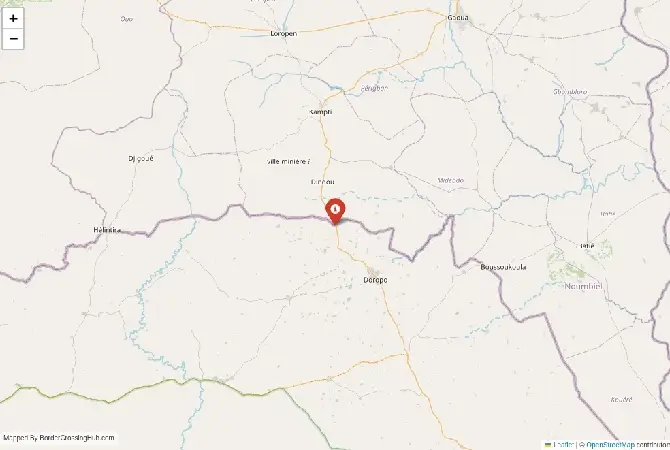
Monthly Update (September 2026):
Bouna & Doropo remains a highly sensitive Côte d'Ivoire-Burkina Faso frontier route. Recent reporting from Doropo describes recurring cattle theft along the northern border and links the problem to the wider spread of insecurity and illicit activity from the Burkina Faso conflict zone. In late August, gunfire near the Burkinabè border post at Bodana prompted increased security measures around Doropo. Current travel advice also recommends avoiding the Côte d'Ivoire border area with Burkina Faso because of terrorism and kidnapping risks.
About this crossing
This is not a crossing you stumble upon by accident. You come here deliberately, usually because your route takes you through this part of West Africa or because you want to avoid busier corridors. The pace is slow, the setup is basic, and your experience depends heavily on preparation.
Historical context and regional ties
The border here reflects colonial boundaries drawn between French West African territories. Unlike coastal or major inland crossings, this area never developed into a large administrative or trade center.
Nearby Border Crossings




Instead, the importance of Bouna–Doropo comes from local interaction. Ethnic groups such as the Lobi and Koulango live across both sides of the border, maintaining family ties and small-scale trade routes that existed long before modern states were defined.
You will notice that movement here is practical rather than commercial on a large scale. Goods crossing tend to be agricultural: grains, livestock, and basic supplies. There is no heavy freight presence like you would see at larger crossings.
First impressions when you arrive
Bouna feels like a frontier town rather than a transit hub. It has basic services, a few shops, and administrative buildings, but nothing that suggests high international traffic. The road leading in can give you a sense of how remote the area is.
As you approach the border, things become even more understated. There is no large gate or complex. Instead, you find small offices where immigration officers handle exit procedures.
Doropo, just across the border in Burkina Faso, is even quieter. You are unlikely to see crowds, and depending on the time of day, the area can feel almost empty.
Border procedures and what to expect
Your process begins in Bouna, where you must locate the immigration office to receive your exit stamp. This may require asking locals, as signage is not always clear.
Once stamped out, you continue toward Doropo. The distance between the two posts is short, but the road may be unpaved or uneven.
On arrival in Burkina Faso, you complete entry formalities. Officials will check your passport and visa. It is important to note that visa-on-arrival is not reliably available at smaller crossings like this one. You should arrange your visa beforehand unless you have confirmed otherwise through official channels.
When everything runs normally, the process can take between 15 and 30 minutes. However, timing is unpredictable. Officers may not always be present, especially during midday breaks or late afternoons, and this can extend your wait.
Transport options and road conditions
Getting to Bouna is part of the challenge. The town is connected to Bondoukou and other Ivorian مناطق via roads that are partly paved but often deteriorate as you head further northeast.
Public transport exists, but it is limited. Shared taxis and minibuses run irregularly, and schedules are flexible rather than fixed. You may need to wait until a vehicle fills up before departure.
Crossing into Doropo does not significantly improve transport availability. On the Burkina Faso side, shared vehicles and motorcycles are the primary options. If you plan to continue deeper into the country, you should confirm transport in advance.
Road conditions vary widely. During dry months, they are dusty but manageable. During the rainy season, they can become muddy and difficult, especially for standard vehicles.
Seasonal effects on the crossing
Weather has a noticeable impact here. The rainy season, typically from May to October, can make travel more complicated. Roads leading to and from the border may become slippery or partially flooded, increasing travel time.
In contrast, the dry season offers more reliable conditions, but heat and dust become significant factors. Temperatures can rise quickly during the day, and shade is limited around the border area.
Timing your crossing for the morning is a practical choice. You avoid the worst of the heat and increase your chances of finding officials present and transport available.
Safety considerations and local challenges
The Bouna–Doropo crossing is generally calm, but its remoteness requires awareness. There are fewer reports of aggressive scams compared to major West African borders, yet that does not mean you should lower your guard.
Occasionally, travelers report being asked for small unofficial payments. These are usually framed as administrative or processing fees. If this happens, remain polite and ask for clarification or a receipt. This often resolves the situation without escalation.
Because the area is not heavily monitored, you should also consider general travel safety. Avoid carrying visible valuables, keep your belongings close, and do not travel after dark.
It is also wise to check current security conditions before your trip. Northern Ivory Coast and parts of Burkina Faso have experienced security concerns in recent years, and conditions can change.
Nearby areas and potential stops
Bouna offers limited accommodation, but it can serve as a practical overnight stop if you need to break up your journey. Basic guesthouses and small restaurants are available, though options are not extensive.
One notable attraction in the region is Comoé National Park, located to the south of Bouna. It is one of the largest protected areas in West Africa and home to a range of wildlife, though visiting requires planning and often a guide.
Doropo itself has very limited services. Most travelers continue onward rather than staying. Larger towns in Burkina Faso provide better facilities, but they may be several hours away.
Cultural observations at the border
You will notice that daily life here moves at a slower pace. The crossing is used primarily by locals, and you may stand out as a foreign traveler.
French is the official language used in administrative settings, but local languages dominate everyday interactions. Communication can sometimes require patience, especially if you do not speak French.
The shared cultural background across the border creates a sense of continuity. Families, traders, and travelers move between the two sides as part of routine life rather than formal travel.
Practical tips before you go
Preparation is essential for this crossing. You should carry printed copies of all important documents, including your passport and visa. Mobile networks can be unreliable, so digital copies alone are not enough.
Bring sufficient cash in local currency. There are no reliable banking services or ATMs at the border, and currency exchange options are limited.
Plan your transport carefully. Know how you will reach the border and how you will continue your journey afterward. Flexibility is important, but having a general plan reduces stress.
Dress simply and keep your belongings organized. A low-profile approach helps you avoid unnecessary attention.
Final thoughts
A crossing that requires patience and planning
The Bouna–Doropo border crossing is not designed for convenience. Its remote location, limited infrastructure, and variable conditions mean you need to approach it with realistic expectations.
If you prepare properly and stay attentive, the crossing is manageable. It offers a look at a quieter side of West African borders, where local movement takes precedence over international traffic.
For travelers comfortable with basic conditions and flexible timing, it can be a practical route. For others, more developed crossings may be a better choice.
View all border crossings between Ivory Coast and Burkina FasoPractical information
Fuel
Ivory Coast: 2 km - Burkina Faso: 2 km
Currency
XOF,CFA limited
Safety information
Moderate checks
Connectivity
Roads, vans
Have you crossed here?
Help other travelers by sharing your experience, wait times, and any updates.