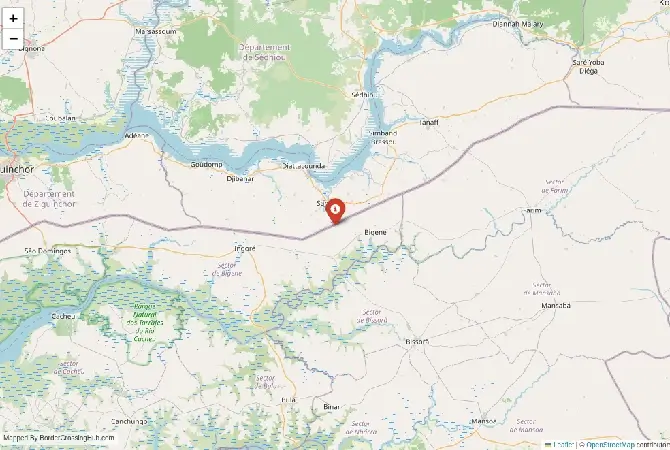
Monthly Update (September 2026):
Bigene and Samine-Escale remains a lightly used Senegal-Guinea-Bissau crossing in the Casamance border region. No significant September closure has been identified, but the frontier is receiving additional security attention following an August agreement between Senegalese and Guinea-Bissau forces to conduct joint patrols in priority sectors. Travelers should therefore expect a more visible security presence in some parts of the border area. The crossing remains much more relevant to local traffic than long-distance international travel.
About this crossing
Off-the-beaten-path Senegal–Guinea-Bissau border in the Casamance region
You reach one of the lesser-known points along the long shared boundary that separates Senegal’s southern Casamance region from northern Guinea-Bissau. The Samine-Escale Bigene crossing connects smaller roads and serves travelers who prefer off-the-main-path routes away from the more common southern entries near Sao Domingos. Also referred to as the Samine border or Bigene post, it handles local traffic, some traders, and occasional foreign visitors exploring both countries by road.
Location and connections
Samine-Escale sits in Senegal’s Sédhiou region, while Bigene lies just across in Guinea-Bissau’s Cacheu area. The border here runs through rural landscapes with villages, fields, and patches of forest. From the Senegalese side you link up toward Ziguinchor or further north. On the Guinea-Bissau side, roads head toward Canchungo or eventually Bissau, though conditions vary. This route suits those combining Casamance with Guinea-Bissau’s quieter northern zones rather than rushing straight to the capital.
Historical notes
The area carries traces of past tensions. Colonial borders drawn between French and Portuguese territories left some disputes, including incidents in the late 1960s and later years tied to regional conflicts in Casamance. Cross-border movements continued despite occasional restrictions, and the post has operated as a functional point for locals moving goods and family visits. Today it reflects the practical ties between communities on both sides.
Nearby Border Crossings



Operating hours
Expect the post to function roughly from early morning to late afternoon, often around 8 AM to 6 PM, though exact schedules can change with staffing or local conditions. Arrive well before midday to avoid closing-time rushes. No major time difference affects the crossing itself. Always confirm current status locally if possible, as smaller posts sometimes adjust without much warning.
From Senegal into Guinea-Bissau
You handle Senegalese exit formalities at Samine-Escale first. Officials check your passport and any vehicle documents. Then you proceed the short distance across to the Guinea-Bissau side at Bigene for entry. Have your Guinea-Bissau visa ready. Many nationalities obtain it in advance or at consulates like in Ziguinchor. Officials may ask basic questions about your plans. The process stays low-volume compared to bigger crossings, but paperwork still takes time.
The reverse direction into Senegal
Start with exit stamps from Guinea-Bissau at Bigene. Cross over and complete Senegalese entry at Samine-Escale. Senegal offers visa exemptions for many passport holders for short stays. Carry proof of onward travel and sufficient funds. Immigration officers review documents carefully in this region.
Typical waits and conditions
With lighter traffic, total time often falls between 30 and 90 minutes when things move steadily. Delays happen during market days or if officials handle groups. Rainy season from June to October brings mud and slower movement on unpaved approach roads. Dry months from November to May usually allow quicker passage. Build buffer time regardless.
Transport choices
Shared taxis, motorcycles, or private vehicles work best here. From the Senegalese side, you find rides toward nearby towns or onward connections. In Guinea-Bissau, options thin out quickly, so arrange transport in advance where possible. No large bus terminals sit right at the post. Travelers often combine segments with stops in regional hubs.
Roads and surroundings
Approaches on both sides feature laterite or dirt tracks that turn slippery when wet. Senegal’s side near Samine shows more maintained sections linking to national routes. Guinea-Bissau’s stretches near Bigene feel rougher with potholes and occasional flooding. Scenery includes rice paddies, cashew orchards, and small villages. Wildlife sightings occur in forested pockets, though nothing guarantees them.
Potential issues to watch
Smaller crossings like this see occasional requests for unofficial fees or “facilitation” money. Travelers report stories of helpers inventing extra charges or directing people to unofficial offices. Stick strictly to marked immigration buildings and refuse unsolicited offers. Carry exact change in local currencies or small USD notes. Some have faced extended questioning or minor document nitpicks. Stay calm and polite while insisting on standard procedures.
Close attractions
Bigene offers a glimpse into rural Guinea-Bissau life with its modest mission history and surrounding fields. On the Senegalese side, Samine-Escale and nearby Goudomp provide access to Casamance culture, forests, and smaller markets. Further afield you reach Ziguinchor’s vibrancy or Guinea-Bissau’s coastal areas. The region rewards slow travel with authentic encounters rather than big sights.
Preparation checklist
Confirm your visa situation well ahead. Print copies of documents and have digital backups. Bring West African CFA francs for both sides plus some emergency USD. Check vehicle requirements if driving, including temporary import papers. Download offline maps since signal drops in border zones. Research any recent security notes for Casamance or northern Guinea-Bissau, as occasional incidents occur in remote pockets. Dress simply and respectfully.
Role in the region
This point supports local trade in agricultural goods, fish, and everyday items. It ties communities divided by an international line yet sharing ethnic and family links. Economic activity stays modest compared to coastal routes, but it plays its part in daily cross-border life.
Planning your crossing
Double-check details close to your travel dates and allow extra hours. Patience and clear information help at Samine-Escale Bigene. With good preparation you manage this quiet route and continue into new territory on either side. (Word count: 1042)
View all border crossings between Senegal and Guinea-BissauPractical information
Fuel
Senegal: 2 km - Guinea-Bissau: 2 km
Currency
XOF,CFA roadside
Safety information
Quiet, occasional delays
Connectivity
Road links, vans
Have you crossed here?
Help other travelers by sharing your experience, wait times, and any updates.