
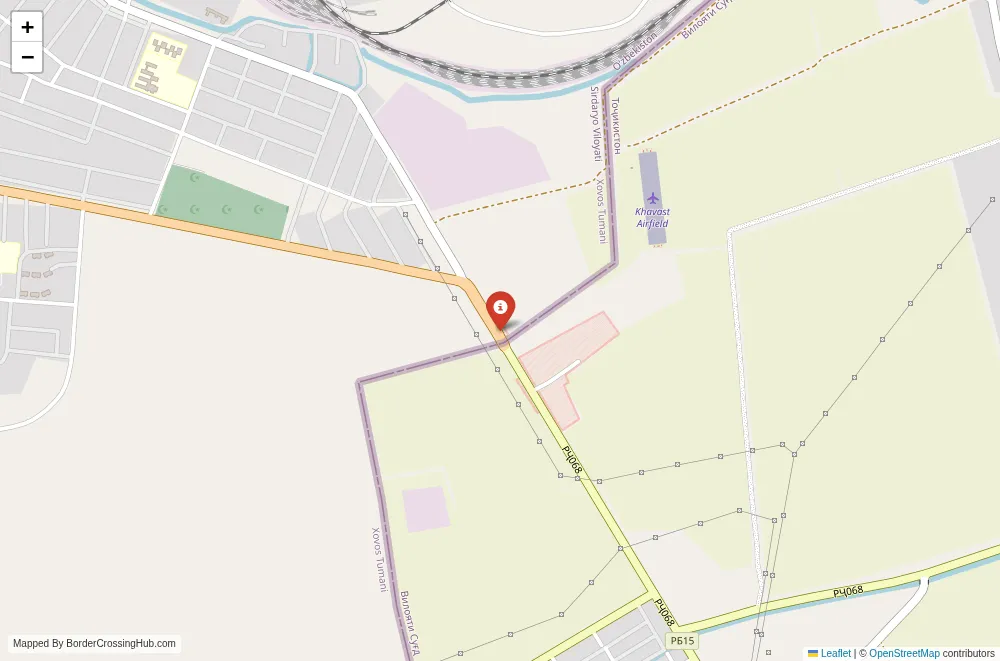
Approximate Border Location
Border Countries
- 🇺🇿Uzbekistan
- 🇹🇯Tajikistan
Border Cities
- 🇺🇿Khavasobod
- 🇹🇯Zafarabad
Wait Times
Cars 20-90m; peaks 120-360m
Just crossed? Tap to report:
Operating Hours
08:00 AM-08:00 PM
Crossing Types
Ped,cars,buses; border controls
Border Type
Land crossing via road (highway)
Peak Times
08:00-10:00 AM; 04:00-07:00 PM
Daily Crossings
1,500-7,000/day
Currency Exchange
UZS; TJS in towns; ATMs limited
Safety Information
Rural crossing; limited services
Languages Spoken
Uzbek, Tajik, Russian
Accessibility Features
Uneven approaches; minimal ramps
About Bidaik & Odesskoye
Monthly Update (March 2026):
As of 03/2026, the Bidaik & Odesskoye Border Crossing sees moderate movement with a mix of passenger cars and trucks. Vehicles gather in small clusters, especially heading toward Russia in the afternoon. Inspections can slow the line slightly on the Russian side. Freight traffic keeps the crossing active.
No Cell Service at the Border? No Problem.
Don’t get caught scrambling for paperwork when you lose signal. Download the complete Asia Transit Guide directly to your device and access every critical detail, fast-track strategy, and border rule – 100% offline.
The Khavasobod-Zafarabad border crossing (also referred to as Khavastabad or Xovosobod on the Uzbek side and Zafarabad on the Tajik side) connects Uzbekistan’s Syrdarya region in Khavast district to Tajikistan’s Sugd region in Zafarabad district. You consider this highway crossing when planning overland journeys between central Uzbekistan, such as areas around Jizzakh or Gulistan, and northern Tajikistan near Khujand. It provides a quieter alternative to the more frequently used Oybek-Fotekhobod point farther north or the recently upgraded Bekabad Auto-Khashtyak. The facility handles vehicles and pedestrians, facilitating regional commerce, family visits, and foreign travelers moving through the western Ferghana Valley fringes. With 24/7 availability, it offers flexibility for those with varying schedules.
Location and Connections
The checkpoint occupies a transitional zone from Uzbekistan’s Syrdarya plains to Tajikistan’s Sugd lowlands, positioned roughly 150 kilometers southwest of Tashkent and approximately 100 kilometers from Khujand. From Uzbekistan, highways run north from Jizzakh or Gulistan toward Khavast district. From Tajikistan, roads lead south from Khujand to Zafarabad district. Shared taxis and private cars serve both approaches, while the neutral zone remains compact, allowing a short drive or walk between the immigration buildings. The surrounding terrain consists of flat, irrigated agricultural fields, cotton plantations, fruit orchards, and dispersed villages that underscore the valley’s high productivity. No passenger rail crosses here, although freight rail lines operate in adjacent corridors.
Historical and Geopolitical Background
The Uzbekistan-Tajikistan border extends more than 1,300 kilometers, largely determined by Soviet administrative boundaries established during the 1920s and 1930s. These divisions fragmented the Ferghana Valley and neighboring areas into a complex mosaic of territories, enclaves, and contested zones. Khavasobod-Zafarabad operated within this context, facing intermittent restrictions during periods of heightened security concerns or bilateral strains. Relations between the two countries improved considerably after 2016, resulting in several border reopenings, infrastructure modernizations, and eased movement. This particular crossing supports ongoing valley trade networks, with Zafarabad district focused on agriculture and Khavast district linked to transit and industrial activities. Fun fact: the Ferghana Valley’s borders historically separated communities across lines drawn with limited regard for local realities, but recent diplomatic efforts have significantly reduced barriers and enhanced cross-border cooperation.
Current Status and Operating Hours
As of early 2026, Khavasobod-Zafarabad functions reliably with 24/7 access for vehicles and pedestrians, according to border documentation and traveler reports. It experiences lighter traffic than primary crossings such as Oybek, which contributes to generally shorter processing times. No significant closures have been documented recently, reflecting sustained cooperation between Tashkent and Dushanbe. Summers from May through September feature intense heat and dust, raising risks of dehydration and fatigue. Winters remain relatively mild, though occasional rain can make unpaved access roads slippery. The round-the-clock schedule accommodates early departures or late arrivals, though many travelers prefer daylight hours for better visibility. Always check the latest conditions through the Uzbek Customs Committee, Tajik Border Service, or trusted traveler platforms like Caravanistan, because even stable points can undergo minor operational changes.
Crossing Procedures Step by Step
You complete exit formalities from one country before entry into the other. From Uzbekistan to Tajikistan: at the Khavasobod Uzbek post, submit your passport for an exit stamp and answer standard questions regarding travel purpose and duration. Proceed through the brief neutral zone to the Zafarabad Tajik immigration facility for an entry stamp, possible customs inspection, and routine security screening. The process reverses when traveling in the opposite direction. Procedures involve manual document verification and basic checks; vehicles undergo insurance confirmation and compliance inspections. Wait times usually fall between 30 minutes and 1.5 hours, often shorter during off-peak periods due to moderate volumes. Foreigners generally describe the experience as efficient, though minor additional inquiries may occur at highway locations.
Visa Requirements for Foreign Visitors
Tajikistan permits visa-free entry or provides e-visas for numerous nationalities (typically 30 or 60 days depending on passport; consult current eligibility lists). Uzbekistan requires e-visas for the majority of foreigners (apply online in advance through the official portal, with fees ranging from $20 to $50 USD and processing times of 2 to 3 days; no visa-on-arrival is available at land borders). Print your e-visa confirmation; carry passport copies and recent photos. Passports must have at least six months validity remaining. Certain nationalities encounter restrictions or supplementary requirements. Highway crossings tend to verify documentation thoroughly, so any inconsistencies can result in delays or entry refusals. Review details with embassies or official websites for your nationality, as policies have remained consistent amid improved bilateral relations.
Transportation Options and Road Details
Shared taxis from Tashkent or Jizzakh transport passengers to Khavast district in 2 to 3 hours along paved highways. From the Tajik side, taxis from Khujand to Zafarabad district take about 1 to 2 hours. Private vehicles cross provided they meet insurance and registration standards. No regular direct buses operate across this point, so plan to organize local onward transport after clearance. Roads feature well-maintained highways near urban centers but transition to dustier or less improved sections closer to the posts, where agricultural vehicles and local traffic predominate. The complete journey from Tashkent to Khujand typically requires 5 to 7 hours including border processing. Daylight travel is advisable for optimal road conditions and visibility, although the 24/7 status allows greater schedule flexibility.
Scams and Safety Warnings
Given the moderate traffic levels, tourist-oriented scams remain uncommon, but occasional issues include unfavorable exchange rates near the posts (exchange only minimal amounts elsewhere) or inflated fares from unofficial taxi drivers. Politely decline unsolicited “assistance” offers and process fees directly at official counters. The region has gained stability through recent agreements, and no significant incidents have been reported at this crossing in the past year. Foreigners sometimes receive additional questions from officials; avoid any unofficial border routes to prevent complications with guards. Stay informed through regional news sources, register travel plans with your embassy, and maintain accessible emergency contacts. The overall risk profile remains low for travelers who prepare adequately.
Nearby Attractions and Practical Tips
Khujand in Tajikistan highlights the expansive Panjshanbe Bazaar, historic forts, and museums dedicated to Silk Road heritage. In Uzbekistan, the Syrdarya region and nearby areas provide access to local markets or onward connections to Tashkent’s architectural and cultural landmarks. Carry USD cash for fees and exchange purposes, bottled water, snacks, sunscreen, and several passport copies. Begin journeys early to maximize daylight and minimize heat exposure; keep Oybek or other nearby crossings as potential backups. Translation apps facilitate interactions with local drivers and officials.
Final Notes for Planning
Khavasobod-Zafarabad stands out as a dependable 24/7 highway option for Uzbekistan-Tajikistan overland travel, characterized by manageable crowds and functional infrastructure. Verify current status before departure, secure e-visas and documents well in advance, and allocate time for routine procedures. With proper preparation, it enables straightforward passage across this agriculturally productive and historically significant valley frontier. Safe travels.
No reviews yet.