Monthly Update (October 2026):
Beled Hawo & El Wak remains a security-sensitive Somalia-Kenya frontier rather than a straightforward tourist crossing in October. Movement in the wider Mandera region can be affected by security incidents and local restrictions, making conditions less predictable than at Kenya's main international gateways. Travelers should confirm that Beled Hawo & El Wak is actually processing their category of passenger before setting out.
About this crossing
The Beled Hawo-El Wak Crossing: A Frontier of Conflict
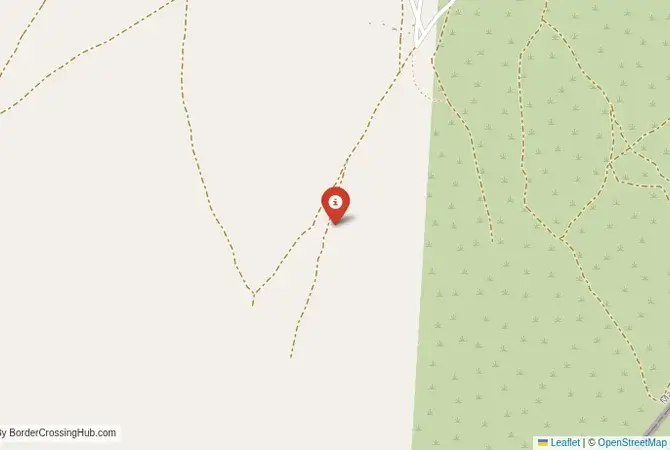
The border crossing point that notionally connects the Somali town of Beled Hawo (Buulo Xaawo) in the Gedo region with the Kenyan town of El Wak in Mandera County is not a formal, functioning gateway. It is a porous, dusty, and extremely dangerous frontier in the semi-arid heartlands of the Horn of Africa. This is a region defined by the long and brutal conflict with the Al-Shabaab insurgency, and by the complex clan dynamics of the Somali people who live on both sides of the border. The "crossing" is a simple line in the sand, a place where the authority of both the Somali and Kenyan states is weak and often challenged. The atmosphere is not that of a border crossing, but of a heavily militarized and deeply insecure frontline. It is a place where the primary traffic is not traders or travelers, but soldiers, insurgents, and refugees.
A History of a Porous and Contested Border
The history of this border is the history of the Somali people and the colonial-era division of their traditional lands. The border between what became Kenya and Somalia was drawn by the British and Italians, cutting through the territory of the Marehan clan and other Somali groups. The line has always been porous, with nomadic pastoralists moving freely with their herds. The collapse of the Somali state in 1991 and the rise of various Islamist militant groups, culminating in Al-Shabaab, transformed this frontier. The Gedo region of Somalia became a major stronghold for the insurgents. The border became a primary route for Al-Shabaab to infiltrate into Kenya to carry out attacks, and for the Kenyan Defence Forces (KDF) to cross into Somalia to fight the group as part of the African Union mission (AMISOM/ATMIS). The towns of Beled Hawo and El Wak have been the scene of numerous battles and attacks. It is a border that has been defined for decades by war, insurgency, and the constant, violent struggle for control.
Nearby Border Crossings





Border Procedures: Non-Existent in a War Zone
There are no formal border procedures at this location for travelers. The border is officially closed to civilian and tourist traffic in 2025–2026 with only humanitarian and military access permitted. For a foreign traveler, there is no legal or practical way to cross here. There are no functioning immigration or customs facilities to process international passports or visas. The area is controlled by a patchwork of Somali government-aligned forces, local clan militias, the Kenyan military, and Al-Shabaab. Any foreigner appearing in this region would be at extreme risk of being kidnapped for ransom or killed. The concept of civilian, international travel is completely non-existent in this part of the world. The only international presence is that of the military and, in more secure areas, humanitarian aid organizations. Any movement is a heavily armed, high-stakes military operation.
The Regional Context: The Gedo and Mandera Frontline
The crossing connects the Gedo region of Somalia with the Mandera County of Kenya. Both are among the most dangerous and underdeveloped regions in their respective countries. The Gedo region has been a perpetual battlefield in the war against Al-Shabaab. The infrastructure is almost non-existent, and there is no effective government control outside of a few heavily fortified towns. Mandera County in northeastern Kenya is a vast, arid, and insecure region. It has suffered from numerous terrorist attacks by Al-Shabaab, including attacks on buses, police posts, and villages. The Kenyan government maintains a massive security presence in the region, but the long and porous border is almost impossible to completely secure. Travel in this part of Kenya, even for Kenyans, is extremely dangerous and often requires armed convoys. It is a region that is, for all practical purposes, a war zone.
Final Contextual Note: A Border of War
The Beled Hawo-El Wak crossing is a point on the map that represents the frontline of one of Africa's longest and most brutal insurgencies. It is a border that is defined by violence, insecurity, and the complete absence of the conditions required for safe travel. It is not a gateway but a barrier, a line that separates two countries but is united by a shared and devastating conflict. For the outside world, this region is known through the headlines of terrorist attacks and military operations. The story of this border is a sobering lesson in the devastating impact of transnational terrorism and state failure. It is a frontier that is, for the foreseeable future, completely and utterly closed to any form of peaceful passage.
View all border crossings between Somalia and KenyaPractical information
Fuel
Somalia: <1 km - Kenya: 2 km
Currency
Limited exchange (SOS, KES)
Safety information
Restricted, security risks
Connectivity
Limited Wi-Fi, 2G
Have you crossed here?
Help other travelers by sharing your experience, wait times, and any updates.