Monthly Update (September 2026):
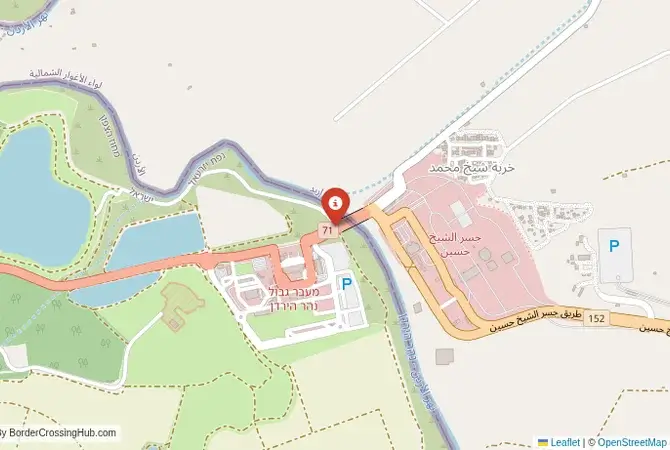
Beit She'an & Sheikh Hussein remains an operating Jordan-Israel crossing, but September brings an important temporary restriction. Israel's Airports Authority has announced that from September 15 through September 20, private vehicles will not be permitted to leave Israel for Jordan through the Jordan River crossing because of expected congestion ahead of Yom Kippur. Travelers without private vehicles can still use a shuttle service from the Israeli side. Outside that period, Jordan currently lists Sheikh Hussein's normal hours as 08:30–19:30 Sunday-Thursday and 10:00–18:00 Friday-Saturday.
About this crossing
Operational Details
This checkpoint connects the Irbid Governorate of Jordan with the Northern District of Israel. It is a major international crossing, but its hours can be variable, and it is not always open 24/7. It is essential to check the current schedule before travel. The crossing is open to international tourists, as well as to commercial freight. The facility is large and modern on both sides, designed to handle a significant volume of traffic. It is a key route for trade and for the many tourist and pilgrimage groups that visit the holy sites in both countries.
A History of a Peace Treaty
The history of this crossing is the history of the Arab-Israeli conflict and the subsequent peace process. For decades, this was a closed and hostile military frontier. The Jordan River was a line of conflict. The 1994 Israel-Jordan peace treaty transformed the relationship between the two countries. The Sheikh Hussein Bridge crossing (also known as the "Jordan River Crossing") was opened shortly after the treaty was signed, a powerful and tangible symbol of the new era of peace and cooperation. It stands as a testament to the possibility of reconciliation in a region long defined by conflict.
Nearby Border Crossings



The Border Crossing Procedure
The border crossing procedure is a complex, multi-stage, and often very slow process, particularly on the Israeli side. You will first pay a Jordanian exit tax and receive an exit stamp. You will then take a mandatory shuttle bus across the bridge to the Israeli terminal. Here, you will undergo a rigorous and meticulous security and immigration check by Israeli authorities. This can involve detailed questioning about your travel plans, your background, and your reasons for visiting. Be prepared for a potentially long and stressful experience. You will need a valid passport. Visa requirements vary by nationality. Be aware that an Israeli stamp in your passport may prevent you from entering some other countries in the Middle East, though Israel often provides the stamp on a separate piece of paper.
The Surrounding Region: Jordan Side
On the Jordanian side, the crossing is in the Jordan Valley, the agricultural heartland of the country. The nearby Pella archaeological site has ruins from the Greco-Roman and Byzantine eras. The magnificent Roman ruins of Umm Qais (ancient Gadara), with their stunning views over the Sea of Galilee and the Golan Heights, are also in this region. The city of Irbid is a major university town. The crossing is also a gateway to the magnificent Roman city of Jerash, one of the best-preserved Roman provincial cities in the world.
The Surrounding Region: Israel Side
On the Israeli side, the crossing is near the city of Beit She'an. The Beit She'an National Park contains the spectacular ruins of a major Roman and Byzantine city, including a magnificent theater, colonnaded streets, and bathhouses. The crossing is the gateway to the beautiful Galilee region, the scene of much of Jesus's ministry. The Sea of Galilee, with its holy sites like Capernaum and the Mount of Beatitudes, is a short drive away. The historic city of Nazareth is also in this region.
Practical Travel Information
Practical planning is absolutely essential for this route. You must have all your documents in perfect order. The official currencies are the Jordanian Dinar (JOD) in Jordan and the Israeli Shekel (ILS) in Israel. Be prepared to pay the Jordanian exit tax and the fee for the mandatory shuttle bus. Private cars are allowed to cross, but the process can be complex and expensive, involving insurance and other fees. Most travelers cross as foot passengers and take a taxi on the other side. Be prepared for a significant change in security atmosphere when you cross into Israel.
Final Considerations
The Sheikh Hussein Bridge border crossing is a journey into the heart of the Holy Land. It is a modern checkpoint that is a symbol of a historic peace treaty, but it operates with the high security that is a constant reality of the region. It is a gateway to some of the most important archaeological and religious sites in the world. For the traveler, it is a formal and meticulous process, a passage that requires patience and an understanding of the complex political context. It is a bridge that connects two nations, a journey across the sacred Jordan River into a land of profound history and faith.
View all border crossings between Jordan and IsraelPractical information
Fuel
Jordan: 500 m - Israel: 500 m
Currency
Near Beit She'an; JOD, ILS
Safety information
Generally safe; occasional touts
Connectivity
Checkpoint Wi-Fi, 4G
Have you crossed here?
Help other travelers by sharing your experience, wait times, and any updates.