
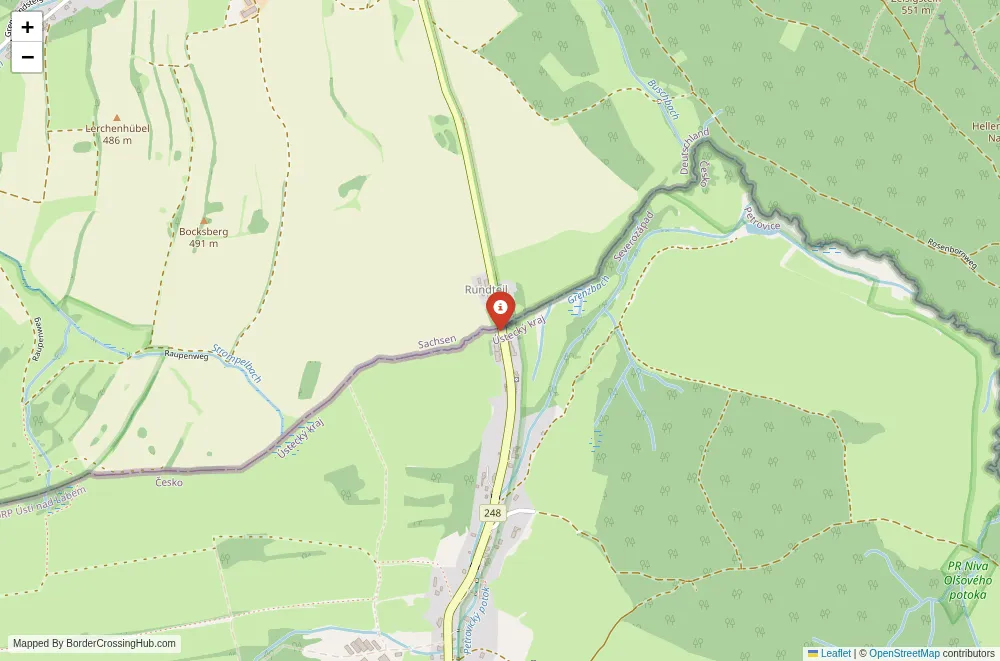
Approximate Border Location
Border Countries
Border Cities
- 🇩🇪Bahratal
- 🇨🇿Petrovice
Wait Times
Cars 0-20m; peaks 30-180m at controls
Just crossed? Tap to report:
Operating Hours
Open 24 hrs (12:00 AM-11:59 PM)
Crossing Types
Cars,buses,trucks; motorway corridor
Border Type
Land crossing via motorway (A17/D8)
Peak Times
Mon-Fri 02:00-07:00 PM; holiday returns
Daily Crossings
15,000-55,000/day
Currency Exchange
EUR; CZK at service areas; ATMs
Safety Information
High-speed traffic; enforcement checks possible
Languages Spoken
German/Czech
Accessibility Features
Accessible rest stops; step-free toilets
About Bayerisch Eisenstein & Železná Ruda
Monthly Update (March 2026):
As of 03/2026, the Bayerisch Eisenstein & Železná Ruda Border Crossing stays calm with a steady trickle of cars and cyclists. Vehicles pass freely through the town area, and delays are rare on either side. Weekends bring a few more visitors heading into the Bavarian Forest and Šumava region. Snowy or wet weather in the mountains can slow the drive.
No Cell Service at the Border? No Problem.
Don’t get caught scrambling for paperwork when you lose signal. Download the complete Europe Transit Guide directly to your device and access every critical detail, fast-track strategy, and border rule – 100% offline.
Bayerisch Eisenstein connects Germany to the Czech Republic in a unique way through a railway station straddling the border in the Bavarian Forest region, where the national line runs right through the middle of the building platforms and tracks.
Location and Basic Connections
You arrive at this crossing in the town of Bayerisch Eisenstein in Bavaria’s Regen district on the German side, directly linked to Železná Ruda-Alžbětín on the Czech side in the Plzeň Region. The station serves as the primary point, with the border dividing the structure itself. Foreign visitors often come by train when traveling from Plattling or Zwiesel in Germany toward Klatovy or Plzeň in Czechia, or to explore the Bavarian Forest National Park and Šumava on the Czech side. Alternative names include Bayerisch Eisenstein Železná Ruda border or the Bayerisch Eisenstein/Železná Ruda-Alžbětín station crossing. As a Schengen internal rail point, it normally features no routine passenger checks, but temporary controls apply on the German side as of February 10 2026.
Historical Background and Geopolitical Role
The station opened in the late 19th century as part of deliberate design to straddle the then Bavarian-Bohemian frontier, with each side built by different railway companies. The Bavarian Forest railway from Plattling reached here in 1877, connecting to the Bohemian line toward Plzeň. After World War II and the 1945 Potsdam Agreement, the border solidified along this line, splitting the station. During the Cold War, the crossing closed tightly from 1953, with tracks severed at the boundary and facilities bricked up or blocked. Rail traffic resumed on June 2 1991 after the fall of communism, allowing seamless changes between German and Czech services. Today, it stands as a rare example of a divided station, with the border marked by a white line on the platform and signs inside. It supports tourism between the Bavarian Forest and Šumava National Parks, reflecting post-Schengen reconciliation in this forested borderland.
Current Status and Safety Considerations
Germany continues temporary internal border controls with Czechia until at least March 15 2026, citing persistent irregular migration, smuggling networks, asylum system strains, and security threats from global conflicts. These measures focus on spot checks rather than fixed booths at rail points like this. Czechia does not maintain routine controls here. On trains, checks occur sporadically through onboard or station verifications, with most journeys unaffected. The station area remains safe for visitors, with low crime in this small town and national park setting, and no widespread scams or aggressive touts reported. Carry your passport or national ID at all times in case of any random verification.
Operating Hours and Wait Times
The station and rail services operate according to timetable, with no fixed border hours since it’s integrated into the line. Regional trains run several times daily in each direction, often with short platform waits for connections. Temporary controls add variability: most trains cross without interruption, while a random check might delay boarding or add 5 to 20 minutes for document inspection. Passenger services see minimal delays here compared to road points. Peak tourist seasons in summer or holidays bring more activity but rarely long waits. Weather in the mountains can cause minor timetable adjustments from snow or fog, but the line stays reliable.
Visa Requirements for Foreign Visitors
Schengen rules govern entry: EU/EEA/Swiss citizens move freely with valid ID or passport. Non-EU nationals qualify for visa exemptions up to 90 days in any 180-day period if eligible, or hold a Schengen visa. The Entry/Exit System registers non-EU travelers at external borders but not routinely on this internal rail line; spot checks may verify your documents or stay details. Present your passport during any control, plus proof of accommodation, funds, or onward travel if requested. No fees apply at this crossing.
Crossing Procedures Step by Step
You board a regional train in Germany (from Zwiesel or Plattling) or Czechia (from Železná Ruda or Plzeň). Normally, the train continues across the border without stopping, as the platforms straddle the line and language announcements shift. A white line marks the exact border on the platform. If authorities perform a control, police may board at the station or conduct an onboard check for ID presentation and basic questions. Provide documents promptly; the process ends fast amid passenger flow. No separate pedestrian or vehicle options exist here—it’s rail-focused. The transition feels distinctive yet routine, with the station building shared between countries.
Transportation Options and Road Details
Regional trains (Waldbahn in Germany, České dráhy in Czechia) connect Bayerisch Eisenstein to Zwiesel, Regen, or Plattling on the German side, and to Železná Ruda, Klatovy, or Plzeň on the Czech side, with several daily services. No direct road crossing aligns exactly here; nearby road points like Železná Ruda/Furth im Wald or other Bavarian Forest crossings handle vehicles. The rail line passes through forested Bavarian Forest scenery with hills, trees, and occasional clearings. Traffic on trains stays moderate, ideal for relaxed travel. Cycling or hiking paths nearby allow exploration of the national parks.
Nearby Attractions and Practical Tips
Bayerisch Eisenstein offers a railway museum with historic carriages on the German side, plus access to Bavarian Forest trails and viewpoints. Železná Ruda features Šumava National Park entry, lakes, and hiking. A tourist information office inside the station provides maps for both parks. Carry ID due to controls. Euros work on both sides, Czech koruna useful in Železná Ruda; cards accepted widely. Pack layers for mountain weather and comfortable shoes for walks. Check timetables ahead for connections. Visit the platform border line for photos.
Cultural and Economic Significance
The crossing highlights shared rail heritage in this Bavarian-Bohemian borderland, where the station symbolizes unity over division. Tourism thrives on national parks, spas in nearby Bad Kötzting or Železná Ruda, and cross-border nature activities. It facilitates regional travel and exchanges, exemplifying Schengen’s seamless rail integration amid temporary security adaptations.
Final Planning Notes
Monitor official EU or national sites for updates on temporary controls close to your trip, keep ID accessible, and verify train schedules. This iconic divided station offers a fascinating border experience between Germany and Czechia when you arrive prepared.
No reviews yet.