
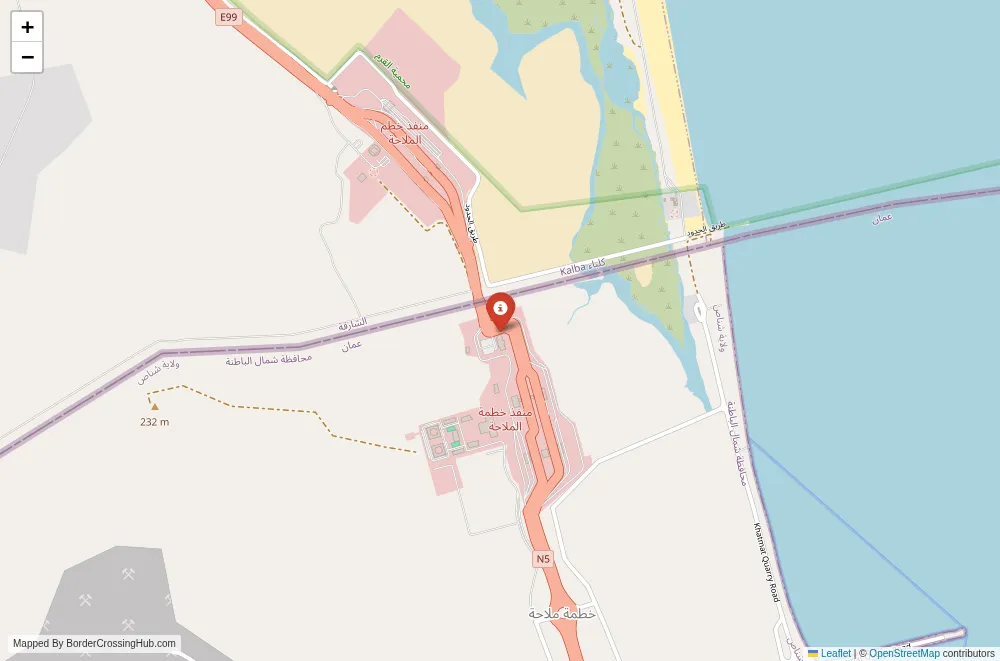
Approximate Border Location
Border Countries
Border Cities
- 🇴🇲Wam
- 🇦🇪Fujairah
Wait Times
Cars 10-40m; peaks 60-150m weekends
Just crossed? Tap to report:
Operating Hours
Open 24 hrs (12:00 AM-11:59 PM)
Crossing Types
Ped,cars,buses; border controls
Border Type
Land crossing via motorway (UAE–Oman)
Peak Times
Thu-Sat 09:00 AM-01:00 PM
Daily Crossings
2,000-9,000/day
Currency Exchange
AED; OMR at posts/towns; ATMs nearby
Safety Information
Queueing possible; keep documents ready
Languages Spoken
Arabic, English
Accessibility Features
Paved lanes; step-free varies
About Baimak & Kosonsoy
Monthly Update (March 2026):
As of 03/2026, the Baimak & Kosonsoy Border Crossing stays fairly calm with a modest stream of local vehicles. Cars pass through the checkpoint without much buildup most of the day. Late afternoons sometimes slow slightly on the Uzbek side during inspections. Cross-border family visits and small trade keep the crossing active.
No Cell Service at the Border? No Problem.
Don’t get caught scrambling for paperwork when you lose signal. Download the complete Asia Transit Guide directly to your device and access every critical detail, fast-track strategy, and border rule – 100% offline.
The Baimak-Kosonsoy border crossing links Kyrgyzstan’s Jalal-Abad region (specifically near Ala-Buka district and the town of Baimak) directly to Uzbekistan’s Namangan region (at Kosonsoy town). You find this point in the western Ferghana Valley, where the convoluted Kyrgyzstan-Uzbekistan border creates numerous small crossings. Also referred to as Baymak (alternative spelling) or Kosonsay/Kosonsoy checkpoint, it serves mainly local and regional traffic rather than international tourists, with limited mentions in travel guides for foreign use.
Location and Connections
This road crossing occupies a rural stretch of the Ferghana Valley’s edge, connecting Ala-Buka in Kyrgyzstan to Kosonsoy in Uzbekistan. From Jalal-Abad city, you reach Baimak via local roads (paved but winding through farmland and hills); on the Uzbek side, Kosonsoy links to Namangan city and farther to Andijan or Tashkent routes. The area features flat agricultural land mixed with low hills, typical of the valley’s fertile zones. No rail or major highway runs directly through it; shared taxis or private cars handle short distances to the posts. The border zone here reflects the valley’s complex divisions, with enclaves and tight lines nearby.
Historical and Geopolitical Background
The Kyrgyzstan-Uzbekistan border stems from Soviet-era administrative lines drawn in the 1920s-1930s, creating a highly fragmented frontier in the Ferghana Valley with enclaves, pene-enclaves, and disputed pockets. Baimak-Kosonsoy emerged as one of several local points amid post-independence adjustments. Tensions flared in the 1990s-2000s over water, land, and ethnic issues, leading to occasional closures. The 2022 final border delimitation treaty (ratified after years of talks) stabilized much of the line, reducing incidents. This crossing stayed minor compared to Dostuk/Dustlik or Kensai/Uchkurgan. Fun fact: the valley’s borders once caused confusion even for locals, with some villages split between countries until recent agreements clarified lines.
Current Status and Operating Hours
As of early 2026, Baimak-Kosonsoy operates as a two-way road point, though primarily for locals and regional residents. Official lists include it among crossings, but tourist-focused sources rarely mention it as reliably open to foreigners; most recommend Dostuk or Izboskan/Madaniyat for international travel. Hours typically limit to daylight (roughly 8:00 a.m. to 6:00 p.m. or similar), with possible lunch breaks or weather-related pauses. The valley sees hot summers and occasional rain affecting unpaved approaches; no major 2026 closures reported here, unlike some Chinese or other points. Verify status via Kyrgyz State Border Service or Uzbek customs sites, as smaller crossings shift with local decisions.
Crossing Procedures Step by Step
You process exit from one country then entry into the other. From Kyrgyzstan to Uzbekistan: arrive at Kyrgyz post near Baimak, present passport for exit stamp, possible vehicle check if driving. Cross short no-man’s-land (walk or drive). At Uzbek immigration in Kosonsoy, hand over passport for entry stamp, answer questions on purpose and stay. Reverse direction follows similar order. Procedures stay manual with basic security; bag or vehicle scans occur. Wait times usually fall under an hour off-peak but stretch longer with queues or extra checks. Smaller posts mean fewer lanes, so timing matters.
Visa Requirements for Foreign Visitors
Kyrgyzstan offers visa-free entry or e-visa for most nationalities (up to 60 days for many Western passports, 30 days in some cases); check your status via official Kyrgyz e-visa portal. Uzbekistan requires e-visas for nearly all foreigners (apply online in advance, fees around $20-50 USD, processing 2-3 days; visa-on-arrival unavailable at land points like this). Bring printed e-visa confirmation, passport copies, and photos. Some nationalities face restrictions or need invitations. Both countries enforce passport validity (six months minimum) and may ask for onward plans. Smaller crossings sometimes scrutinize documents more; mismatches lead to denials. Confirm via embassies, as policies hold steady but enforcement varies.
Transportation Options and Road Details
Shared taxis or marshrutkas run from Jalal-Abad to Ala-Buka, then local transport or hitch to Baimak (roads mostly paved but narrow with traffic). On Uzbek side, taxis from Kosonsoy head to Namangan or Andijan. No direct long-distance buses cross here; private cars offer flexibility but require insurance checks. Roads stay decent in valley areas, though rural sections turn rough after rain. Full trip from Jalal-Abad to Namangan takes several hours plus border time. Start early to finish in daylight; checkpoints dot approaches.
Scams and Safety Warnings
Smaller crossings like this see fewer tourist-oriented scams, but unofficial helpers near posts may push overpriced “assistance” or transport; handle fees directly at booths. Money changers offer bad rates; change minimal amounts elsewhere. The Ferghana Valley carries occasional ethnic or resource tensions, though recent border deals eased much of it. Foreigners attract attention at minor points; expect extra questions or delays. Avoid unofficial paths, as they risk fines or worse. No major violence reported recently, but monitor news for local incidents. Register with embassies and avoid night travel in remote valley areas.
Nearby Attractions and Practical Tips
In Kyrgyzstan, Ala-Buka district offers rural valley views and access toward Toktogul Reservoir or Chatkal Reserve (border permit may apply for some zones). Uzbek side near Kosonsoy leads to Namangan’s Chust knives market or onward to Fergana city’s silk history. Carry USD cash for fees, water, snacks, and passport copies. Pack patience for queues and have backups like Dostuk if issues arise. Use apps for local taxis and check weather.
Final Notes for Planning
Baimak-Kosonsoy works as a local valley link but stays off most tourist radars; stick to it only with confirmed open status and solid prep. Double-check visas, timings, and updates through official channels before heading out. If clear, it gets you across the Ferghana patchwork without major detours. Safe travels.
No reviews yet.