
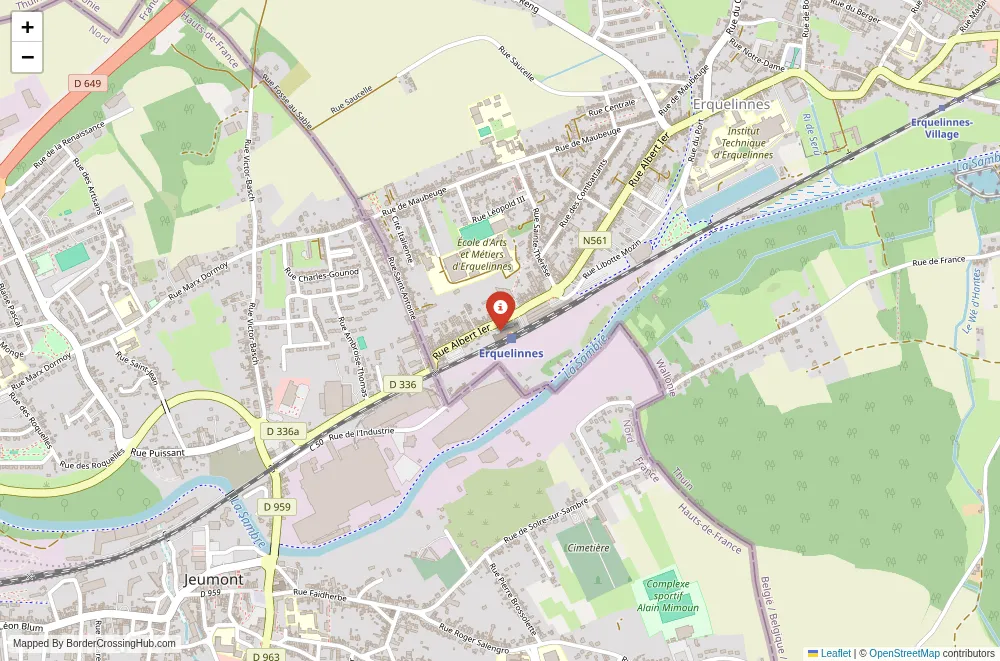
Approximate Border Location
Wait Times
Cars 0-10m; peaks 15-45m peak hours
Just crossed? Tap to report:
Operating Hours
Open 24 hrs (12:00 AM-11:59 PM)
Crossing Types
Ped,cars,bikes; rail nearby
Border Type
Land crossing via road (local)
Peak Times
07:00-09:00 AM; 04:00-06:30 PM
Daily Crossings
7,000-25,000/day
Currency Exchange
EUR only; ATMs near stations
Safety Information
Occasional controls; normal urban caution
Languages Spoken
French/Dutch
Accessibility Features
Step-free station access varies
About Bad Muskau & Łęknica
Monthly Update (March 2026):
As of 03/2026, the Bad Muskau & Łęknica Border Crossing moves freely with a steady trickle of cars and cyclists. Most vehicles roll straight across the bridge without slowing. Weekends bring a few more visitors heading to the nearby park on either side. Otherwise it stays calm and predictable.
No Cell Service at the Border? No Problem.
Don’t get caught scrambling for paperwork when you lose signal. Download the complete Europe Transit Guide directly to your device and access every critical detail, fast-track strategy, and border rule – 100% offline.
Bad Muskau connects Germany to Poland across the Lusatian Neisse River, where the border divides one of Europe’s most remarkable landscape parks in a peaceful corner of Upper Lusatia.
Location and Basic Connections
You reach this crossing where the German spa town of Bad Muskau in Saxony meets the Polish town of Łęknica in Lubusz Voivodeship. It lies along the Neisse River, with the main pedestrian and vehicle link via the Postbrücke (Post Bridge) right in the town center. Foreign visitors often use it to explore the UNESCO-listed Muskauer Park (Park Mużakowski), which spans both sides of the border. Alternative names include the Bad Muskau Łęknica border or Neisse River crossing at Muskau Park. As a Schengen internal point, it normally allows free movement, but temporary controls remain active on the German-Polish border as of February 2026, with spot checks possible due to ongoing migration and security measures.
Historical Background and Geopolitical Role
The border follows the Oder-Neisse line established after World War II in 1945, placing the park under divided sovereignty. Prince Hermann von Pückler-Muskau created the landscape park starting in 1815 as an English-style garden that integrated the town, river, and surrounding terrain. After the war, the division split the park, with about two-thirds on the Polish side in Łęknica and the rest around Bad Muskau’s New Palace. The site gained UNESCO World Heritage status in 2004 for its pioneering approach to landscape design. A pedestrian bridge rebuilt in 2003 reconnected the parts, and since Poland joined Schengen in 2007, the crossing has supported seamless exploration. The area reflects post-war reconciliation, with joint German-Polish management of the park and local cross-border ties in tourism and daily life.
Current Status and Safety Considerations
Germany conducts temporary checks at all land borders, including with Poland, until at least March 15 2026, citing high irregular migration, smuggling networks, asylum system strain, and global security issues like the Ukraine conflict and Middle East tensions. Poland maintains controls on its German border until April 4 2026, due to migratory pressure from Belarus routes spilling over and burdens on public security. At this small town crossing, expect random police stops for ID verification rather than permanent booths, often on the bridge or nearby roads. Travelers describe these as quick in this low-traffic spot, with no major delays or queues reported. The area stays safe and welcoming, focused on park visitors, with no common scams or aggressive touts. Carry your passport or national ID at all times to handle any check without issues.
Operating Hours and Wait Times
The Postbrücke and other park paths remain open around the clock for pedestrians and cyclists, with vehicle access during standard road hours. Temporary controls add variability: most crossings pass without intervention, while a random stop might take 5 to 15 minutes for document review or questions. This quiet location sees far fewer checks than motorway points, keeping waits minimal. Peak times around weekends or summer park visits could slightly increase activity near the bridge. Weather rarely disrupts, though winter ice on the river or heavy rain might affect paths.
Visa Requirements for Foreign Visitors
Schengen rules apply: EU EEA Swiss citizens move freely with valid ID or passport. Non-EU nationals qualify for visa exemptions up to 90 days in any 180-day period if eligible, or need a Schengen visa. The Entry/Exit System registers non-EU travelers at external borders but not routinely here; spot checks may verify your stay duration or purpose. Present your passport during any control, plus proof of accommodation, funds, or onward travel if requested. No fees occur at this crossing.
Crossing Procedures Step by Step
You approach via town streets in Bad Muskau or park paths in Łęknica, reaching the Postbrücke where the river marks the line. Normally, walk, cycle, or drive across as signs shift languages and the park continues unbroken. If police run a control, they may stop you on the bridge or roadside for ID presentation and basic questions. Provide documents calmly; the process resolves fast amid tourist flow. Multiple wooden bridges in the park allow foot and bike crossings without separate lanes. The shift feels natural, with greenery and features blending across the border.
Transportation Options and Road Details
Regional buses connect Bad Muskau to Cottbus for train links, while local services reach Łęknica. Driving uses secondary roads from Görlitz or Weißwasser, paved and scenic through forests and fields. The park offers extensive walking and cycling paths, many crossing the river via bridges. Scenery includes manicured landscapes, ponds, terraces, and the Neisse’s gentle flow. Traffic remains light, ideal for relaxed exploration. Cycling works well on flat terrain with marked routes.
Nearby Attractions and Practical Tips
The Muskauer Park itself stands out, with the New Palace and orangery on the German side, plus extensive Polish sections of terraces and arboretum. Buy a map at the information point in Łęknica or Bad Muskau for full coverage. Carry ID due to controls. Euros work on both sides, though zloty helps in Poland; cards see wide use. Pack comfortable shoes for park trails and layers for variable weather. Visit early to avoid crowds in peak season. Cross on foot for the best experience of the divided yet unified park.
Cultural and Economic Significance
The crossing enables shared stewardship of a UNESCO site that symbolizes harmony over division. Tourism drives local economies, with visitors drawn to the park’s beauty and history. Cross-border markets in Łęknica offer goods, while Bad Muskau provides spas and cafes. Joint efforts preserve the landscape, reflecting broader German-Polish cooperation in border regions. Seasonal blooms and events add to its appeal year-round.
Final Planning Notes
Check official sources for the latest on temporary controls before heading out, keep ID ready, and allow a little extra time for possible random checks. This unique river-spanning park makes for an enriching border experience when you arrive prepared.
No reviews yet.