
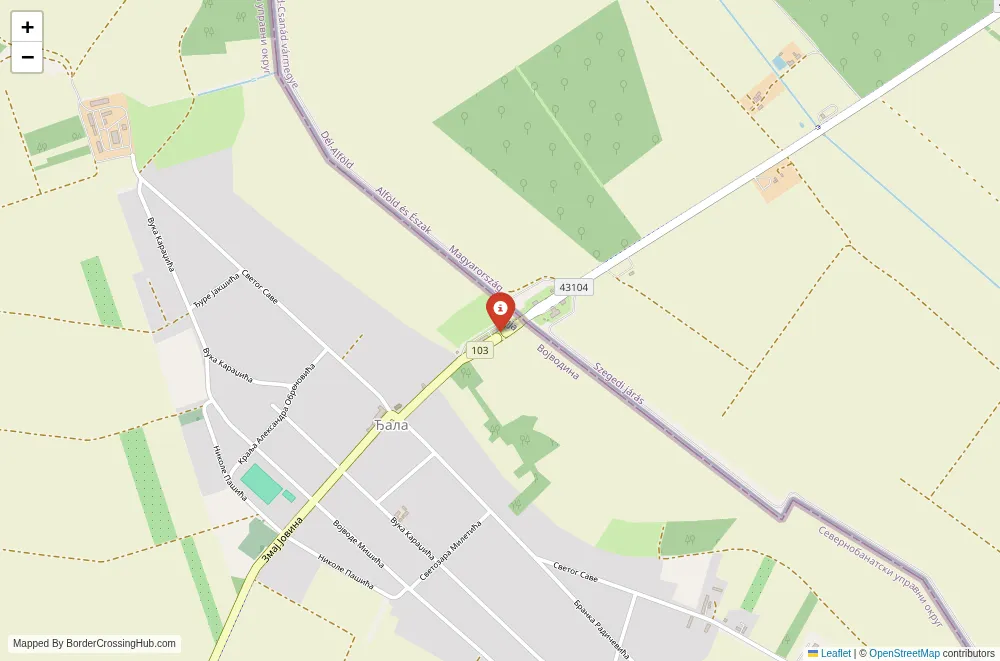
Approximate Border Location
Wait Times
Cars 10-45m; peaks 60-240m weekends
Just crossed? Tap to report:
Operating Hours
06:00 AM-10:00 PM
Crossing Types
Ped,cars,buses; border controls
Border Type
Land crossing via rural road
Peak Times
08:00-10:00 AM; 04:00-07:00 PM
Daily Crossings
1,500-6,000/day
Currency Exchange
HUF; RSD in Szeged; EUR common; ATMs
Safety Information
Queues at times; keep valuables secure
Languages Spoken
Hungarian/Serbian
Accessibility Features
Paved lanes; step-free varies
About Bácsszentgyörgy & Rastina
Monthly Update (March 2026):
As of 03/2026, the Bácsszentgyörgy & Rastina Border Crossing remains quiet and mostly stable. Vehicles pass through the rural crossing without much buildup. Mornings are typically calm before a few extra cars appear later in the day. Farm traffic and cross-border family visits bring occasional short bursts of movement.
No Cell Service at the Border? No Problem.
Don’t get caught scrambling for paperwork when you lose signal. Download the complete Europe Transit Guide directly to your device and access every critical detail, fast-track strategy, and border rule – 100% offline.
The Bácsszentgyörgy-Rastina crossing stands as a quiet, lesser-used road link between southern Hungary and northern Serbia’s West Bačka District, connecting the Hungarian village of Bácsszentgyörgy to the Serbian village of Rastina (also known as Haraszti in Hungarian contexts).
Alternative Names
It appears as Bácsszentgyörgy-Rastina, Bácsszentgyörgy-Raština, or sometimes Bácsszentgyörgy-Haraszti. Rastina sits in the Sombor municipality area.
Location and Connections
This point lies in flat agricultural plains, reachable from Baja or Csávoly in Hungary by heading toward Gara and then the border on local roads. From Bácsszentgyörgy, the crossing is short and direct. On the Serbian side, Rastina connects to Sombor or further routes toward Novi Sad and Belgrade via secondary roads. It serves as an alternative to nearby points like Hercegszántó-Bački Breg or Tompa-Kelebija, especially for those avoiding heavier traffic.
Historical Background
The crossing opened in April 2018 as part of efforts to improve local ties after years of separation due to border fences and restrictions. Before that, residents of Rastina traditionally crossed informally to visit Bácsszentgyörgy (just 500 meters away) for customs like bringing flowers, but formal access was limited. Infrastructure upgrades, including joint controls, came with EU cross-border programs to ease movement in this rural zone.
Geopolitical and Economic Role
It supports modest local traffic in an area with shared Hungarian and Serbian communities focused on farming. Passenger cars dominate, with no buses or freight allowed. The point helps family visits and short errands, though its restricted access keeps volumes very low. It ranks among the least used along the frontier.
Operating Hours and Current Status
The crossing operates daily from 07:00 to 19:00 for international passenger traffic (excluding buses). No 24-hour service exists, and no major seasonal extensions apply. Joint Hungarian-Serbian controls often happen on the Hungarian side. Check police.hu, NAV customs pages, or Serbian border updates right before travel for any temporary changes.
Visa Requirements for Foreign Visitors
Access stays restricted: only Serbian citizens, plus EU, EEA, Swiss nationals and their third-country family members enjoying free movement rights under EU law. Other nationalities cannot use this point. Hungary follows Schengen rules, Serbia provides visa-free entry for many (including US, Canada, Australia) up to 90 days if eligible elsewhere. Confirm your status with embassies, as non-qualifiers face immediate denial.
Crossing Procedures Step by Step
Approach from Hungary (Bácsszentgyörgy) for exit checks: present passport and vehicle documents. Officers from both sides often handle controls jointly on the Hungarian side. Drive through the short zone to Serbia (Rastina) for entry stamping and basic customs. Passenger cars proceed in lanes; the process typically takes 10-30 minutes with low crowds.
Wait Times and Peak Periods
This ranks as one of the quietest crossings, with waits usually under 15 minutes or none reported. Peaks remain rare, even on weekends or holidays, due to limited eligibility and rural location. Apps like BorderWatcher offer user reports since no live camera exists.
Transportation Options After Crossing
Private cars provide the only practical way; no public buses cross here. From Rastina, rural roads lead to Sombor or other connections. In Hungary, Bácsszentgyörgy links back to Baja or route 55. Taxis in nearby towns cost extra in this remote setup.
Road Conditions and Scenery
Local roads feature good pavement through open farmland: vast fields, occasional villages, and flat plains typical of the region. Driving stays straightforward with no challenging sections.
Weather and Seasonal Impacts
Hot, dry summers dominate, while winters bring fog, frost, or light snow. Flat terrain means quick clearing but potential visibility drops in fog. No seasonal closures occur.
Nearby Attractions
Bácsszentgyörgy offers small-village peace. Rastina provides rural Serbian life. Nearby Sombor features historic buildings and markets, while Baja in Hungary has river views and local cuisine.
Practical Travel Tips
Verify eligibility due to restrictions. Cross within 07:00-19:00 daylight hours. Carry euros or local currencies for minor needs. Use BorderWatcher for updates. Fuel up near Baja.
Common Scams and Warnings
Very few issues surface at this low-traffic spot. Avoid rare unofficial money changers for poor rates. Ignore any help offers. Checks stay calm and direct for those allowed through.
Cultural and Economic Notes
The area blends Hungarian and Serbian rural traditions, with agriculture central and the crossing reviving old community links for family and local movement.
Final Planning Advice
Choose this if you qualify and seek a peaceful, uncrowded option in the western border section. Confirm details officially, prepare your documents, and appreciate the quiet rural drive connecting these close villages. Safe travels.
No reviews yet.