
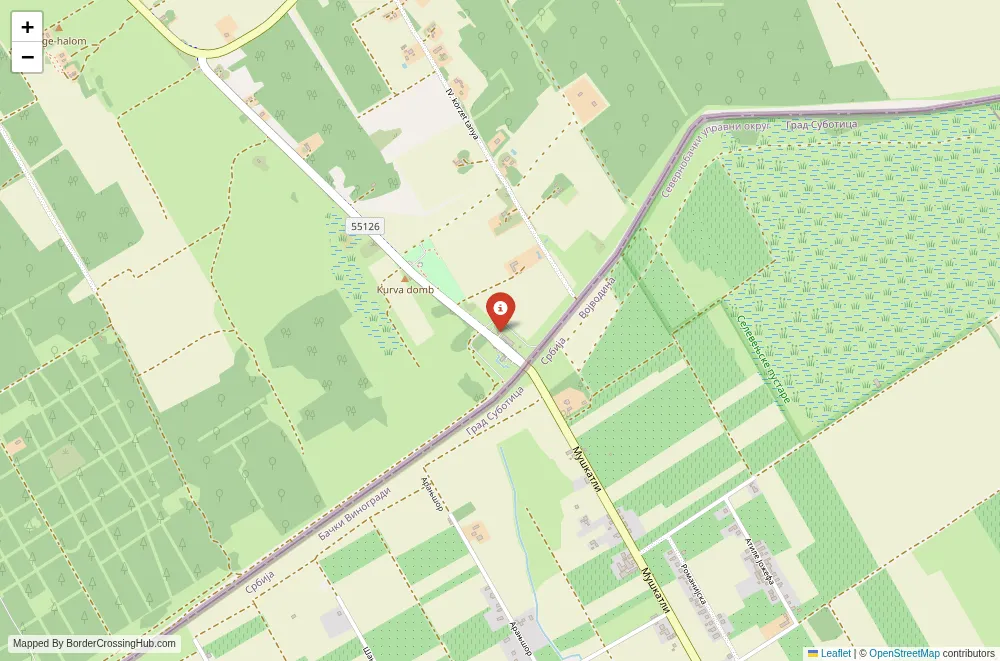
Approximate Border Location
Wait Times
Cars 15-60m; peaks 90-360m summer
Just crossed? Tap to report:
Operating Hours
Open 24 hrs (12:00 AM-11:59 PM)
Crossing Types
Ped,cars,buses; border controls
Border Type
Land crossing via road checkpoint
Peak Times
Fri-Sun 08:00 AM-12:00 PM; Jul-Aug
Daily Crossings
6,000-25,000/day
Currency Exchange
HUF; RSD, EUR near Horgoš; ATMs
Safety Information
High congestion; scams risk in queues
Languages Spoken
Hungarian/Serbian
Accessibility Features
Step-free areas; shade limited
About Bácsalmás & Bajmok
Monthly Update (March 2026):
As of 03/2026, the Bácsalmás & Bajmok Border Crossing ticks along at a relaxed pace most days. Vehicles pass through the checkpoint without major queues, although the Hungarian side sometimes slows during afternoon returns. Mornings usually move quickly. Cross-border shopping and local errands keep a modest flow going.
No Cell Service at the Border? No Problem.
Don’t get caught scrambling for paperwork when you lose signal. Download the complete Europe Transit Guide directly to your device and access every critical detail, fast-track strategy, and border rule – 100% offline.
The Bácsalmás-Bajmok border crossing serves as a quiet road link between southern Hungary and northern Serbia, tucked away in the flat plains of the Bačka region.
Alternative Names
You will find it referred to as Bajmok-Bácsalmás, Bácsalmás-Bajmok, or simply the Bácsalmás border point on maps and signs. This small crossing connects the Hungarian town of Bácsalmás with the Serbian village of Bajmok.
Location and Connections
It lies in a rural stretch along the Hungarian-Serbian frontier, roughly between the more prominent Tompa-Kelebija crossing to the east and Hercegszántó-Bački Breg to the west. From Hungary, you reach Bácsalmás via route 55, turning off near Mélykút or Tataháza for the final approach. On the Serbian side, Bajmok sits close to Subotica, with onward roads leading toward Novi Sad or Belgrade. Most people drive their own cars or use local buses; public transport options remain limited compared to bigger crossings.
Historical Background
The border here traces back to post-World War I treaties that redrew lines across multi-ethnic areas in the former Austro-Hungarian lands. The crossing itself opened more recently, with road rehabilitation projects in the early 2020s improving the connecting route as part of EU-funded cross-border cooperation efforts between Hungary and Serbia’s Vojvodina province. It has stayed a low-key point, avoiding the heavier traffic and occasional tensions seen at major entries like Röszke-Horgoš.
Geopolitical and Economic Role
This point supports local movement in a region with mixed Hungarian and Serbian communities. Trade stays modest, mostly everyday goods and personal visits rather than large-scale commerce. It eases short trips for residents on both sides, and occasional holiday extensions reflect efforts to accommodate family travel during peak times.
Operating Hours and Current Status
Standard hours run from 07:00 to 19:00 daily, though seasonal adjustments occur. From May to September, it often extends to 07:00-19:00 or later on weekends in summer periods. In winter months (September to May), some sources note shorter windows like 06:00-18:00, but recent official listings stick to 07:00-19:00. During holidays like Christmas/New Year, weekends frequently extend to 24:00 (midnight). It handles only passenger vehicles and personal traffic; no buses or freight allowed. Always double-check official sites like the Hungarian police or Serbian border police pages right before you go, since changes happen for events or security.
Visa Requirements for Foreign Visitors
As both countries sit outside the Schengen Area but Hungary belongs to the EU, rules depend on your nationality. EU, EEA, and Swiss citizens cross freely with ID. Many others enjoy visa-free entry to both for short stays (usually 90 days). Serbia allows visa-free access for a wide range of passports, including US, Canada, Australia, and most of Latin America. Check your specific requirements via embassies, as entry/exit must match rules for each side. No visa-on-arrival issues apply here for most foreigners.
Crossing Procedures Step by Step
Drive up to the Hungarian side first for exit checks if leaving Hungary. Officers review documents and may ask about your plans. Proceed across the short border zone to the Serbian side. There, present your passport for entry stamping. Procedures stay straightforward for passenger cars. You drive your own vehicle through; no pedestrian-only option exists. The process typically wraps up in 10-30 minutes outside busy periods.
Wait Times and Peak Periods
This remains one of the quieter crossings along the border. Waits often stay under 15 minutes, even during moderate traffic. Peaks happen during summer weekends or holidays when extensions apply, but crowds rarely build like at 24-hour points. Early mornings or mid-week crossings usually move fastest.
Transportation Options After Crossing
Once through on the Serbian side, roads lead quickly to Bajmok and then Subotica (about 20-30 minutes). From there, buses or trains connect to Novi Sad and Belgrade. In Hungary, Bácsalmás links back to route 55 toward Baja or Kecskemét. Private cars give the most flexibility here; taxis exist but cost more in rural areas.
Road Conditions and Scenery
The connecting road received upgrades in recent years, so pavement holds up well on both sides. Expect flat agricultural landscapes: corn fields, sunflowers in season, small villages, and open plains. No dramatic hills or tight turns; just straight, easy driving. Rural roads mean occasional tractors or slow vehicles.
Weather and Seasonal Impacts
Summers bring heat and dry conditions, with dust possible on side roads. Winters carry fog, occasional snow, and icy patches in this lowland area. Rain can make unpaved shoulders slippery. Holiday extensions help during festive travel, but always factor in potential fog reducing visibility.
Nearby Attractions
Bácsalmás offers a small-town feel with local markets and Hungarian rural architecture. Bajmok has a quiet village atmosphere. Nearby Subotica draws people with its Art Nouveau buildings, while Sombor lies not far on the Serbian side with historic sites. For nature, the area borders parts of the Danube-Tisza region with birdwatching spots.
Practical Travel Tips
Cross during daylight if possible, especially in winter. Carry cash in euros or local currencies for any small fees, though most transactions stay electronic. Keep documents handy and organized. Fill up fuel on the Hungarian side if prices suit you better. Use apps like BorderWatcher for real-time reports from other drivers. Avoid peak holiday rushes unless you want the extended hours.
Common Scams and Warnings
This low-traffic crossing sees few reported scams compared to busier ones. Still, watch for unofficial money changers near the border offering bad rates. Some drivers mention occasional overzealous officials asking extra questions, but nothing widespread. Stick to official lanes, ignore anyone offering “fast-track” help, and report odd requests. Travelers note it as generally calm, with minimal hassle if your papers check out.
Cultural and Economic Notes
The region blends Hungarian and Serbian influences, visible in bilingual signs, local foods like paprika-heavy dishes, and mixed communities. Cross-border family ties keep the point active for personal visits. Economic activity focuses on agriculture and small trade rather than tourism.
Final Planning Advice
Pick this crossing if you want to avoid crowds at bigger points like Tompa or the motorway. Confirm hours and any restrictions ahead through official channels. Bring patience for rural pace, and enjoy the peaceful route through farmland connecting these neighboring countries. Safe journey.
No reviews yet.