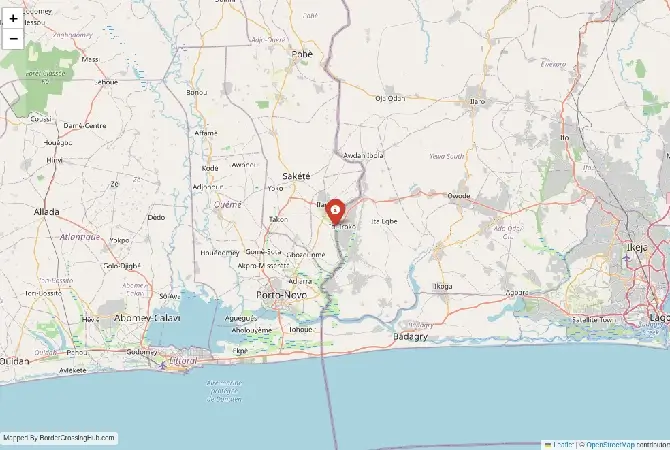
Monthly Update (September 2026):
Asunora and Igolo remains a smaller Benin-Nigeria crossing, with no significant September closure identified. Nigeria has been expanding the number of land crossings operating along its borders, with Kamba and Tsamiya reopened in February 2026, although the federal government says Nigerian land borders are not generally closed. For travelers using smaller Benin-Nigeria routes, local operating arrangements and security checks remain more important than queue times. It is worth confirming that the crossing is functioning for the type of traffic you intend to take before making the journey.
About this crossing
This crossing mainly serves local communities, traders, and travelers who prefer to avoid the congestion found at larger Nigeria–Benin border points like Seme. It is functional but modest, and you should expect a more informal setup.
Regional Context and Historical Background
The boundary here reflects colonial-era divisions between British-controlled Nigeria and French Dahomey, now Benin. Unlike the heavily trafficked coastal crossings, this one developed around nearby villages and agricultural trade rather than long-distance commerce.
Nearby Border Crossings




Cross-border movement has been part of daily life for generations. Families, markets, and cultural ties span both sides, which contributes to a steady but low-volume flow of people. You will likely notice that many crossings here are routine for locals rather than international यात्रियों.
Border Facilities and Setup
Facilities at Asunora and Igolo are basic. You will find small immigration posts rather than large complexes. There are no extensive lanes or structured terminals, and the process may feel less formal compared to major crossings.
Electricity and digital systems are inconsistent. Much of the work is done manually, including passport stamping and record-keeping. You may need to move between small offices to complete exit and entry procedures.
Operating hours are typically during the day, but exact times are not always clearly posted or enforced. Arriving early increases your chances of finding officials present and avoiding delays.
Visa Requirements and Documentation
You should prepare all documentation before arriving, as this crossing is not suitable for resolving visa issues.
For Nigeria, most travelers need a visa obtained in advance. Visa-on-arrival options are limited and not reliably available at smaller land crossings like Asunora.
For Benin, an eVisa is required for most nationalities. You should complete the application online and carry printed confirmation documents.
A yellow fever vaccination certificate is mandatory for both countries. Officials may check this carefully, so keep it accessible.
Crossing Procedure and Waiting Times
The process is relatively straightforward but not always clearly guided. You will exit one country, then proceed to the other side for entry formalities. Distances between offices are short, often requiring only a brief walk.
Wait times are generally shorter than at major crossings. On a typical day, you might complete the process in 20 to 40 minutes. However, delays can occur if staff are limited or if there is confusion about procedures.
Officials may ask questions about your route and purpose of travel, especially if you are one of the few foreign visitors using this crossing.
Road Conditions and Access
Getting to the Igolo–Asunora crossing requires some planning. Roads in the area are a mix of paved and unpaved sections, with quality varying depending on maintenance and weather.
On the Benin side, Igolo connects to regional roads that lead toward larger towns, though conditions are not always consistent. On the Nigeria side, access to Asunora may involve smaller rural roads.
During the rainy season, these routes can become muddy and slow. In the dry season, dust and heat are the main challenges.
Public transportation exists but is limited. Shared taxis and minibuses may operate between nearby towns, but direct service to the border is not guaranteed. You may need to arrange part of your journey privately.
Seasonal and Weather Considerations
Weather plays a role in how easy this crossing is to access. The rainy season can affect road conditions significantly, particularly on unpaved sections.
Flooding is less of a concern than at river crossings, but muddy roads can still delay travel. Planning your trip during the dry season generally makes access easier.
Heat during the dry months can be intense, so carrying water and preparing for long waits without shade is important.
Scams & Warnings
Even at smaller crossings, you should stay alert. Requests for unofficial payments can occur, especially if officials assume you are unfamiliar with local procedures.
You should remain polite but firm. Ask for receipts when fees are requested and avoid paying anything that is not clearly explained.
Another common issue is the presence of informal helpers offering assistance. While some may be genuinely helpful, others may expect payment for services you do not need.
Confusion about procedures can also arise due to the informal setup. Taking your time and confirming each step helps ensure you complete all required checks.
Local Life and Cross-Border Movement
This crossing reflects the daily routines of nearby communities. You will likely see traders carrying goods, farmers transporting produce, and families moving between villages.
The atmosphere is less hectic than larger crossings, but it is still active in its own way. This local focus shapes the overall experience and keeps the flow steady without becoming overwhelming.
Practical Tips for Travelers
You should carry enough local currency, as card payments are not accepted. Food and water options near the border are limited, so bringing your own supplies is a good idea.
Mobile network coverage can be inconsistent, so do not rely entirely on online services. Having offline maps or written directions can help.
French is widely spoken in Benin, while English is used in Nigeria. Being prepared to switch between the two can make communication easier.
Final Thoughts
The Igolo–Asunora crossing offers a quieter route between Benin and Nigeria, shaped by local movement and rural surroundings.
Closing Note
You should approach this crossing with preparation and patience. It can be a practical alternative to busier routes, but the limited infrastructure and informal procedures mean you need to stay attentive and flexible throughout the process.
View all border crossings between Benin and NigeriaPractical information
Fuel
Benin: <1 km - Nigeria: <1 km
Currency
XOF,NGN informal
Safety information
Crowded, petty crime risk
Connectivity
Roads, shared taxis
Have you crossed here?
Help other travelers by sharing your experience, wait times, and any updates.