
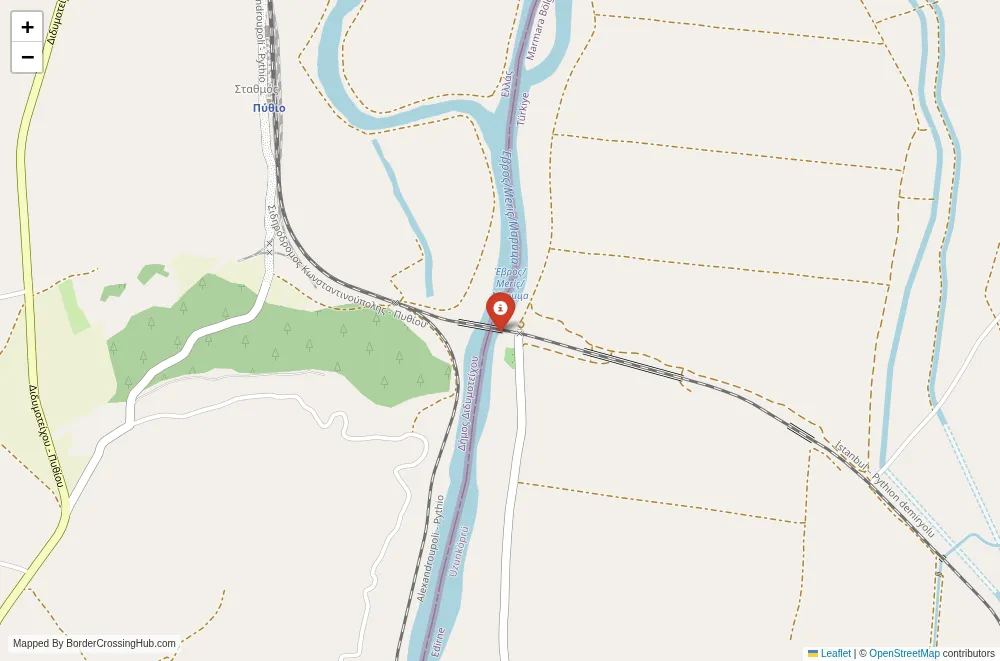
Approximate Border Location
Wait Times
Train 30-120m; peaks 120-300m checks
Just crossed? Tap to report:
Operating Hours
Rail by timetable; typical 06:00 AM-10:00 PM
Crossing Types
Trains only; passport/customs on route
Border Type
Land crossing via road bridge (Evros)
Peak Times
Evenings; summer travel surges
Daily Crossings
100-800/day
Currency Exchange
EUR; TRY in Alexandroupoli/Edirne; ATMs
Safety Information
Long checks; limited services at stations
Languages Spoken
Greek/Turkish
Accessibility Features
Station access varies; limited ramps
About Ásotthalom & Bački Vinograd
Monthly Update (March 2026):
As of 03/2026, the Ásotthalom & Bački Vinograd Border Crossing stays moderately active but generally stable. Cars move through steadily, though inspections on the Serbian side can slow the line a bit during late morning and afternoon. Midday often feels smoother once the early traffic clears. Weekend family visits and small trade traffic can stretch waits slightly.
No Cell Service at the Border? No Problem.
Don’t get caught scrambling for paperwork when you lose signal. Download the complete Europe Transit Guide directly to your device and access every critical detail, fast-track strategy, and border rule – 100% offline.
Ásotthalom connects Hungary to Serbia in the southern part of Csongrád-Csanád County along the Hungarian-Serbian border in the Pannonian plain, where the border runs across a local road bridge dividing the Hungarian village of Ásotthalom from the Serbian village of Bački Vinogradi in a flat, agricultural landscape of vineyards, sunflower fields, small woodlands, and scattered farms.
Location and Basic Connections
You reach this crossing where Ásotthalom in Hungary’s Southern Great Plain Region (Csongrád-Csanád County, Szeged District) meets Bački Vinogradi in Serbia’s Vojvodina Autonomous Province (Subotica Municipality). It lies along the secondary road bridge (Hungarian road 4304 / Serbian local road) over a small drainage canal or tributary near the Tisza River floodplain, in open countryside with distant views toward the Tisza and Danube-Tisza interfluve. Foreign visitors cross here when traveling from Szeged, Hódmezővásárhely, or southern Hungary toward Subotica, Kanjiža, or the Serbian Bačka region, or the reverse for Hungarian Puszta landscapes and the Szeged paprika region. Alternative names include the Ásotthalom Bački Vinogradi border or Bačka vineyard crossing. As a Schengen external border for Hungary (EU/Schengen member) and Serbia (non-Schengen), it features full customs, immigration, and police facilities on both sides.
Historical Background and Geopolitical Role
The border follows the post-World War I Hungarian-Yugoslav frontier formalized by the 1920 Treaty of Trianon, which assigned the right bank of the Tisza and its tributaries to the Kingdom of Serbs, Croats and Slovenes (later Yugoslavia) and the left bank to Hungary. The area around Ásotthalom and Bački Vinogradi was historically part of the Bácska/Bačka region with mixed Hungarian-Serbian cultural influences tied to viticulture, agriculture, and river trade. The frontier split the shared Bačka plain cultural area after 1920, with population shifts during World War II and the Yugoslav period. During the Cold War, the border was restricted between socialist Yugoslavia and communist Hungary. The crossing remained limited until after 1989. After Hungary joined Schengen (2007) and Serbia began EU accession talks, procedures modernized, supporting cross-border tourism to the Bačka wine region, Subotica’s Art Nouveau architecture, and the Hungarian Puszta nature areas.
Current Status and Safety Considerations
Hungary (EU/Schengen external border) and Serbia maintain full customs, immigration, and security checks at Ásotthalom and Bački Vinogradi stations. Controls include passport/ID verification, vehicle inspection, and customs formalities on both sides. This low-volume rural crossing sees thorough but efficient processing for tourists, with no routine long queues outside peak summer or holiday periods. The area has low crime typical of rural border zones, with no reported scams or aggressive touts—focus on standard border precautions. Carry your passport or national ID at all times, plus vehicle documents, insurance, and green card if driving.
Operating Hours and Wait Times
The road crossing operates limited hours (typically daytime, around 7:00–19:00 or seasonal variations) due to its rural status—confirm current timetable via official sources before travel. Full customs processing adds variability: expect 10–40 minutes per direction for document/vehicle checks, longer during peak tourism (summer weekends/holidays). Off-peak moves quickly. Weather in the Pannonian plain can affect access: winter snow or ice may slow the road, while summer heat or rain makes it slippery.
Visa Requirements for Foreign Visitors
Hungary (Schengen): EU/EEA/Swiss citizens travel freely with ID; non-EU nationals need a Schengen visa or qualify for exemption (up to 90 days/180). Serbia: Many nationalities (EU, US, UK, Canada) enjoy visa-free entry up to 90 days; check current rules. Full checks apply at both stations. Present passport, plus proof of accommodation, funds, or onward travel if requested.
Crossing Procedures Step by Step
You approach on road 4304 from Hungary or local road from Serbia, reaching the border facilities where officers check passports/IDs and vehicle documents. Normally, present documents at Hungarian customs first (outbound), then Serbian (inbound) or vice versa. Provide passports calmly; the process resolves quickly for light traffic. Pedestrians and cyclists may use the crossing but with limited facilities—expect vehicle priority. The transition feels rural and understated, with immediate access to vineyard views or village roads on both sides.
Transportation Options and Road Details
No direct public transport crosses here due to its rural nature: regional buses reach Szeged (Hungary) or Subotica (Serbia). Driving uses paved secondary roads winding through the Pannonian plain, passing farmland, vineyards, small villages, and river meadows. Scenery includes flat landscapes, distant Tisza views, and sunflower fields. Traffic stays light compared to major routes. Cycling suits flat terrain with quiet roads and some marked paths nearby.
Nearby Attractions and Practical Tips
On the Hungarian side, Ásotthalom offers proximity to the Szeged paprika region and the Tisza River nature areas. On the Serbian side, Bački Vinogradi lies close to Subotica with its Art Nouveau architecture, Palić Lake, and the Bačka wine cellars. Carry ID due to checks. Euros work in Hungary, Serbian dinar in Serbia (euros widely accepted); cards accepted in towns. Pack layers for changeable plain weather. Shop or refuel on either side for convenience. Cross in daylight for safer rural roads.
Cultural and Economic Significance
The crossing sustains cross-border cooperation in the Bačka/Baranja region, supporting tourism to wine cellars, nature areas, and local villages. Shared Pannonian heritage blends in viticulture, folk traditions, and rural life. It fosters economic ties through EU-funded infrastructure and regional markets, exemplifying post-Trianon reconciliation amid temporary security measures.
Final Planning Notes
Check official Hungarian, Serbian, or EU sources for updates on temporary controls, crossing hours, and road conditions before travel, keep ID ready, and allow flexibility for checks or seasonal variations. This peaceful rural route offers a convenient and scenic local passage between Hungary and Serbia when you stay prepared.
No reviews yet.