
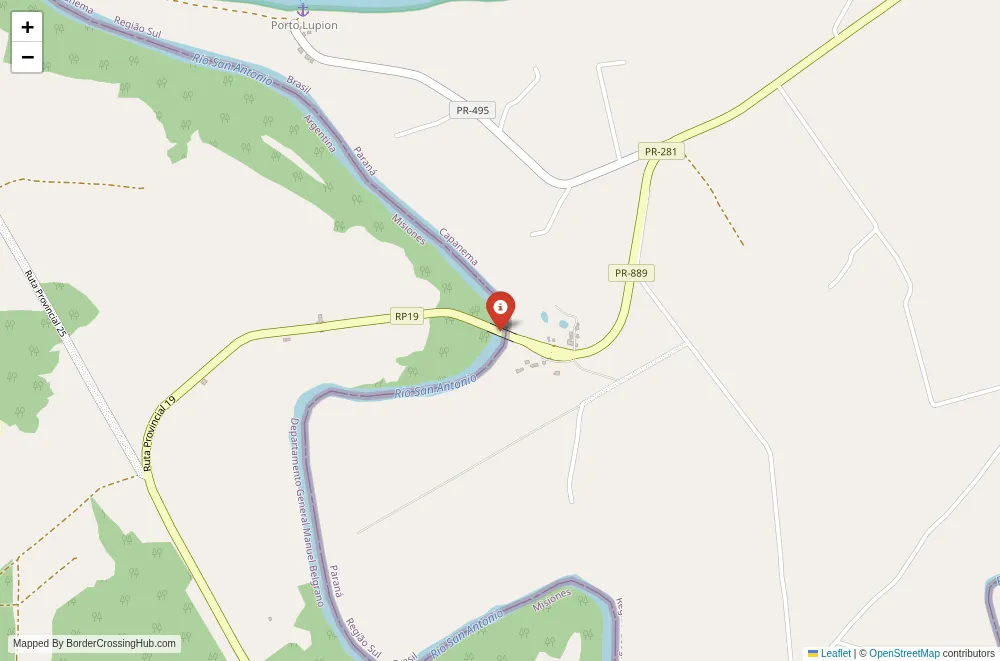
Approximate Border Location
Wait Times
Cars 10-40m; peaks 60-120m
Just crossed? Tap to report:
Operating Hours
07:00 AM-07:00 PM
Crossing Types
Ped,cars,buses; limited commercial
Border Type
Land crossing via road bridge
Peak Times
08:00-10:00 AM; 03:00-06:00 PM; Dec-Jan
Daily Crossings
1,000-4,000/day
Currency Exchange
AR$; R$ exchange in towns; some ATMs
Safety Information
Generally calm; beware fog and narrow roads
Languages Spoken
Portuguese, Spanish, English
Accessibility Features
Step-free sidewalks; limited reserved parking
About Andresito & Capanema
The Andresito-Capanema border crossing links the town of Comandante Andresito in Misiones province, Argentina, to Capanema in Paraná state, Brazil, over the short San Antonio River via the Puente Internacional Comandante Andresito.
Location and Connections
You approach from the Argentine side along Ruta Provincial 19, which winds through Misiones forest toward the bridge in Comandante Andresito. The Argentine immigration post sits about 800 meters before the actual river crossing. On the Brazilian end, the post lies roughly 300 meters after the bridge in Capanema. The bridge itself spans around 124 meters with a 13-meter-wide roadway, including pedestrian walkways. From there, Brazilian state roads PR-889 and PR-281 connect onward to regional centers like Francisco Beltrão or farther into Paraná. The towns sit about 38 km apart by road, making this a relatively isolated but direct link in this part of the frontier.
Historical Background
The San Antonio River has marked the Argentina-Brazil boundary since 19th-century treaties settled lingering colonial disputes rooted in earlier Iberian divisions. The area remained sparsely populated until yerba mate cultivation expanded in the 20th century, drawing settlers to both sides. The international bridge opened in the 2010s after years of planning and construction, replacing informal crossings or longer detours. It aimed to boost local trade and integration in this agricultural zone. The name honors Comandante Andresito Guacurarí, a key figure in Misiones history tied to indigenous and regional conflicts. Periodic agreements have adjusted operations, including hour extensions in recent years.
Current Status and Operating Hours
As of early 2026, the crossing operates daily from 7:00 AM to 7:00 PM, with recent extensions from prior shorter windows. It handles both vehicles and pedestrians, classified as a full international paso rather than just vecinal traffic. The bridge rarely closes due to weather since it sits over a stable river section. Still, check argentina.gob.ar/seguridad/pasosinternacionales or Brazilian federal police sources immediately before your trip, as administrative changes or local events can alter schedules. No major disruptions have hit this post lately, but rural borders sometimes adjust quietly.
Visa Requirements for Foreign Visitors
Most nationalities gain visa-free access to Argentina and Brazil for tourism stays of up to 90 days each. Ensure your passport holds at least six months’ validity beyond entry. This remote crossing offers no visa-on-arrival services; obtain any required Brazilian visa at a consulate in advance if your passport demands it. Officials on both sides process stamps at their respective posts. Have onward travel evidence and proof of funds ready, though questions rarely arise for straightforward tourist passages.
Crossing Procedures and Wait Times
Procedures remain uncomplicated owing to modest traffic. From Argentina, exit immigration and customs occur at the post before the bridge. Cross the span, then complete Brazilian entry shortly after. The reverse follows the same pattern. Queues typically stay short—often 10 to 30 minutes—since volumes consist mainly of locals, regional shoppers, and occasional overland travelers. Peak times during summer or weekends might add 15 to 45 minutes. Vehicles proceed directly; pedestrians cross on the same structure. Any required forms get handled on-site or digitally if prompted.
Transportation Options and Road Conditions
Buses from nearby Misiones towns like San Pedro or Puerto Iguazú reach Comandante Andresito, with short taxis or remises covering the last stretch. Private vehicles navigate paved RP 19 easily, though some connecting rural roads include gravel. On the Brazilian side, PR roads provide paved continuation. The drive features dense subtropical jungle, yerba mate plantations, and rolling terrain with occasional river glimpses. Rain turns unpaved access bits muddy, so verify conditions if driving. Public options stay limited compared to Iguazú-area routes.
Scams and Warnings
This low-profile crossing experiences few tourist-oriented scams, but informal transport near the posts sometimes charges inflated fares—negotiate or use official taxis. Avoid unofficial assistants offering to expedite paperwork. Customs focus on undeclared goods; exceeding personal limits on items like alcohol or tobacco invites fines. Petty theft remains uncommon, but secure items during waits. The main practical risk involves arriving outside hours, potentially stranding you until the next day in a small town with basic facilities. Recent binational security operations aim to curb any cross-border issues, but isolation limits quick assistance.
Nearby Attractions and Practical Tips
Comandante Andresito provides access to Misiones interior, including trails in nearby reserves and yerba mate processing sites. Capanema offers a quiet Brazilian rural entry point toward Paraná’s agricultural heartland. Bring Argentine pesos, Brazilian reais in small notes, and some USD for fees or purchases. Insect repellent stands essential in the humid, forested zone. Summer delivers heat, humidity, and heavier rains that slow travel; drier months from May to September offer better conditions. Pack water, snacks, and sunscreen—amenities stay minimal on both sides.
Cultural and Economic Role
Daily crossings foster close ties between the linked communities through family visits, shopping for cheaper goods, and agricultural exchanges. Yerba mate, timber, and small-scale farming drive the local economy, with the bridge easing movement of produce and workers. It supports regional Mercosur integration in this less-traveled frontier stretch, sustaining livelihoods tied to cross-border commerce.
Final Crossing Advice
Double-check hours and status on official migration pages a day or two ahead to sidestep surprises. Arrive within operating times with passport, cash, and patience ready. Allow buffer for any inspections. This modest bridge gives you a calm, authentic taste of rural binational life in Misiones-Paraná, suited for travelers seeking off-the-main-path routes between Argentina and Brazil. (Word count: 1042)
No reviews yet.