
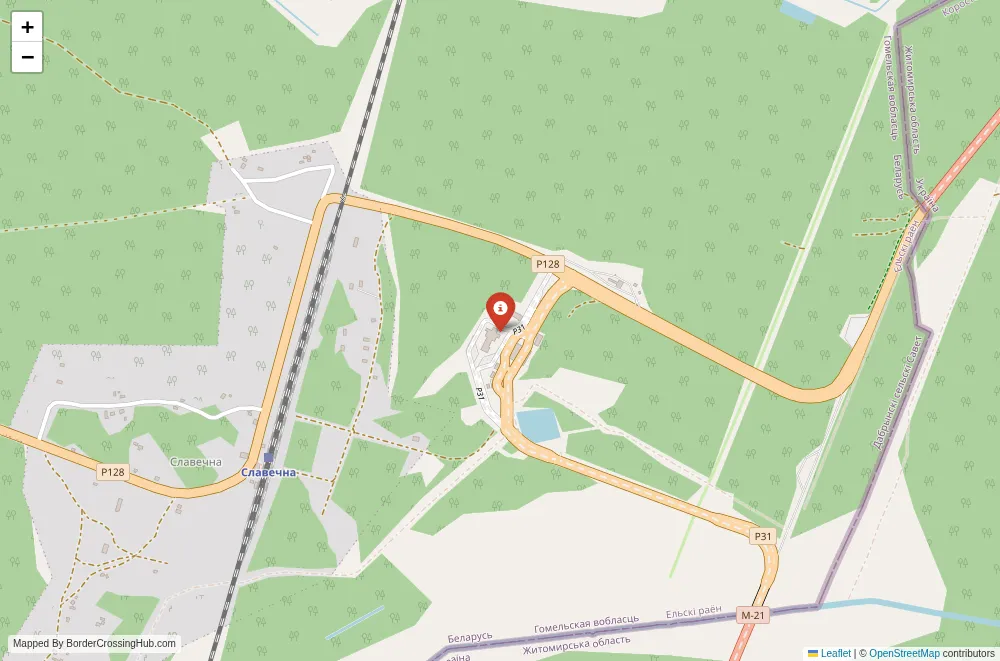
Approximate Border Location
Wait Times
Closed/very limited; delays 240-720m if open
Just crossed? Tap to report:
Operating Hours
Hours variable; confirm locally
Crossing Types
Ped,cars if permitted; full controls
Border Type
Land crossing via road (regional)
Peak Times
N/A; restricted crossing
Daily Crossings
0-200/day
Currency Exchange
BYN; UAH; some EUR; ATMs scarce
Safety Information
High security; restrictions likely
Languages Spoken
Belarusian/Ukrainian
Accessibility Features
Basic; limited accessibility
About Aliaksandrawka & Vilcha
Monthly Update (March 2026):
As of 03/2026, the Aliaksandrawka & Vilcha Border Crossing sees very limited movement. Vehicles rarely approach the crossing, and the surrounding roads stay mostly empty. Any crossings that do happen tend to be controlled rather than routine. Changes usually depend on broader regional conditions rather than daily travel demand.
No Cell Service at the Border? No Problem.
Don’t get caught scrambling for paperwork when you lose signal. Download the complete Europe Transit Guide directly to your device and access every critical detail, fast-track strategy, and border rule – 100% offline.
The Aliaksandrawka-Vilcha border crossing (also known as Alexandrovka-Vilcha, Александровка-Вильча, or Oleksandrivka-Vilcha) serves as a road-based point on the Belarus-Ukraine frontier, positioned in a sensitive area overlapping the Chernobyl Exclusion Zone and connecting Gomel oblast in Belarus to Kyiv oblast in Ukraine.
Location and Basic Connections
This crossing links the Belarusian checkpoint at Aliaksandrawka (in Narovlya district, Gomel oblast, along the P37 highway) to Vilcha on the Ukrainian side (in the Chernobyl Exclusion Zone, along the T1035 highway). It sits in a sparsely populated, heavily forested part of Polesia, far from major population centers. The road approach involves rural highways winding through woods and marshes, with Vilcha lying within the restricted Chernobyl zone, adding layers of control even before recent events. In pre-closure times, it handled passenger cars, buses, and limited cargo, serving mostly regional traffic rather than long-haul international routes. No rail component exists here; it’s strictly automotive.
Historical Background
The border traces Soviet administrative lines through Polesia’s wetlands and forests, where natural features like rivers often defined divisions more than politics. Aliaksandrawka-Vilcha gained prominence due to its placement near the Chernobyl site after the 1986 disaster, requiring extra radiation monitoring alongside standard checks. In the 1990s and 2000s, it functioned as an interstate point for locals and some cross-border travel in a region with shared Belarusian-Ukrainian heritage. The area saw brief diplomatic use in early 2022 talks, but the invasion shifted dynamics dramatically: Russian forces used nearby routes during advances toward Kyiv, and Belarus’s involvement led to immediate restrictions and closures across the frontier.
Current Status and Safety Warnings
As of early 2026, all land crossings between Belarus and Ukraine, including Aliaksandrawka-Vilcha, remain closed to regular civilian traffic. Official Belarusian and Ukrainian sources confirm no passenger or routine vehicle movement occurs. The border features reinforced security, patrols, barriers, and monitoring amid ongoing tensions. This zone carries substantial risks. Its location near the Chernobyl Exclusion Zone combines potential residual contamination concerns with active security threats like landmines from past fighting, military patrols, and strict enforcement. Unauthorized approaches risk detention, heavy fines, deportation, or escalation. Foreign visitors face intense scrutiny; even proximity without authorization invites serious issues. Online rumors of reopenings or alternative paths lack foundation and pose real danger. Always cross-check your government’s travel advisory, Ukraine’s State Border Guard Service, and Belarus’s State Border Committee for the latest. The area stays off-limits for travel.
Operating Hours and Wait Times
When active, the crossing ran 24/7 with capacity for up to 220-600 passenger vehicles and some buses daily per direction. Processing varied but could extend during peaks, with waits from minutes to over an hour depending on volume. These specs no longer apply; the point has no operational civilian hours or queues.
Visa Requirements for Foreign Visitors
Pre-closure, Belarus offered visa-free entry for many nationalities at land borders (often 30 days), while Ukraine provided visa-on-arrival or e-visas. As an interstate point, it accepted citizens of both countries primarily, with foreigners needing standard documents. Local rules sometimes required extra checks due to the Chernobyl zone. Closure nullifies visa relevance here. Illegal entry attempts lead to severe consequences regardless of passport.
Crossing Procedures Step by Step
In operational days, you arrived from the Belarusian side at Aliaksandrawka for exit stamp and customs, crossed a short no-man’s-land stretch on the highway, then cleared Ukrainian entry at Vilcha (with possible radiation screening). Facilities included standard booths and inspection areas for vehicles and luggage. The process reversed for the other direction. No pedestrian-only option existed prominently. Civilian procedures have ended; the checkpoint remains under restricted control.
Transportation Options
Private cars or buses provided the main means pre-closure. From Narovlya in Belarus or nearby Ukrainian points like Ovruch or Ivankiv, you’d drive the rural highways. No public transport targeted the crossing directly. Current restrictions block approaches, making transport moot for crossing purposes.
Road Conditions and Scenery
The P37 and T1035 highways feature paved but rural sections, with potential deterioration from weather or neglect in the zone. Scenery includes thick pine-birch forests, wetlands, small rivers, and abandoned or sparsely inhabited areas tied to the Chernobyl legacy. Flat Polesia terrain dominates, with occasional clearings and signs of restricted access.
Nearby Attractions
The immediate area offers no conventional tourism due to the exclusion zone and security. Vilcha sits within Chernobyl boundaries, with limited access even historically. Nearby Belarusian Narovlya district holds quiet rural spots, while Ukrainian side features zone-related sites farther out, but restrictions prevent visits. The frontier itself lacks draws; most people avoided lingering.
Seasonal Variations and Weather Impacts
Winter snow complicates rural roads, spring thaws create mud, summer brings rain and insects from marshes. The Chernobyl zone adds humidity and vegetation density in warmer months. Security overrides seasonal factors; access depends on political-military decisions.
Practical Travel Tips
Avoid any attempt to reach or use this crossing. For border or regional study, rely on maps, official documents, and reports. In border-adjacent Ukraine or Belarus, follow security rules strictly, avoid restricted zones, secure documents, and steer clear of photography near checkpoints or installations.
Cultural and Economic Role
Before closure, it supported limited cross-border family ties, small trade, and regional movement in Polesia’s blended communities. It reflected shared roots where dialects and traditions overlap. Economically modest, it facilitated local needs more than major commerce.
Final Note on This Restricted Crossing
Aliaksandrawka-Vilcha remains a sealed point amid enduring conflict and zone sensitivities. Keep it off travel lists and track official updates for any shifts. Proceed carefully wherever your borders lead next.
No reviews yet.