
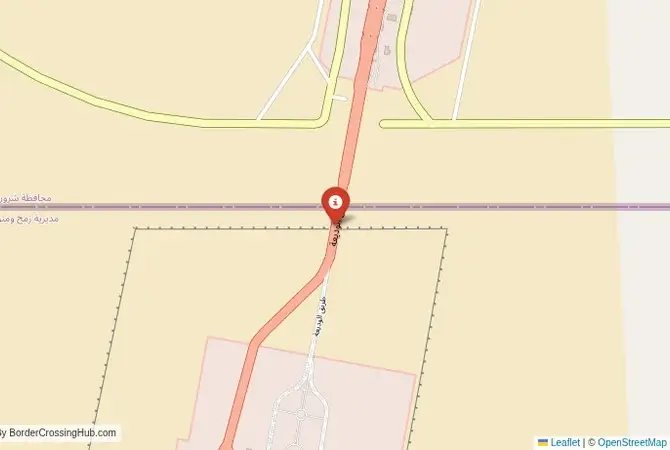
Approximate Border Location
Border Countries
- 🇾🇪Yemen
- 🇸🇦Saudi Arabia
Border Cities
- 🇾🇪Al‑Wadeeah
- 🇸🇦Najran region (Saudi)
Wait Times
30–90 min typical
Just crossed? Tap to report:
Operating Hours
Open 24 hours
Crossing Types
Pedestrians, vehicles, commercial
Border Type
Land crossing via road
Peak Times
7:00–10:00 AM, weekends
Daily Crossings
2,900–3,100 crossings
Currency Exchange
Exchange near Al-Wadeeah (YER, SAR)
Safety Information
Restricted, security risks
Languages Spoken
Arabic, English
Accessibility Features
Ramps, assistance
About Al‑Wadeeah & Najran region (Saudi)
Monthly Update (February 2026):
Trucks idle beside cars at the Al-Wadeeah & Najran region Border Crossing, then clear in waves. Over recent weeks in February 2026 it’s been variable, with outbound checks toward Saudi Arabia taking longer. Traffic surges and security routines shape most delays.
Critical Security Warning: High-Risk Conflict Zone
The Yemen-Saudi Arabia border is an active military conflict zone. All international governments strongly advise against any travel to Yemen due to the catastrophic civil war, terrorism, and high risk of kidnapping. The Al-Wadeeah border crossing, while sometimes operational, is located in a remote and dangerous desert region and has been targeted in the conflict. This guide is for informational and geopolitical context only. Attempting to travel to or through this crossing is extremely dangerous and not possible for tourists or ordinary travelers.
The Al-Wadeeah Crossing: A Desert Chokepoint
The Al-Wadeeah border crossing is the most easterly land gateway between Yemen and Saudi Arabia, connecting Yemen’s vast Hadhramaut Governorate with the Sharurah region in Saudi Arabia’s Najran Province. This is a true desert crossing, a remote outpost in the immense sands of the Rub’ al Khali (the Empty Quarter). Before the war, it was a secondary route, less used than the western crossings. However, with the Houthi takeover of northern Yemen, Al-Wadeeah’s strategic importance skyrocketed. It became the primary, and for long periods the only, land exit for Yemenis living in government-controlled areas to reach Saudi Arabia and the outside world. It has functioned as a critical, if overwhelmed, humanitarian and commercial chokepoint throughout the conflict.
A History Shaped by the Empty Quarter and Modern War
The history of this border is recent, defined by the 2000 Jeddah Treaty that formally demarcated the long-disputed frontier between Yemen and Saudi Arabia. For centuries before that, the region was the domain of nomadic tribes, with no formal lines of control. The crossing was established to formalize movement in this remote area. Its transformation came in 2015. As Houthi forces advanced, the western borders closed, and Al-Wadeeah, located in a part of Yemen that remained under the control of the internationally recognized government, became the main escape route. It was inundated with thousands of Yemenis seeking refuge and travelers trying to get out. It also became the main entry point for Saudi and coalition aid and military supplies to support allied Yemeni forces. This has made it a strategic target, and it has been attacked by Houthi forces with long-range missiles.
Border Procedures Under Duress
The Al-Wadeeah crossing operates under immense strain and with a security-first protocol. It is not open for tourism. For Yemeni nationals, crossing is an arduous and often desperate journey.The Yemeni Side: The road to the crossing from within Yemen is long and dangerous, passing through areas with fractured security. At the border itself, travelers face long queues, often waiting for days in the harsh desert climate with limited facilities. The internationally recognized Yemeni government officials who run the post conduct their own checks.The Saudi Side: Entry into Saudi Arabia is strictly controlled. Yemeni nationals require valid visas and are subject to extensive security screening. The Saudi border facility is large and heavily fortified. The process involves detailed checks of all personal documents, biometric data collection (fingerprints and eye scans), and thorough searches of vehicles and luggage. The goal of Saudi authorities is to prevent any security threats from crossing the border while managing the flow of legitimate travelers and commercial trucks. The entire process can take many hours or even days, depending on the level of traffic and the prevailing security situation.
The Surrounding Region: The Rub’ al Khali
The crossing is situated in one of the most desolate landscapes on earth. The Rub’ al Khali is the largest continuous sand desert in the world, a sea of sand dunes stretching for hundreds of kilometers. On the Saudi side, the road connects to the remote town of Sharurah, which is a military and oil industry outpost. From there, it is a very long drive to the more populated areas of Najran or Riyadh. On the Yemeni side, the road leads towards the cities of Seiyun and Al-Abr in the Hadhramaut valley. The journey on either side of the border is a long and monotonous drive through an extremely harsh and empty environment. Basic services like fuel and water are scarce, and travelers must be self-sufficient.
Final Contextual Note: A Desperate Gateway
The Al-Wadeeah border crossing is a stark illustration of how conflict can reshape geography and infrastructure. A once-minor desert post has become a critical, overwhelmed artery for a nation in crisis. It is a place of immense human suffering and resilience, where thousands have undertaken perilous journeys to seek safety or transport essential goods. It is a heavily militarized and frequently targeted location. For the outside world, it serves as a powerful symbol of the Yemeni war’s devastating impact and the immense challenges of managing a border with a collapsed state. It is unequivocally a no-go zone for any unauthorized person. As of early 2026, following recent military escalations in southern Yemen and Saudi interventions, the crossing remains the sole operational land link between Yemen and Saudi Arabia, with services continuing around the clock amid ongoing security concerns and no changes making it accessible for tourism.
No reviews yet.