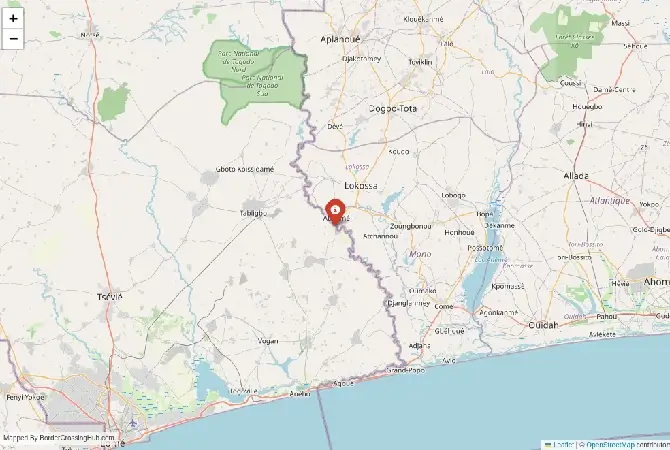
Monthly Update (September 2026):
Agbanakin and Athiémé remains a smaller Benin-Togo crossing with no significant September closure identified. The crossing is much less important for international through traffic than the main Hilacondji-Sanvee Condji route, so travelers should expect more limited facilities and local traffic. The wider Benin-Togo frontier is seeing increased customs cooperation, including at Hilacondji, but there is no indication that this represents a new restriction on ordinary travelers.
About this crossing
This is not a crossing you stumble upon by accident. It serves mostly local traffic, small-scale trade, and travelers who prefer less crowded routes.
Historical and Regional Context
The border here traces back to colonial-era divisions between French-administered Dahomey, now Benin, and territories that later became Togo. Unlike larger crossings shaped by major highways, this one developed around river access and nearby communities.
Nearby Border Crossings




The Mono River has long acted as both a connector and a divider. Local populations have historically moved across it for trade, fishing, and family ties. That legacy still influences how informal and community-driven the crossing can feel.
Border Facilities and Layout
Facilities at both Agbanakin and Athiémé are basic but functional. You will typically find small immigration offices rather than large checkpoints. Procedures are straightforward, though not always clearly organized.
Electricity and digital systems may be inconsistent. Much of the process still relies on manual record-keeping, and the pace can depend on how many people are crossing at the time.
Operating hours are generally daytime only, but strict schedules are not always enforced. Arriving earlier in the day reduces the chance of complications.
Visa Requirements You Should Prepare For
You should arrange your documents before arriving, as this is not a place to resolve visa issues.
For Togo, many travelers can obtain an eVisa in advance. Visa-on-arrival options may exist at major crossings but are unreliable in smaller locations like Agbanakin.
For Benin, an eVisa is required for most nationalities. You should carry printed approval documents to avoid delays.
A yellow fever vaccination certificate is mandatory for entry into both countries, and checks are common.
Crossing Process and Waiting Times
The process is usually simple: exit formalities on one side, followed by entry procedures on the other. Distances between offices can be short, sometimes requiring only a brief walk.
Wait times vary. On quiet days, you might complete the crossing in 20 to 30 minutes. If multiple travelers arrive at once or staff availability is limited, delays can stretch longer.
Officials may ask about your travel plans, especially if you are one of the few विदेशी travelers passing through.
Road Conditions and Access Routes
Access to this crossing depends heavily on local roads. On the Benin side, Athiémé is connected by regional roads that are generally passable, though not always in perfect condition.
On the Togo side, reaching Agbanakin can involve smaller, less maintained roads. During the rainy season, these routes can become muddy and slow to navigate.
Public transport exists but is limited. Shared taxis and minibuses operate between nearby towns, but direct connections to the border are not guaranteed. You may need to arrange part of the journey privately.
River Influence and Seasonal Changes
The Mono River plays a key role in the crossing’s character. During the rainy season, water levels rise, which can affect nearby roads and low-lying areas. Flooding may slow travel or temporarily disrupt access.
In the dry season, conditions improve, but heat and dust become more noticeable. Planning your timing around weather conditions can make a significant difference.
Scams & Warnings
While this crossing is generally low-key, you should still be cautious. Requests for small unofficial payments can occur, especially if officials assume you are unfamiliar with local procedures.
You should remain polite but firm. Ask for receipts if any fees are requested and avoid paying anything that is not clearly explained.
Another common issue is unclear instructions. Different officers may give slightly different directions, so taking a moment to confirm each step can help prevent confusion.
Local Life and Cross-Border Movement
This border reflects the daily routines of nearby communities. You will likely see traders carrying goods, fishermen moving along the river, and locals crossing for family visits.
The atmosphere is informal compared to larger crossings. That can make the experience more personal, but it also means you should be prepared for a less structured process.
Practical Travel Tips
You should carry enough cash in local currency, as card payments are not accepted. Food and water options near the border are limited, so bringing your own supplies is a good idea.
Mobile network coverage may be inconsistent, particularly near the river. Having offline maps or written directions can help.
French is widely spoken on both sides, so basic communication skills in the language can make interactions easier.
Final Thoughts
The Athiémé–Agbanakin crossing offers a quieter route between Benin and Togo, shaped by local life and the presence of the Mono River.
Closing Note
You should approach this crossing with preparation and flexibility. It can be a practical option if you are traveling in the region, but it requires patience and attention to detail compared to larger, more developed border points.
View all border crossings between Benin and TogoPractical information
Fuel
Benin: 2 km - Togo: 2 km
Currency
Not required (both sides use XOF)
Safety information
Calm rural zone
Connectivity
3G/4G mobile coverage
Have you crossed here?
Help other travelers by sharing your experience, wait times, and any updates.