Monthly Update (September 2026):
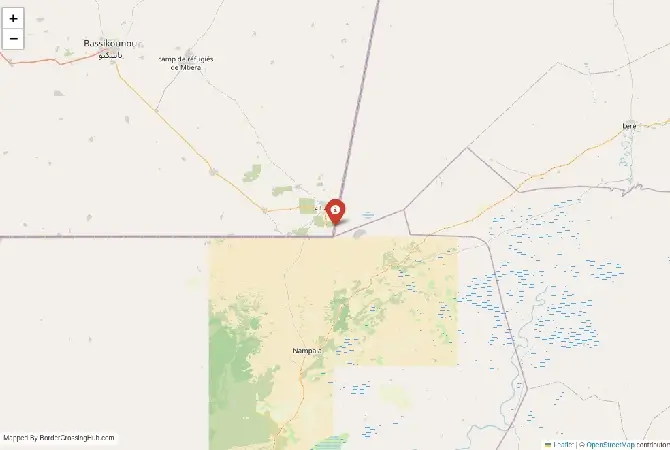
Adel Bagrou & Bassikounou area remains a remote and unpredictable Mauritania-Mali frontier route, with no significant September reopening or closure identified. The Bassikounou area is also heavily shaped by cross-border displacement and the large refugee population in southeastern Mauritania. The wider Mauritania-Mali border remains subject to serious security concerns, with Mauritanian authorities restricting some cross-border movement for security reasons. Travelers should therefore confirm both security conditions and local permission before attempting a route through this area.
About this crossing
This route is sometimes called the Adel Bagrou Border on the Mauritanian side and the Bassikounou Crossing on the Malian side. In reality, it functions more as a loosely defined frontier than a clearly organized checkpoint for international travelers.
A border shaped by nomadic routes and modern instability
For centuries, this part of the Sahel was crossed by nomadic groups moving livestock and goods between seasonal مناطق. The border drawn during the colonial period divided these routes between what became Mauritania and Mali.
Nearby Border Crossings




Today, those historical connections still exist, but they are overshadowed by modern challenges. The Bassikounou area in Mali has been affected by instability and displacement, while southeastern Mauritania has seen increased security measures along its frontier.
Trade continues, mostly informal and small-scale, but the environment has changed significantly over the past decade.
What you will encounter at the crossing
Do not expect a conventional border post. In Adel Bagrou, administrative presence exists but is limited. Immigration procedures may be handled in small offices, and their availability can vary.
On the Malian side, the Bassikounou area is even less structured. You may not find a clearly marked immigration facility, and movement can depend on local conditions and security الوضع at the time.
This is not a crossing where you follow a clear sequence of steps. You may need to ask for directions and confirm procedures locally.
Border procedures and entry requirements
You are still required to complete exit and entry formalities, even if the process feels informal. Starting in Mauritania, you must locate officials in Adel Bagrou to stamp out.
Crossing into Mali is more uncertain. Even with a valid visa, entry may depend on current security conditions and the presence of authorities. Smaller crossings like this do not reliably offer visa-on-arrival options, so you should arrange your documents in advance.
Processing times are unpredictable. If everything aligns, you might complete the process within 30 minutes. However, delays of several hours are not unusual, particularly if officials are not immediately available.
Transport and access difficulties
Reaching Adel Bagrou involves traveling through remote Sahel terrain. Roads are often unpaved and can be in poor condition. During certain times of year, sections may become difficult to pass.
Public transport is limited. Shared vehicles operate irregularly, and you may need to rely on local arrangements or private transport.
On the Malian side, access to and from the Bassikounou area is even more challenging. Transport options are scarce, and routes may be affected by security concerns.
You should not assume you will find immediate onward travel after crossing.
Seasonal impact on travel
The Sahel climate adds another layer of difficulty. During the rainy season, typically from June to September, roads can become muddy and partially flooded, slowing travel significantly.
In the dry season, heat and dust dominate. Temperatures can rise sharply, and long distances without shade or services make travel physically demanding.
Seasonal conditions can also influence whether routes are passable at all.
Security risks and serious concerns
This is a high-risk المنطقة. The border area has been affected by armed groups, banditry, and regional instability. Security forces maintain a presence, but coverage is not uniform.
Travel advisories from many governments warn against all travel to parts of eastern Mauritania and western Mali, including areas near this crossing.
You should not attempt to cross without up-to-date information from official sources. Conditions can change rapidly, and routes that appear open may become restricted without notice.
Kidnapping risks and attacks on vehicles have been reported in broader regions, making independent travel particularly risky.
Nearby settlements and limited services
Adel Bagrou is a small town with basic amenities. You may find simple food options and limited accommodation, but services are minimal.
The Bassikounou area in Mali has been affected by displacement, and infrastructure is limited. It is not a place where you should expect tourist facilities or reliable services.
Larger towns in Mauritania provide better support, but they are far from the border.
Cultural context and cross-border ties
Despite current challenges, the region reflects long-standing cultural connections. Communities on both sides share languages, traditions, and economic روابط that predate national borders.
You may encounter herders, traders, and families moving within the المنطقة, maintaining patterns of life that have existed for generations.
However, these connections now exist alongside significant security concerns that affect travel.
Practical advice before considering this route
You should avoid planning to cross here unless absolutely necessary and properly authorized. If your journey requires travel between Mauritania and Mali, safer alternatives should be considered.
If you are in the region, stay informed about current conditions, avoid unnecessary movement toward the border, and coordinate with local authorities if required.
Carry essential supplies, including water, food, and communication tools. Services are sparse, and delays can be significant.
Travel during daylight hours only, and avoid moving alone.
Final note
A crossing defined by risk and uncertainty
The Adel Bagrou–Bassikounou border area is not a practical option for most travelers. Its combination of remoteness, limited infrastructure, and security concerns makes it one of the more challenging frontiers in West Africa.
Understanding its context is valuable, but for travel planning, it is best approached with caution or avoided entirely in favor of more stable routes.
View all border crossings between Mauritania and MaliPractical information
Fuel
Mauritania: 2 km - Mali: 2 km
Currency
MRU,XOF limited
Safety information
Sahel zone, checkpoints
Connectivity
Roads, minibuses
Have you crossed here?
Help other travelers by sharing your experience, wait times, and any updates.