
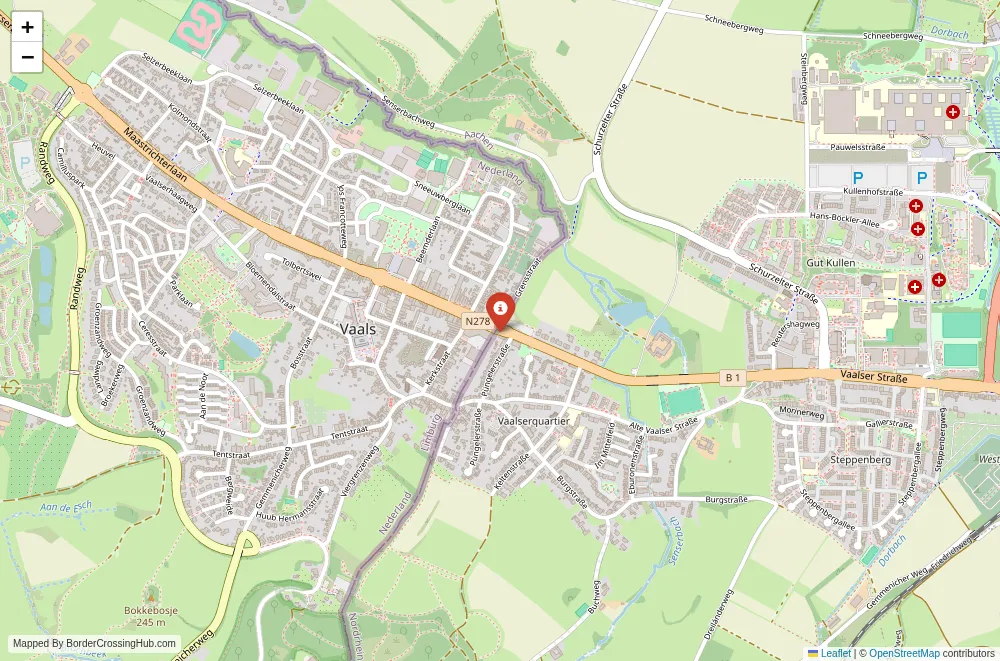
Approximate Border Location
Border Countries
- 🇩🇪Germany
- 🇳🇱Netherlands
Border Cities
- 🇩🇪Aachen
- 🇳🇱Vaals
Wait Times
Cars 0-10m; peaks 15-45m commute
Just crossed? Tap to report:
Operating Hours
Open 24 hrs (12:00 AM-11:59 PM)
Crossing Types
Ped,cars,bikes,buses; no routine checks
Border Type
Land crossing via city streets
Peak Times
07:00-09:00 AM; 04:00-06:30 PM
Daily Crossings
40,000-140,000/day
Currency Exchange
EUR only; ATMs everywhere
Safety Information
Urban congestion; occasional controls
Languages Spoken
Dutch/German
Accessibility Features
Step-free routes; accessible buses
About Aachen & Vaals
The Aachen-Vaals border forms one of the most famous and accessible spots in Europe where you can cross from Germany into the Netherlands in just a few steps, right next to the tripoint with Belgium.
Alternative Names
This crossing is commonly called the Vaals-Aachen border, the Vaals Grenze, the Aachen-Vaals grensovergang, or simply the road from Aachen to Vaals. The area is often associated with the nearby Drielandenpunt (Three Country Point / Dreiländereck / Trois Frontières).
Current Status and Safety Note
Germany and the Netherlands are both in the Schengen Area, so this border remains open with no permanent checkpoints or routine passport controls. You drive, walk, or cycle across freely under normal conditions. Germany has maintained temporary spot checks at various borders, including with the Netherlands, since late 2024 for migration and security reasons; these are random, targeted, and infrequent on smaller roads like those linking Aachen to Vaals. The area feels safe and integrated, with locals crossing daily without issue. No widespread scams or safety problems are reported for casual visitors.
Historical Background
The Germany-Netherlands border here was largely finalized in the 19th century through treaties between Prussia and the Netherlands, with the southern section from Losser down to Vaals delimited in agreements around the 1860s. The tripoint at Vaalserberg (where Germany, Netherlands, and Belgium meet) marks the end of this land border segment. The region around Aachen and Vaals has deep historical ties, with the border area growing together after World War II as controls disappeared. Vaals itself became a popular spot for the symbolic three-country point, drawing visitors to stand in three nations at once.
Geopolitical and Economic Role
This crossing sits in a densely integrated tri-border region where Germany, the Netherlands, and Belgium blend seamlessly. Aachen (Germany) and Vaals (Netherlands) function almost as twin towns, with people commuting, shopping, and socializing across the line daily. The nearby Drielandenpunt draws tourists who want to experience three countries in minutes. Local economies benefit from cross-border retail, dining, and tourism rather than heavy freight, which uses larger motorways.
Visa Requirements for Foreign Visitors
Schengen rules apply to both Germany and the Netherlands. If your nationality qualifies for visa-free entry, you need only a valid passport or national ID. Most non-EU visitors receive 90 days within any 180-day period across the area. Carry your travel document at all times, as random spot checks can occur anywhere in the border zone, though they are uncommon on footpaths or small roads.
Crossing Procedures Step by Step
Multiple small roads connect Aachen to Vaals, such as the single-lane route from Aachen’s Laurensberg or Orsbach districts straight into Vaals. You drive across with no barriers or booths; a border marker or sign may appear briefly. For pedestrians and cyclists, paths and quiet roads lead directly from Aachen into Vaals, often through residential areas or woods. No forms or officials are present under routine conditions. The reverse direction is identical. At the nearby Drielandenpunt (a short walk or drive from Vaals), you walk around a concrete marker or stone pillar and cross into Belgium and back within steps.
Typical Wait Times and Peak Periods
Wait times are essentially zero most days. You cross instantly. Summer weekends, holidays, and good weather bring more tourists to the tripoint, creating minor crowds around the marker and parking areas. Random German spot checks might briefly stop a few vehicles but rarely cause noticeable delays here.
Operating Hours
The roads and paths stay open 24 hours a day, every day of the year, as normal public infrastructure.
Transportation Options to and From the Border
From Aachen city center, take bus lines like ASEAG 11, 21, 36, or 55 toward Vaals (some go directly to Vaals bus station). The ride takes about 20-30 minutes. From Vaals, bus 350 connects back to Aachen (often hourly or better). Driving is straightforward via local roads. Cycling works excellently on quiet lanes and forest paths. Trains reach Aachen Hauptbahnhof, then a bus or walk covers the rest.
Road Conditions and Scenery
The connecting roads are narrow but paved and well-maintained, winding through residential neighborhoods, fields, and forested hills. The Vaalserberg area offers gentle slopes (the highest point in mainland Netherlands at about 322 meters) with oak and pine woods. Views include rolling countryside and distant city outlines. The tripoint itself sits in a wooded park-like setting with paths and open space.
Seasonal Variations and Weather Impacts
Summer draws the biggest crowds for photos at the tripoint. Winter can bring ice on smaller roads or paths, and shorter daylight limits exploration. Rain makes forest trails muddy but rarely blocks access. The area remains passable year-round.
Nearby Attractions
Vaals offers a small town atmosphere with shops and cafes. The Drielandenpunt features the border marker, a large hedge maze (Labyrint Drielandenpunt), observation tower views, and walking trails. Aachen provides a historic center with its cathedral, thermal baths, and university vibe. Nearby forests and paths suit short hikes or bike rides across the three countries.
Common Scams and Warnings
Scams are virtually nonexistent in this tourist-friendly spot. The main annoyance is parking fees or crowds at the tripoint during peak times. Random German border checks focus on vehicles and are not aggressive toward tourists. Keep valuables secure in busy areas.
Travel Tips and Preparation
Use a map app to find the exact roads or paths from Aachen to Vaals. Bring your passport/ID and some cash or card for parking or maze entry. Wear comfortable shoes for walking around the tripoint or forest trails. Check bus schedules via 9292.nl or local apps. Combine the crossing with a visit to Aachen’s sights or a short hike for the full experience.
Cultural and Economic Significance
This border area shows how completely open Schengen frontiers can create shared communities. People live, work, and play across the line without noticing it. The tripoint has become a lighthearted symbol of European unity, letting visitors playfully hop between countries in seconds.
Final Planning Advice
Confirm any temporary German spot-check status through official sources if concerned, though it rarely impacts this area. Bring your documents, head to Vaals by bus or car, and enjoy the easy fun of crossing borders on foot. This spot delivers one of Europe’s simplest and most memorable country-hopping moments. Safe travels.
No reviews yet.