Monthly Update (September 2026):
Kyrgyz–Kyshtak & Rishtan remains a smaller crossing through the Ferghana Valley, with no major September disruption reported. The route continues to be most useful for travelers already moving between southern Kyrgyzstan and the Uzbek Ferghana Valley, rather than as a primary international gateway.
About this crossing
Location and Connections
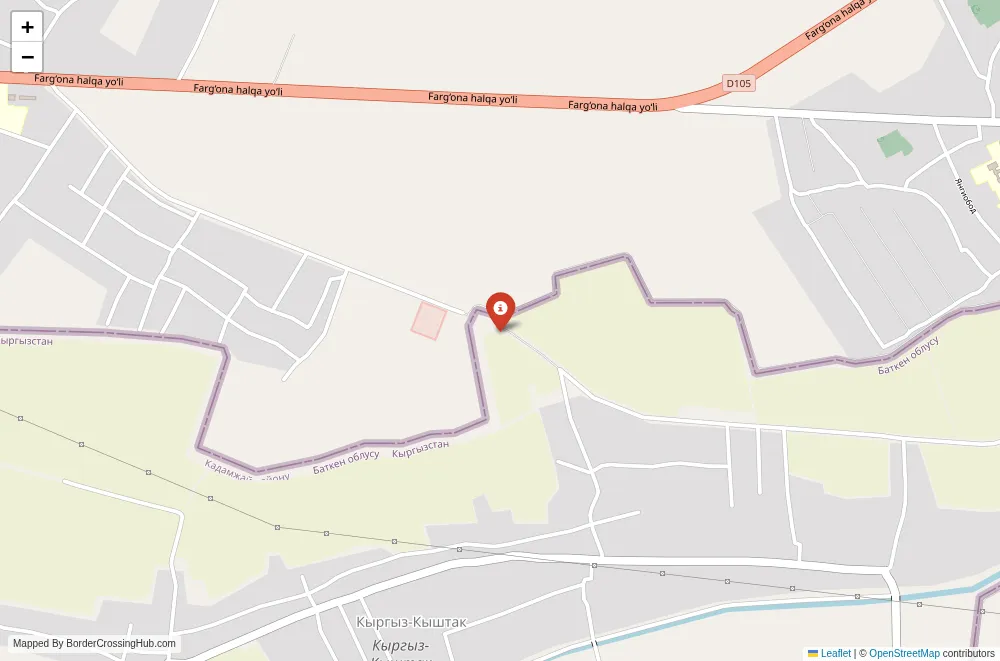
Kyrgyz-Kyshtak village sits in Kyrgyzstan's Kadamjay district within Batken oblast, close to mining communities and rural settlements, at an elevation around 500 meters with coordinates placing it near the Uzbek line. Rishtan lies in Uzbekistan's Fergana province, famous for pottery and about 8-10 km from the crossing, connecting to Fergana city (roughly 40-50 km) or Margilan. From Kyrgyzstan, local roads from Kadamjay or Batken lead to the post; on the Uzbek side, paved routes continue to Rishtan and beyond. The area features flat valley farmland, orchards, low hills, and proximity to industrial/mining influences. Vehicles and pedestrians cross, with a short no-man's-land separating immigration points.
Historical and Geopolitical Background
The Ferghana Valley borders trace to Soviet administrative divisions of the 1920s-1930s, which assigned territories based on ethnicity and resources, resulting in a convoluted patchwork of lines, enclaves, and disputes. Kyrgyz-Kyshtak-Rishtan emerged amid these complexities, with occasional tensions over access, water, and land. Post-independence, the area saw periodic restrictions due to security or bilateral strains. The 2022 delimitation treaty significantly stabilized the frontier, resolving segments and fostering cooperation. Rishtan's pottery tradition dates centuries, tied to Silk Road heritage, while Kyrgyz-Kyshtak reflects rural Kyrgyz life near mining zones. Fun fact: the valley's borders once split families and fields, with enclaves like Sokh nearby adding layers until recent agreements clarified access.
Nearby Border Crossings

Current Status and Operating Hours
As of early 2026, Kyrgyz-Kyshtak-Rishtan appears in border lists but functions mainly for locals, with limited confirmation of routine foreign use; traveler sources prioritize Dostuk or other points for international passage. Hours restrict to daylight (approximately 8:00 a.m. to 6:00 p.m., with possible variations). The valley endures hot summers (dust and dehydration risks), occasional rain muddying approaches, and rare winter fog. No major 2026-specific disruptions noted here, though smaller crossings remain adjustable. Post-delimitation progress has improved valley mobility overall. Verify via Kyrgyz Border Service, Uzbek authorities, or recent updates before travel.
Crossing Procedures Step by Step
You exit one country then enter the other. From Kyrgyzstan to Uzbekistan: Kyrgyz post at Kyrgyz-Kyshtak requires passport exit stamp and basic questions. Cross the brief neutral zone to Rishtan Uzbek immigration for entry stamp, customs scan, and purpose inquiries. Reverse mirrors this. Manual processing prevails, with occasional vehicle or bag checks; foreigners may receive extra scrutiny at less-visited points. Wait times average 30-90 minutes, shorter off-peak. Pedestrians clear faster; vehicles undergo insurance/compliance verification. Minor facilities mean fewer lanes, so timing matters.
Visa Requirements for Foreign Visitors
Kyrgyzstan allows visa-free entry or e-visas for most nationalities (up to 60 days for many Western passports). Uzbekistan requires e-visas for nearly all foreigners (apply online ahead, $20-50 USD fee, 2-3 days processing; no visa-on-arrival at land borders). Print e-visa confirmation; carry passport copies and photos. Six-month validity applies; restricted nationalities need extras. Smaller crossings enforce rigorously; mismatches cause denials. Confirm via embassies or portals, as post-treaty rules hold steady but enforcement varies.
Transportation Options and Road Details
Shared taxis or private cars from Batken/Kadamjay reach Kyrgyz-Kyshtak (1-2 hours on mixed paved/rural roads with checkpoints). Uzbek taxis head to Rishtan/Fergana. No direct buses cross routinely; arrange onward locally. Roads include highways near towns but rural/mining sections rougher—potholes, dust after rain, agricultural traffic. Full Batken-Fergana trip takes several hours plus border. Daylight travel recommended for safety and conditions.
Scams & Warnings
Local focus reduces tourist scams, but poor exchange rates (change elsewhere) or inflated fares near posts occur. Unofficial "assistance" may appear; stick to official processes. Valley stability improved post-treaty; no recent incidents at this point, though foreigners attract questions. Avoid unofficial paths to prevent guard issues. Monitor news for tensions; register embassies, carry contacts. Low crime but caution in rural/industrial zones.
Nearby Attractions and Practical Tips
Kyrgyz-Kyshtak/Kadamjay offers rural Kyrgyz insights and valley walks. Rishtan shines with pottery: visit workshops for traditional blue-glazed ceramics, a centuries-old craft. Fergana/Margilan provide silk factories, markets, architecture. Carry USD cash (fees/exchange), water, snacks, sunscreen, passport copies. Start early; consider Dostuk backup. Translation apps help communication.
Final Notes for Planning
Kyrgyz-Kyshtak-Rishtan acts as a regional Ferghana Valley link with post-delimitation calm, though less tourist-focused. Confirm status, secure e-visas/docs early, prepare for procedures. It enables direct passage across this intricate, heritage-rich frontier. Safe travels.
View all border crossings between Kyrgyzstan and UzbekistanPractical information
Fuel
Kyrgyzstan: 2 km - Uzbekistan: 2 km
Currency
KGS; UZS; USD common; ATMs in towns
Safety information
Queues common; watch valuables
Connectivity
Wi-Fi points; 4G
Have you crossed here?
Help other travelers by sharing your experience, wait times, and any updates.