Monthly Update (September 2026):
Schaffhausen & Stein am Rhein remains a useful northern Switzerland–Germany connection, with no major September disruption identified. The latest available September traffic picture for the wider Schaffhausen area shows generally free-flowing conditions, although individual crossings can change quickly during commuter periods. Travelers should still keep their documents ready for possible customs or police checks.
About this crossing
Location and Connections
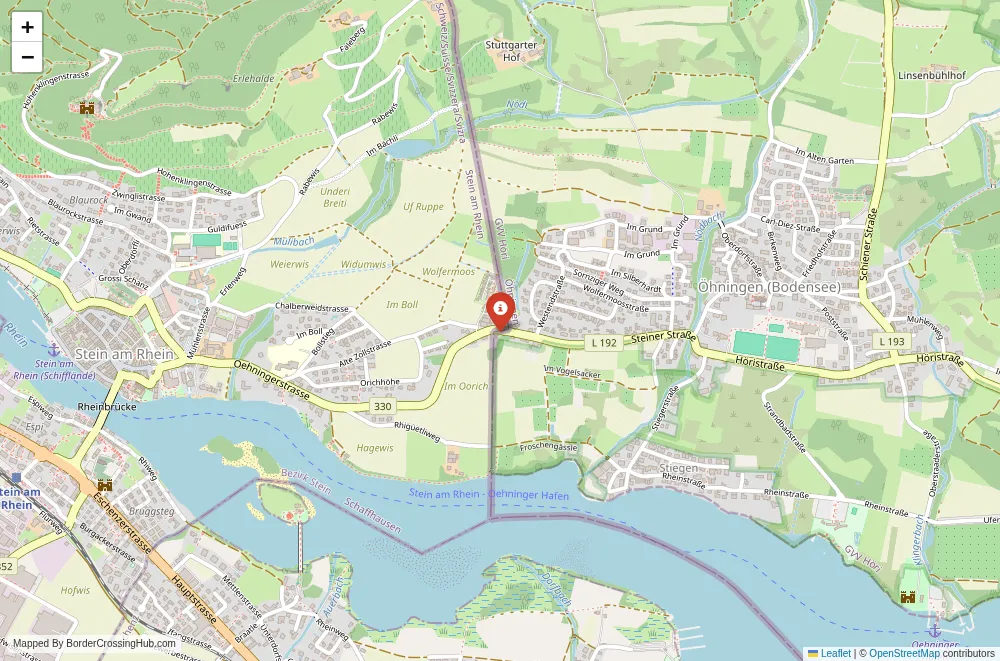
You find this crossing along the High Rhine (Hochrhein) where the canton of Schaffhausen, Switzerland, borders the German district of Konstanz. The main road link follows Swiss Route 4 (or local roads) from Schaffhausen city toward Stein am Rhein, with the border running along or near the Rhine itself in several places. Stein am Rhein sits at the Rhine's exit from Lake Untersee (part of Lake Constance), with the southern part of its municipality on the Swiss side and nearby German territory to the north and east. From Schaffhausen, Stein am Rhein lies about 20 to 30 minutes east by car or train. Rail line connects Schaffhausen to Stein am Rhein station, with some services extending toward Singen in Germany. Buses, such as line 33 from Südbadenbus, link Stein am Rhein to Singen (Hohentwiel) railway station in Germany. The area forms part of the tripoint region near Lake Constance (with Austria farther east), popular for lake cruises, cycling paths along the Rhine, and cross-border day trips.
Alternative Names
It appears as the Schaffhausen-Stein am Rhein border crossing, Stein am Rhein border with Germany, or Hochrhein crossings near Schaffhausen/Stein am Rhein. Some references tie it to the German district of Konstanz or nearby Ramsen/Hemishofen areas in Schaffhausen canton.
Nearby Border Crossings


Historical Background
The High Rhine has defined this frontier for centuries, shaped by medieval trade, Habsburg influence, and 19th-century treaties that fixed the line amid salt and river commerce. The canton of Schaffhausen lies mostly north of the Rhine (an unusual Swiss protrusion), with Stein am Rhein's southern section staying Swiss while the river marks the divide. Post-WWII, the border stayed open under Swiss neutrality, with customs easing until Schengen in 2008 (Switzerland's full entry). The region preserves medieval architecture in Stein am Rhein and Schaffhausen, reflecting shared Alemannic heritage despite the political split. The Rhine's role as a trade artery historically fostered close ties, even as the border created enclaves and curiosities like the nearby Büsingen German exclave surrounded by Schaffhausen.
Geopolitical Context
Schengen since 2008 normally eliminates routine passport and customs controls for EU/Swiss citizens and visa-exempt travelers. Germany maintains temporary internal border controls due to migration, smuggling, and security. As of February 10, 2026, these extend at least through March 15, 2026, with Bundespolizei random spot inspections at land borders, including Switzerland crossings. Switzerland occasionally heightens checks for security or traffic, but no widespread temporary controls apply here. Spot checks focus on irregular migration or goods; the Rhine crossings see lighter enforcement than motorways. No permanent booths exist; controls are mobile or at select points. The border follows the Rhine's main channel, with Stein am Rhein's position keeping it fully Swiss south of the river.
Practical Crossing Procedures
You drive, walk, or ride across Rhine bridges or local roads with border markers or signs. On roads, proceed straight; pedestrians use sidewalks or paths. Temporary German measures may prompt random stops for ID checks, travel questions, or vehicle review. EU/Swiss citizens show passport or national ID. Non-EU nationals need valid passports, visas/Schengen entry if required, and proofs like accommodation. Carry vehicle insurance; Swiss motorway vignette needed if continuing on highways (local Rhine roads often vignette-free). Rail passengers face rare onboard checks. Switzerland not in EU customs union means declare goods over allowances.
Typical Wait Times
Normal passage takes seconds to minutes. Random checks add variability: most clear quickly, but selected stops or peaks (tourist weekends, events) can cause 10 to 30 minute delays on bridges or roads. Foot crossings in town often face no waits. Rail and pedestrian paths stay smooth.
Operating Hours
Roads, bridges, and rail operate 24/7 year-round. Schengen removed fixed hours. Winter weather or rare events might slow access briefly, but crossings remain open.
Transportation Options and Road Conditions
Drive across Rhine bridges; regional trains connect Schaffhausen to Stein am Rhein, with extensions to Singen in Germany. Buses link the area. Roads offer good pavement with urban and river valley traffic; bridges have lanes for cars/bikes. Scenery includes Rhine views, Lake Untersee, and medieval towns. Watch for cyclists, boats, or lake traffic.
Scams & Warnings
Scams stay rare in this integrated border area. No common touts or fake services reported. Watch for parking fees or informal changers with poor rates. Carry ID for spot checks. The area feels safe and binational; drive attentively in urban traffic.
Nearby Attractions
Stein am Rhein features colorful medieval frescoes, half-timbered houses, and a historic bridge over the Rhine. Schaffhausen offers Munot Fortress, old town, and Rhine Falls nearby. The region includes Lake Constance boat trips, cycling along the High Rhine, and cross-border paths to German towns like Singen. The area suits historic walks, river cruises, or day trips exploring Swiss-German border curiosities.
Seasonal Variations and Weather Impacts
Winter brings snow; roads clear quickly but lake activities reduce. Summer sees crowds and clear weather. Autumn offers mild days and foliage. Rain can slick bridges, but closures stay rare.
Travel Tips and Preparation
Carry passport/ID for spot checks. Use cross-border transport apps. Pack layers for river weather. Check police sites for control updates. Enjoy the seamless town feel.
Cultural and Economic Significance
The crossing supports binational life in the High Rhine region: shared tourism, trade, and daily cross-border flows. Stein am Rhein and Schaffhausen thrive on visitors drawn to medieval charm and Rhine scenery, with the river uniting rather than dividing communities.
Before You Cross
Verify spot check status and traffic from official sources near your travel date. With prep for rare stops and relaxed pace, you navigate this riverine crossing and discover the medieval magic of Schaffhausen and Stein am Rhein. Safe travels.
View all border crossings between Switzerland and GermanyPractical information
Fuel
Switzerland: <1 km - Germany: <1 km
Currency
EUR; CHF nearby towns; ATMs
Safety information
Rural roads; occasional police checks
Connectivity
Wi-Fi points; 4G
Have you crossed here?
Help other travelers by sharing your experience, wait times, and any updates.