Monthly Update (October 2026):
Monontsa Pass & Monontsa Pass Border Crossing remains a minor mountain route between Lesotho and South Africa in October. There is no significant new closure reported this month, but the route remains more sensitive to mountain weather than the major lowland crossings. Travelers should check conditions before setting out, particularly as October weather can change quickly in the highlands.
About this crossing
A History of a Herder's Path
The history of this crossing is the history of the Basotho herders and their ancient paths through the mountains. For centuries, the high mountain pastures (molapos) of this region have been used by the Basotho for grazing their livestock in the summer months. The route over the Monontsa Pass was a traditional footpath for these herders. The modern border is a colonial legacy, a line drawn through this mountainous wilderness. The formalization of the crossing as a border post is a more recent development, a pragmatic measure to provide a legal crossing point for the isolated communities in this far northern corner of Lesotho. It has never been a major route for trade or transit. Its character has always been that of a remote, local link, a place where the modern state has a very light footprint. It is a border that is defined by the ancient rhythms of pastoral life and the formidable geography of the high Maloti.
The Border Crossing Procedure: A Basic and Rustic Affair
This is a very quiet border, and the process is generally very relaxed and personal. The border is open from 08:00 to 16:00, and it is essential to check the current operating times before you travel, as they can be limited. Exiting South Africa: The South African immigration and customs post is a very basic facility, likely a small, simple building or a caravan, located at the bottom of the pass. You will present your passport and get your exit stamp. The process will be manual, with your details recorded in a ledger. The officials are generally friendly and may be surprised to see a foreign traveler. The Pass: You will then begin the long, steep, and winding climb up the gravel road of the Monontsa Pass. The road is rough and requires a high-clearance vehicle, and a 4x4 is strongly recommended, especially after rains. The views are spectacular. Entering Lesotho (Monontsa): The Lesotho post is located at the top of the pass. It is an equally basic facility. You will go to the immigration office and present your passport. For most nationalities, Lesotho offers visa-free entry. The officer will stamp your passport. The customs check is usually a very informal and brief formality. The entire process on both sides can often be completed in less than 30 minutes, but the journey up the pass will take much longer.
Nearby Border Crossings

Route, Onward Travel, and Extreme Challenges
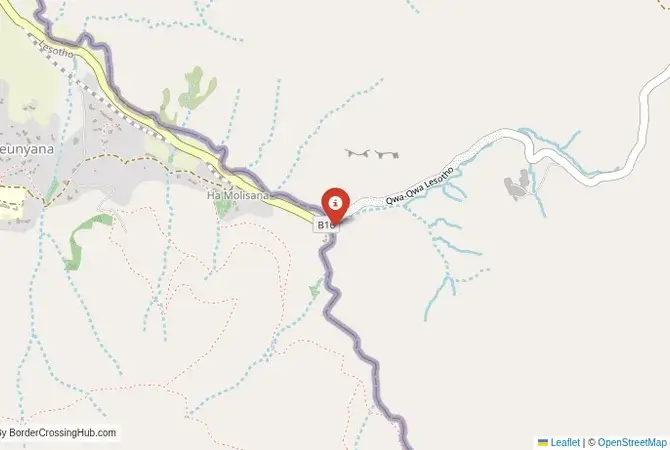
This crossing is for 4x4 vehicles and adventure motorcycles only. On the South African side, the pass is located near the Golden Gate Highlands National Park and the town of Phuthaditjhaba (QwaQwa). The road to the pass is a mix of paved and gravel roads. On the Lesotho side, the road from the border is a rough, unpaved track that winds its way through the remote northern highlands. It eventually connects to the main A1 highway, but the journey is a long, slow, and arduous one. There is no public transport on this route. You must be completely self-sufficient with fuel, food, water, and vehicle recovery equipment. The main challenge is the road condition, which can be very poor and is subject to washouts and snow in the winter. This is a journey into a true wilderness, and you must be prepared for any eventuality. Getting stuck or breaking down here is a very serious situation.
Final Planning Advice for a High-Altitude Adventure
The Monontsa Pass crossing is a true overland expedition. It is not a border for tourists in a regular car, but for serious, well-equipped adventurers. The logistical challenges are significant. The key to using this crossing is to have a very capable 4x4 vehicle and to be completely prepared for a multi-day, self-sufficient mountain journey. It is absolutely essential to check the current operating hours of the border and the condition of the pass before you set out. The reward is a journey through one of the most remote, beautiful, and untouched parts of the Maloti-Drakensberg mountains. It is a border that offers a sense of discovery and a deep connection to the wild, rugged landscape. It is a passage for the true explorer, a quiet and beautiful gateway into the deep, high heart of the Mountain Kingdom.
View all border crossings between South Africa and LesothoPractical information
Currency
Available near Caledonspoort (ZAR, LSL)
Safety information
Generally safe, traffic moderate
Connectivity
Limited mobile signal; no Wi-Fi
Have you crossed here?
Help other travelers by sharing your experience, wait times, and any updates.