Monthly Update (September 2026):
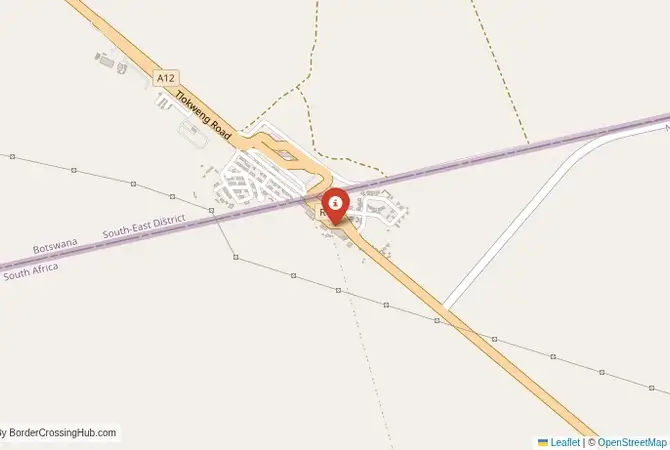
Kopfontein remains a major South Africa-Botswana road gateway and an important route between Pretoria and Gaborone. South Africa currently lists Kopfontein as operating around the clock, while ongoing bilateral work between the two countries is aimed at improving the movement of people and goods through key border posts. There is no significant September closure reported, although freight traffic can still add delays during busy periods.
About this crossing
A History of a Capital's Gateway
The history of this crossing is the history of the city of Gaborone itself. When Botswana became independent in 1966, it was one of the poorest countries in the world, and its new capital, Gaborone, was a tiny administrative village. The discovery of diamonds transformed the country's fortunes, and Gaborone grew into a modern, prosperous, and well-planned city. The Tlokweng border crossing, located right on the edge of the expanding capital, grew with it. It became the most convenient gateway for residents of Gaborone to access the nearby towns and services in South Africa, and for South African businesses and visitors to reach the new capital. The crossing is a powerful symbol of Gaborone's remarkable growth and its deep economic and social integration with its powerful southern neighbor. The chronic congestion at the border is a direct result of this success, a sign of the immense volume of interaction that takes place between the two nations every single day. It is a border that is a victim of its own popularity.
The Border Crossing Procedure: A Busy and Often Congested Process
The border is open from 06:00 to 24:00. It is not a 24-hour crossing. The process is professional, but the high volume of traffic often leads to long queues and significant delays, especially on weekends and public holidays. Exiting South Africa (Kopfontein Gate): You will arrive at the South African border post. You will go to the immigration hall. For most nationalities, South Africa offers visa-free entry. The officer will check your passport and provide an exit stamp. After immigration, you will proceed to the customs office. The officials will check your vehicle's documents. They are particularly strict about ensuring that vehicles have the correct registration papers and cross-border authorization. The No-Man's-Land: After clearing the South African side, you will drive a short distance to the Botswanan side. Entering Botswana (Tlokweng): You will arrive at the Botswanan border post. You will go to the immigration hall and get your passport stamped for entry. The customs process for vehicles involves paying a road tax and having the correct insurance. A key feature of this border is the veterinary control. You will have to go through a foot-and-mouth disease control point. The entire process is formal but can be very time-consuming due to the long queues.
Nearby Border Crossings

Route, Onward Travel, and Alternatives
This crossing is on the main road from the South African town of Zeerust to Gaborone. On the South African side, the road connects to the main N4 highway, which leads to Pretoria and Johannesburg. On the Botswanan side, the border is right on the edge of the capital city. For those without a car, there are numerous bus and minibus services that run from Johannesburg and Pretoria to Gaborone that use this crossing. However, due to the frequent congestion at Tlokweng, many of the major international bus companies (like Intercape) prefer to use the slightly longer but often faster route via the Pioneer Gate-Skilpadshek crossing to the west. For travelers with their own vehicle, it is always a good idea to check the live traffic situation before deciding which of the Gaborone-area borders to use. The Ramatlabama crossing to the south is another, 24-hour alternative, though it is a longer drive from Johannesburg.
Final Planning Advice for the Capital's Gateway
The Kopfontein-Tlokweng crossing is a major, busy, and often congested urban border. It is the most direct gateway between Gaborone and South Africa. The key to a successful crossing is to be prepared for a long wait, especially if you are traveling at a peak time. Have all your documents in order, especially your vehicle registration and cross-border authorization letters if you are driving. Be prepared for the mandatory veterinary checks. If you are traveling by bus, be aware that your journey time can be significantly affected by delays at the border. This crossing is a journey into the heart of the integrated southern African economy. It is a place that powerfully illustrates the deep, daily connections that bind the capital of Botswana with the economic powerhouse of South Africa. It is a border that is defined by its constant, relentless, and vital flow of people.
View all border crossings between South Africa and BotswanaPractical information
Fuel
South Africa: <1 km - Botswana: <1 km
Currency
Limited near Kopfontein (ZAR, BWP)
Safety information
Generally safe, remote risks
Connectivity
Limited Wi-Fi, 3G
Have you crossed here?
Help other travelers by sharing your experience, wait times, and any updates.