Monthly Update (September 2026):
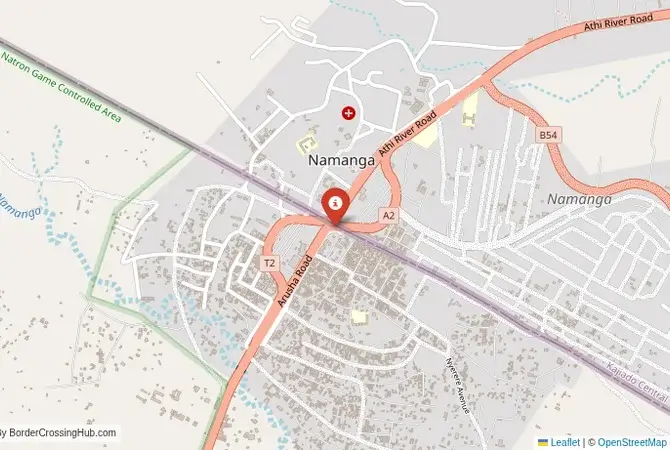
Namanga remains one of the principal Kenya-Tanzania road gateways and continues to operate as a One Stop Border Post. A joint Kenya-Tanzania livestock vaccination exercise has been running around the Namanga border, reflecting continued cross-border coordination in the area. This is not expected to disrupt ordinary passenger crossings, and there is no significant September closure reported.
About this crossing
A History on a Maasai Frontier
The history of this border is the history of the Maasai people and the colonial division of their traditional lands. The border between what became the British colony of Kenya and the German colony of Tanganyika (later Tanzania) was drawn by European powers in the late 19th century, cutting directly through the heart of Maasailand. The Maasai, a semi-nomadic pastoralist people, had traditionally moved freely with their herds across the vast plains, following the rains and the seasons in a way that paid no heed to lines on a map. The new border was a profound disruption to their way of life, though for many years it remained a porous and largely theoretical line. The town of Namanga grew up as a small administrative post on this new frontier. Its modern importance is a direct result of the growth of the safari tourism industry in the post-independence era. The route from Nairobi to Arusha became the main axis of this industry, connecting the Amboseli National Park in Kenya (famous for its large elephant herds against the backdrop of Kilimanjaro) with the "Northern Circuit" of Tanzania (Serengeti, Ngorongoro, Lake Manyara, and Tarangire). The Namanga crossing was upgraded into a massive, modern "One-Stop Border Post" to facilitate this vital, multi-billion dollar tourist economy, a piece of 21st-century infrastructure laid upon an ancient pastoralist landscape.
The Border Crossing Procedure: The One-Stop Border Post
The border is open 24 hours. The process is now consolidated into a large, modern One-Stop Border Post (OSBP), which has made the process much more efficient and streamlined than in the past. The One-Stop Process: The new OSBP is a massive, modern complex that houses the officials of both countries in a single building. The key principle is that you only stop once to do all your paperwork, eliminating the need to go through two separate, lengthy procedures. Exiting Kenya and Entering Tanzania: You will arrive at the OSBP. You will first go to the Kenyan immigration counter and get your passport stamped for exit. You will then walk a few meters to the Tanzanian immigration counter in the same hall. Here, you will present your passport. You can obtain a Tanzanian visa on arrival for most nationalities. You will need to fill out a form and pay the visa fee in US dollars (the fee varies by nationality, e.g., $100 for US citizens, $50 for most others). You will also need your yellow fever vaccination certificate. After getting your Tanzanian entry visa and stamp, you will go through a single customs check for your luggage. The process is designed to be linear and efficient. Exiting Tanzania and Entering Kenya: The process is the same in reverse. You will get your Tanzanian exit stamp and your Kenyan entry stamp (visa on arrival is also available for Kenya) in the same building. The entire process is designed to be as smooth as possible for the large volume of tourist traffic.
Nearby Border Crossings




Route, Onward Travel, and The Safari Circuit
This crossing is on the main A104/A2 highway. The road from Nairobi to the border (about 3-4 hours) is a good, paved highway. The road from the border to Arusha (about 1.5-2 hours) is also in excellent condition. The most common way for travelers to use this crossing is via one of the daily shuttle bus services that run between Nairobi and Arusha. These companies (like Riverside or Impala) are very experienced, comfortable, and they guide you through the border process, making it extremely easy. If you are on a pre-booked safari, your tour company will handle the crossing for you in their private vehicle. Arusha is the main safari capital of Tanzania, the place where almost all trips to the Serengeti and Ngorongoro begin. This makes the Namanga crossing the essential link for any traveler wanting to combine the wildlife experiences of both Kenya and Tanzania into a single, epic East African safari. The convenience of this crossing is a key factor in the popularity of the combined Kenya-Tanzania safari itinerary.
Final Planning Advice for the Safari Gateway
The Namanga crossing is a modern, efficient, and very tourist-friendly border. The One-Stop Border Post has made the process much smoother and more pleasant. The key to a successful crossing is to be prepared for the Tanzanian visa on arrival. Have the correct amount of clean, new US dollar bills for your nationality's visa fee. Also, have your yellow fever vaccination certificate readily accessible, as it is often checked. Taking one of the shuttle bus services is the most highly recommended and hassle-free way to make the journey. This border is more than just a formality; it is the grand entrance to the world's greatest wildlife spectacle. It is a place filled with the promise of adventure, a smooth and scenic passage into the legendary landscapes of the Serengeti and beyond. By being prepared, you can ensure your East African adventure begins with a simple and stress-free step across the line.
View all border crossings between Kenya and TanzaniaPractical information
Fuel
Kenya: <1 km - Tanzania: <1 km
Currency
Exchange near Namanga (KES, TZS)
Safety information
Safe, traffic moderate
Connectivity
Wi-Fi at checkpoints, 4G
Have you crossed here?
Help other travelers by sharing your experience, wait times, and any updates.