Monthly Update (September 2026):
Kasumbalesa remains one of the major pressure points on the Zambia-DRC freight corridor. Recent regional logistics reporting put crossing time from the Zambian side at around four days during periods of congestion, far longer than a normal passenger crossing. The heavy truck traffic is the main source of the problem, so travelers using Kasumbalesa should leave substantial time in their itinerary when freight volumes are high.
About this crossing
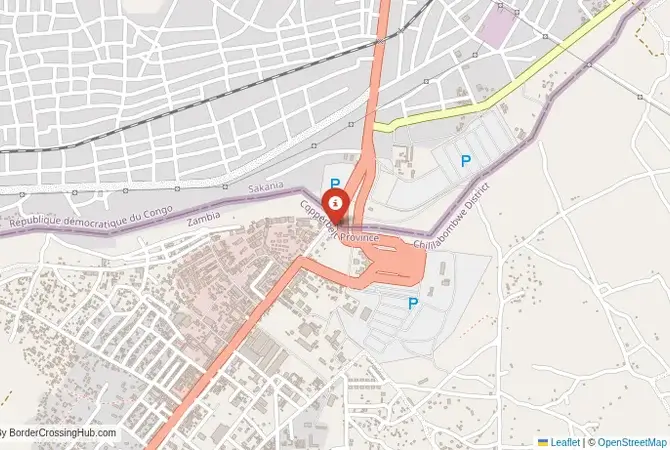
The Kasumbalesa Crossing: The Copperbelt Chokepoint
The border crossing at Kasumbalesa is the busiest and most important trade artery for the entire southern African mining industry. This is the main gateway on the "North-South Corridor," the route that connects the copper and cobalt mines of Zambia's Copperbelt and the DRC's Katanga province with the port of Durban in South Africa. This is not a border; it is a massive, sprawling, and often dysfunctional logistical nightmare. It is defined by the colossal queue of thousands of freight trucks, particularly those carrying copper and hazardous materials, which can wait for weeks to be processed. The atmosphere is one of intense, high-stakes commerce, immense frustration, and a constant, grinding chaos. For the very few adventurous travelers who attempt this route, it is one of the most challenging and intimidating border crossings in Africa, a passage into the wild, complex, and resource-rich heart of the continent.
A History of a Mining Frontier
The history of this border is the history of the Copperbelt, one of the richest mineral deposits on earth. The border is a colonial legacy, a line drawn by the British between their territories of Northern Rhodesia (Zambia) and the Belgian Congo. The line cut directly through a single, massive geological formation. The mining industries on both sides were developed by colonial powers and have always been deeply interconnected. The Kasumbalesa crossing grew as the main checkpoint on the road that linked the two halves of this industrial region. In the post-independence era, the crossing's fortunes have been tied to the political and economic stability of the two nations and the global price of copper. The chronic instability and wars in the DRC have often made the crossing a difficult and dangerous place. In recent years, efforts have been made to modernize the border post to cope with the massive increase in mineral exports from the DRC, but the fundamental problems of congestion and corruption remain.
Nearby Border Crossings





The Border Crossing Procedure: A Notorious and Difficult Process
The border is open 24 hours for commercial traffic but remains challenging for passengers with persistent delays. A bilateral agreement signed in December 2025 advances the establishment of One-Stop Border Posts including at Kasumbalesa, with the OSBP manual finalized and operationalization targeted toward 2027 to improve efficiency. The process is known for being extremely slow, bureaucratic, and rife with requests for unofficial payments. You must have your visas sorted in advance. Exiting Zambia: The Zambian side is relatively orderly. You will go through the immigration and customs procedures. The process is formal but can be slow. Entering DR Congo: The Congolese side is the major challenge. You must have a pre-arranged Congolese visa. Visas are not issued at the border. You will present your passport, visa, and yellow fever certificate to the immigration (DGM) officials. The process is notoriously slow and bureaucratic. You will likely be approached by "facilitators" who will offer to speed up the process for a fee. It is a very intimidating environment. The customs process for vehicles is also extremely complex and is a major source of delays and corruption. For any traveler, this is an extremely difficult process to navigate without the help of an experienced local contact or "fixer."
Route, Onward Travel, and Extreme Security Risks
This crossing is on the main highway between the Zambian Copperbelt city of Ndola and the DRC's second-largest city, Lubumbashi, the capital of the Katanga region. On the Zambian side, the road is paved and in good condition. On the Congolese side, the road to Lubumbashi is also paved. However, the security situation in the Katanga region is very volatile with ongoing concerns including for truck drivers especially at night. The area has a long history of secessionist movements and political violence. The risk of armed robbery and carjacking on the roads is very high. For those without a car, there are some bus services, but these are not recommended for foreign travelers. Any travel in this region requires a very high degree of security awareness. It is not a place for independent backpacking or self-drive tourism. The only reason for a foreigner to be using this crossing is typically for essential business in the mining sector, and this is always done with extensive security arrangements.
Final Contextual Note: A Border of Last Resort
The Kasumbalesa crossing is a vital economic artery, but it is a dysfunctional and dangerous border. It is a place that embodies the immense potential of the DRC's mineral wealth and the immense challenges of governance, corruption, and insecurity that prevent that wealth from benefiting the majority of its people. For the traveler, the message is clear: this is a border to be avoided. It is not a tourist route. Any journey into the DRC should be done by air, into a major city like Kinshasa or Lubumbashi, and with professional local support. The Kasumbalesa crossing is a journey into the deep end of Africa's logistical and security challenges, a route that is only for the most hardened and experienced of professionals, not for the adventurous traveler.
View all border crossings between Zambia and DR CongoPractical information
Fuel
Zambia: <1 km - DR Congo: <1 km
Currency
Exchange near Kasumbalesa (ZMW, CDF)
Safety information
Restricted, security risks
Connectivity
Wi-Fi at checkpoints, 4G
Have you crossed here?
Help other travelers by sharing your experience, wait times, and any updates.