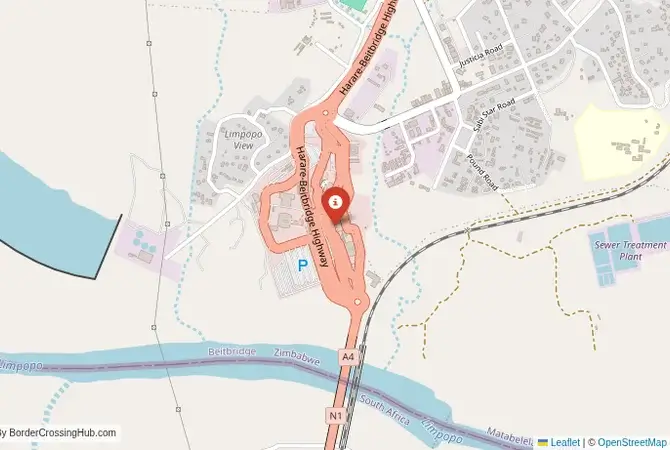
Monthly Update (October 2026):
Beitbridge & Musina remains one of southern Africa's busiest land borders, but there is no new October closure or broad passenger restriction reported. Zimbabwe has continued extending operating capacity during peak periods, while the modernized border complex is designed to handle heavy commercial traffic more efficiently. The crossing can still become congested when freight and passenger volumes rise, so travelers using Beitbridge & Musina should allow extra time rather than assuming the modern facilities guarantee a quick crossing.
About this crossing
A History of a Colonial Bridge and a Sanctions Frontier
The history of this crossing is the history of Cecil Rhodes's colonial ambitions. The Alfred Beit Bridge, opened in 1929, was a key part of his vision of a British-controlled Africa "from Cape to Cairo." It was the vital link between the colony of Southern Rhodesia and the Union of South Africa. The town of Beitbridge grew up around this strategic river crossing. During the era of international sanctions against the white minority regime in Rhodesia, the border became a tense frontline. After Zimbabwean independence in 1980, it became a major commercial gateway. Its importance grew even further after the end of apartheid in South Africa in 1994, as trade boomed. However, the economic and political collapse of Zimbabwe in the 2000s transformed the border again. It became a major route for millions of Zimbabweans seeking work and refuge in South Africa, and a major hub for informal, cross-border traders. The crossing has been massively upgraded in recent years, but the sheer volume of traffic and the complex political and economic situation mean that it remains a place of immense pressure and legendary congestion.
The Border Crossing Procedure: A Notorious Bottleneck
The border is open 24 hours, but the process is notoriously slow, chaotic, and can be very intimidating. Recent reports from late 2025 indicate average wait times of 4–12 hours for vehicles (longer during holidays), with occasional system outages and paperwork delays. It is essential to be prepared and to have a patient and assertive attitude. You must have the correct visas if your nationality requires them. Exiting Zimbabwe (Beitbridge): The Zimbabwean border post is a large, sprawling, and often chaotic complex. You will first go to immigration to get your passport stamped for exit. You will then proceed to customs. If you are in a vehicle, this is a multi-step process involving getting a temporary export permit and having your vehicle inspected. The process can be confusing, and you will be swarmed by "fixers" (touts) offering to help for a fee. It is best to politely but firmly decline and handle the process yourself. The Alfred Beit Bridge: You will then drive or walk across the historic bridge over the Limpopo River. The bridge is a constant traffic jam of trucks, buses, and pedestrians. Entering South Africa (Musina): The South African border post is a very large, modern, and high-security facility. You will go to the immigration hall. For most nationalities, South Africa offers visa-free entry. The officer will check your passport and provide an entry stamp. After immigration, you will go through a very thorough customs check. The officials are looking for illegal goods and undocumented immigrants. Your vehicle and luggage will be carefully inspected. The process is formal and can be very slow due to the huge volume of people.
Nearby Border Crossings




Route, Onward Travel, and Safety
This crossing is on the main N1 highway in South Africa and the A6 in Zimbabwe. The road connects the South African city of Polokwane with the Zimbabwean cities of Bulawayo and the capital, Harare. For those without a car, there are numerous direct international bus services (like Intercape and Greyhound) that run from Johannesburg to Harare and Bulawayo. This is by far the most highly recommended, safest, and most convenient way to cross this border. The bus companies are experts at the border procedures and handle much of the process for you. If you are driving, be aware that the area around the border, particularly at night, has a reputation for crime. It is not advisable to stop on the highway near the border. The town of Musina on the South African side and Beitbridge on the Zimbabwean side are rough border towns, and it is best to be vigilant.
Final Planning Advice for Africa's Busiest Border
The Beitbridge-Musina crossing is a major African overland challenge. It is a border that requires a high degree of preparation and mental fortitude. The key to a successful crossing is to use a reputable international bus service. This will insulate you from the worst of the chaos and the touts. If you must drive, be prepared for a very long, slow, and stressful process. Have all your documents in perfect order, and be patient but firm. This crossing is a journey into the very heart of southern Africa's economic and human geography. It is a powerful, overwhelming, and unforgettable experience, a true rite of passage for any serious overland traveler on the continent.
View all border crossings between Zimbabwe and South AfricaPractical information
Fuel
Zimbabwe: <1 km - South Africa: <1 km
Currency
Exchange near Beitbridge (USD, ZAR, ZiG)
Safety information
Exercise caution; heavy traffic and touts
Connectivity
Wi-Fi at checkpoints, 4G
Have you crossed here?
Help other travelers by sharing your experience, wait times, and any updates.