Monthly Update (September 2026):
Blagoveshchensk & Heihe has a significant seasonal disruption this month. Russia suspended the Blagoveshchensk-Heihe cargo ferry on August 19 because of high water levels on the Amur, with no firm restart date announced. Passenger services are a different matter: the international passenger route remains available, with scheduled crossings listed for September, while the newer road bridge also provides a year-round connection. Travelers should therefore distinguish the suspended freight ferry from passenger services when checking the crossing.
About this crossing
A History of a Contested Frontier
The history of this border is the history of the Russian expansion into the Far East and its relationship with the Chinese Empire. The Amur River was established as the border by the Treaty of Aigun in 1858, a treaty that China considers one of the "unequal treaties" of the colonial era. The city of Blagoveshchensk was founded as a Russian military outpost to secure this new frontier. The border has been a place of both peaceful trade and violent conflict, most notably during the Boxer Rebellion and the Sino-Soviet border clashes of the 1960s. In the post-Soviet era, the relationship has been transformed by commerce. Heihe has boomed, becoming a major center for "border tourism," where thousands of Russian visitors cross daily to shop for inexpensive Chinese goods. The two cities have developed a deep, symbiotic economic relationship. The recent construction of the first-ever road bridge and a cross-border cable car (under construction, checkpoint expected by end-2026) are testaments to the deepening of these ties. It is a border that has moved from a line of conflict to a bustling marketplace.
The Border Crossing Procedure: A Seasonal Journey
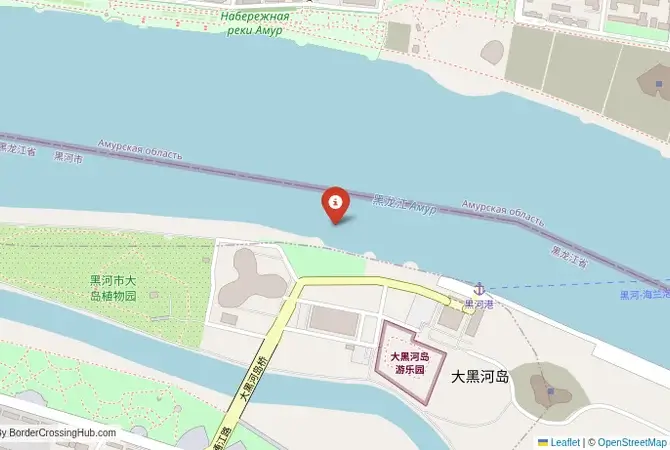
The border is open during daylight hours, with extensions in past years (e.g., to 23:00 reported). The method of crossing depends entirely on the season. You must have a valid visa for the country you are entering, obtained in advance (mutual visa-free trial for ordinary passports up to 30 days since Sept 2025, extended to Sept 2026, boosting tourism surges).Summer (Ferry/Hovercraft): From roughly May to November, the crossing is by boat. You will first go to the large, modern port terminal building in the city you are departing from (Heihe or Blagoveshchensk). You will go through exit immigration and customs. You will then board a passenger ferry or, during the shoulder seasons when the water is low or has floating ice, a hovercraft. The journey across the Amur takes about 15-20 minutes and offers fantastic views of the two city skylines. Upon arrival at the port terminal on the other side, you will go through the entry immigration and customs procedures for the new country. Winter (Ice Road Bus): From roughly December to April, the Amur River freezes solid enough to support vehicles. A temporary "ice road" is established. The crossing is then done by bus. You will go to the same port terminal, go through exit formalities, and then board a special bus that will drive you across the frozen river. On the other side, you will disembark at the port terminal and go through the entry formalities. This is a unique and memorable experience. The New Bridge: A new, permanent road bridge has been constructed a few kilometers downstream. Currently, it is primarily used for commercial freight traffic. It is possible that it will open to passenger buses in the future, which would make the crossing a year-round road journey.
Nearby Border Crossings


Route, Onward Travel, and The Two Cities
This is an urban crossing, so transport is very easy. The port terminals are located in the city centers. On the Chinese side, Heihe has an airport and is connected by rail and road to the provincial capital of Harbin, famous for its ice festival. On the Russian side, Blagoveshchensk is a major city and a stop on the legendary Trans-Siberian Railway, making this crossing a fantastic entry or exit point for a Trans-Siberian adventure. The city itself is beautiful, with a well-preserved 19th-century city center and a magnificent promenade along the Amur, from where you can gaze across at the glittering skyscrapers of Heihe. The contrast between the two cities is a major part of the attraction. Many travelers cross from China for a day or two to experience Russia and then return. A special e-visa may be available for short trips to the region, but you must check the latest Russian visa policies.
Final Planning Advice for the Amur Gateway
The Heihe-Blagoveshchensk crossing is one of the most interesting, scenic, and accessible borders between China and Russia. The key to a successful crossing is to have your visa for your destination country sorted out well in advance (visa-free trial enhancing flows). Be aware of the seasonal nature of the crossing; whether you will be taking a boat or a bus depends on the time of year you travel. The process is well-organized and accustomed to tourists. This crossing offers a unique opportunity to step directly from one major cultural sphere into another, to experience the dramatic juxtaposition of modern China and the historic Russian Far East. It is a highly recommended and unforgettable border experience, a journey across a river that has been at the heart of the history of two great empires.
View all border crossings between China and RussiaPractical information
Fuel
China: <1 km - Russia: <1 km
Currency
Exchange near Heihe (CNY, RUB)
Safety information
Safe, water hazards
Connectivity
Wi-Fi at checkpoints, 4G
Have you crossed here?
Help other travelers by sharing your experience, wait times, and any updates.