Monthly Update (September 2026):
Dongxing & Mong Cai remains one of the three main Vietnam-China gateways used by independent travelers. Current September travel information continues to identify Mong Cai-Dongxing as a practical crossing into Guangxi, generally operating during daytime hours. Vietnam and China are also continuing to expand cross-border trade and tourism cooperation, keeping this busy frontier commercially active. Travelers should have the correct Chinese entry authorization before arriving rather than assuming that the border itself provides a visa.
About this crossing
A History of a Trading Frontier
The history of this border is one of trade and conflict. For centuries, this was a major trading point between the Vietnamese and Chinese empires. The border was often porous, but it was also a frequent flashpoint for military confrontations. The modern cities of Mong Cai and Dongxing grew as centers for this cross-border commerce. The relationship was severed during the 1979 Sino-Vietnamese War, when the bridge was destroyed and the border was sealed. The reopening and rebuilding of the border in the 1990s ushered in a new era of explosive economic growth. The crossing became a massive center for trade, both legal and illegal. Dongxing, in particular, has been transformed from a small town into a large, modern city, its growth fueled almost entirely by cross-border business. The crossing is a powerful symbol of the complex, often volatile, but ultimately deeply pragmatic and intertwined economic relationship between Vietnam and its giant northern neighbor.
The Border Crossing Procedure: A Walk Across the Bridge
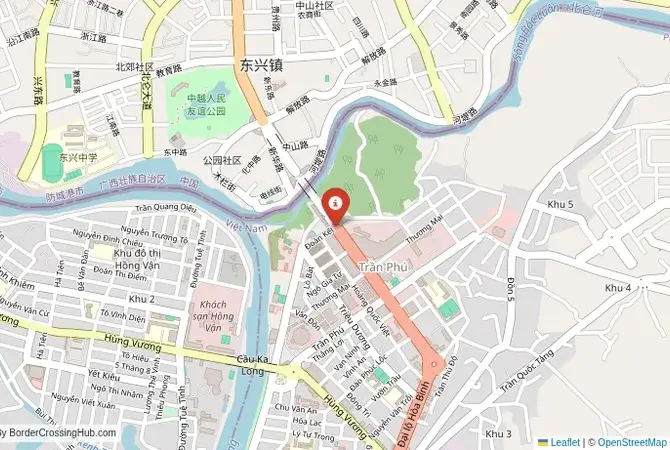
The border is open from 07:00 to 20:00 daily. The process is very well-organized and accustomed to handling large numbers of people, but it can be crowded. You must have a valid visa for the country you are entering, obtained in advance. Visas on arrival are not available. Exiting Vietnam (Mong Cai): The Vietnamese immigration and customs building is a large, modern facility located on the riverbank in the center of Mong Cai. You will enter the hall, present your passport and your Chinese visa to the immigration officer, and get your exit stamp. Your luggage may be passed through an X-ray scanner. The process is professional and efficient. The Friendship Bridge: After clearing Vietnamese immigration, you will walk across the Ka Long River Friendship Bridge. The bridge is always busy with pedestrians, electric carts, and porters hauling massive loads of goods. The view of the two bustling cities on either side of the river is impressive. Entering China (Dongxing): You will then enter the massive and very modern Chinese port of entry building. The process here is thorough. You will first fill out an arrival card and have your fingerprints scanned at an automated kiosk. You will then queue for an immigration officer who will carefully inspect your passport and your Chinese visa before stamping you into the country. After immigration, all of your luggage must be put through an X-ray scanner for a detailed customs check. The officials are professional and the process is highly organized.
Nearby Border Crossings


Route, Onward Travel, and Ha Long Bay
This crossing is the logical choice for travelers coming from Ha Long Bay. From the city of Ha Long, it is about a 3-4 hour bus or minivan ride to the city of Mong Cai. On the Chinese side, from Dongxing, there are frequent buses to the major cities of Nanning and Guilin in Guangxi province. The journey to Nanning takes about 3 hours on a modern expressway. Nanning is a major transport hub with an airport and high-speed train connections to the rest of China. For many travelers, the main reason to use this crossing is its proximity to Ha Long Bay. It allows for a fantastic itinerary, combining one of the great natural wonders of Vietnam with an overland journey into the beautiful karst landscapes of China's Guangxi province, which is famous for the scenery around Guilin and Yangshuo. The city of Mong Cai itself is a bustling trade hub, and Dongxing on the Chinese side is a showcase of modern Chinese development.
Final Planning Advice for the Coastal Route
The Mong Cai-Dongxing crossing is a vibrant, efficient, and highly recommended gateway between Vietnam and China. It is the best option for anyone traveling to or from the Ha Long Bay region. The key to a successful crossing is to have your Chinese visa sorted out well in advance. Do not arrive at the border without one. The process is straightforward, but be prepared for crowds and a very thorough security check on the Chinese side. The journey it enables, from the limestone karsts of Ha Long Bay to the similar, but grander, landscapes of Guangxi, is a classic and unforgettable overland adventure. It is a border that offers a powerful and immediate insight into the immense economic energy that is reshaping this part of Asia.
View all border crossings between Vietnam and ChinaPractical information
Fuel
Vietnam: <1 km - China: <1 km
Currency
Exchange near Mong Cai (VND, CNY)
Safety information
Safe, traffic moderate
Connectivity
Wi-Fi at checkpoints, 4G
Have you crossed here?
Help other travelers by sharing your experience, wait times, and any updates.