Monthly Update (September 2026):
Cấu Treo & Nam Phao remains one of the principal road gateways between Laos and Vietnam, linking central Laos with Hà Tĩnh and onward to Vietnam's coast. There is no significant September closure reported, and the crossing continues to be used by international road travelers and bus services. Vietnam's current land-entry system requires travelers who need a visa to arrange it before reaching the border, rather than relying on visa on arrival at the checkpoint.
About this crossing
A History on the Ho Chi Minh Trail
The history of this crossing is deeply connected to the Vietnam War. The rugged mountains of the Laos-Vietnam border were the heart of the Ho Chi Minh Trail, the complex network of paths and roads that North Vietnam used to supply its forces in the south. The area around the modern Nam Phao-Cầu Treo crossing was a key part of this network. The route was subjected to intense American bombing. The modern highway that exists today, National Highway 8, was built after the war, with Vietnamese assistance, to formalize this historic connection and to provide landlocked Laos with access to a Vietnamese seaport. The crossing has since become a vital economic artery for both nations. It is a major conduit for Lao exports, such as timber and minerals, and for the import of Vietnamese goods. It is a border that has been transformed from a secret wartime trail into a major, modern commercial highway, a symbol of the "special relationship" between the two socialist states.
The Border Crossing Procedure: A Formal Mountain Gateway
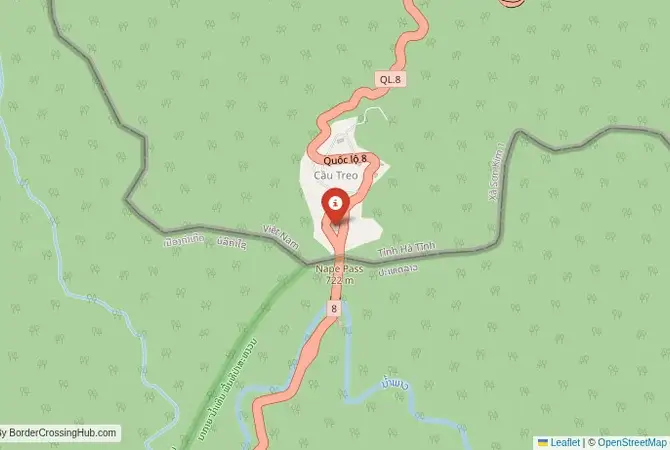
The border is open from 07:00 to 17:00 daily. The facilities on both sides are modern and functional, designed to handle a large volume of commercial traffic. The process for travelers is formal and can sometimes be slow, depending on the truck traffic. You must have a valid visa for the country you are entering, obtained in advance. Visas on arrival are not available at this crossing. Exiting Laos (Nam Phao): The Lao immigration and customs post is located in a large, modern building on the Lao side of the pass. You will present your passport to the immigration officer and get your exit stamp. The customs check is usually a brief formality for tourists. The officials are professional and the process is generally straightforward. The No-Man's-Land: After clearing the Lao post, you will proceed through a scenic, winding no-man's-land to the Vietnamese side. The views from this section of the road are particularly spectacular. Entering Vietnam (Cầu Treo): The Vietnamese border post at Cầu Treo is also a large and modern facility. You will enter the immigration hall and present your passport and your pre-arranged Vietnamese visa (or e-visa printout). The officer will process your entry and give you a stamp. After immigration, your luggage will be passed through an X-ray scanner for a customs check. The Vietnamese officials are known for their professional and thorough approach. The entire process is systematic and well-organized.
Nearby Border Crossings


Route, Onward Travel, and Direct Buses
The most convenient way to navigate this crossing is by taking a direct international bus. There are regular bus services that run from Vientiane in Laos all the way to several cities in Vietnam, including Vinh, and sometimes Hanoi. These buses handle the border crossing as part of their journey, making it a very hassle-free option for travelers. If you are traveling independently, you can take a local bus from Vientiane to the town of Lak Sao in Laos, and then a smaller bus or shared taxi to the border. On the Vietnamese side, from the Cầu Treo border, there are buses and shared taxis to the nearest major city, Vinh, which is on the main Vietnamese coast. From Vinh, you can get trains and buses to Hanoi, Hue, and other destinations in Vietnam. The road on both sides is the paved National Highway 8, but it is a steep and winding mountain road that can be slow, especially when you are behind a long line of trucks.
Final Planning Advice for the Annamite Route
The Nam Phao-Cầu Treo crossing is a spectacular and adventurous way to travel between Laos and Vietnam. The mountain scenery is a major highlight. The key to a smooth journey is to have your Vietnamese visa or e-visa sorted out well in advance. Visas on arrival are not available at this crossing. Taking one of the direct international buses from Vientiane is by far the easiest and most recommended option, as it simplifies all the transport logistics. Be prepared for a long but beautiful journey on a winding mountain road. This crossing is a passage through a region of great historical importance and stunning natural beauty, a perfect route for the traveler who enjoys dramatic landscapes and wants to understand the deep connections that bind these two neighboring nations.
View all border crossings between Laos and VietnamPractical information
Fuel
Laos: <1 km - Vietnam: <1 km
Currency
Limited exchange (LAK, VND)
Safety information
Safe, mountain risks
Connectivity
Limited Wi-Fi, 3G
Have you crossed here?
Help other travelers by sharing your experience, wait times, and any updates.