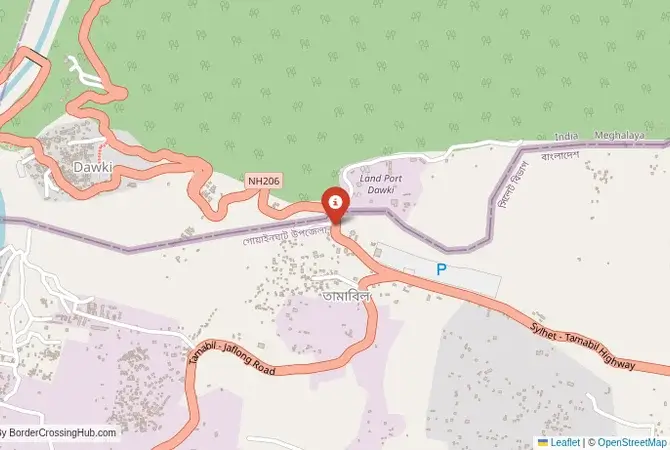
Monthly Update (September 2026):
Dawki & Tamabil remains one of the more useful Bangladesh-India crossings for travelers heading between Sylhet and Meghalaya. Current travel activity includes organized September trips using the Tamabil-Dawki crossing, indicating that the route continues to be used for regular international tourism. There is no significant September closure reported, although travelers should allow extra time for the hill-road approach on the Meghalaya side rather than treating the border itself as the only potential source of delay.
About this crossing
A History of Hills, Trade, and Natural Beauty
The history of this region is that of the Khasi and Jaintia kingdoms, indigenous peoples who have inhabited these hills for centuries. The border is a British colonial construct that divided their traditional lands. The Dawki Bridge was built to facilitate the transport of coal and limestone from the hills of Meghalaya down to the plains of Bengal. This trade continues to this day, and the crossing is a major commercial point, with hundreds of trucks daily carrying stone and other minerals from India to Bangladesh. In recent years, the crossing's fame has grown exponentially due to tourism. The Umngot River at Dawki, with its famously clear water that allows you to see the riverbed meters below, has become a major attraction. The image of colorful boats floating on what looks like a sheet of glass has become iconic. The crossing is now a destination in itself, a place where people come simply to see the bridge, the river, and the unique spectacle of two countries meeting in such a beautiful natural setting.
The Border Crossing Procedure: A Walk Across a Historic Bridge
The border is open during daylight hours. The process is generally straightforward and accustomed to tourists, but the facilities are somewhat spread out. You must have a valid visa for the country you are entering, obtained in advance. Exiting Bangladesh (Tamabil): The Bangladeshi immigration and customs offices are located in the town of Tamabil, a short distance before the actual border bridge. It is a functional, multi-story building. You will need to get your passport stamped for exit by the immigration officials and have your luggage cleared by customs. The process is usually quite smooth. The Walk to the Bridge: After clearing the Bangladeshi post, you will need to take a local CNG (auto-rickshaw) or walk about one kilometer to the border itself. This road is often congested with the massive queues of trucks waiting to cross. The Dawki Bridge: You will then walk across the historic suspension bridge. This is the no-man's-land. The views of the Umngot River gorge from the bridge are spectacular. You will see the flotilla of tourist boats on the river below. This is the most scenic part of any border crossing in the region. Entering India (Dawki): The Indian immigration and customs office is a small building located on the side of the road immediately after you cross the bridge. You will present your passport and your Indian visa to the officer and get your entry stamp. The customs check is usually brief for tourists. Once you are cleared, you are officially in the state of Meghalaya.
Nearby Border Crossings


Route, Onward Travel, and Meghalaya's Wonders
On the Bangladeshi side, the nearest major city is Sylhet, which is about a 1.5 to 2-hour drive from the Tamabil border. There are regular buses and shared taxis. On the Indian side, after crossing at Dawki, you can hire a shared or private taxi for the journey up to Shillong, the capital of Meghalaya. The drive is a spectacular one, winding up through the lush, green Khasi Hills, a journey of about 3-4 hours. The road is scenic but winding. Dawki itself is a major tourist spot for boating on the river. This crossing is the perfect gateway to exploring the wonders of Meghalaya, known as the "Abode of the Clouds." Nearby attractions include Mawlynnong, famous as "Asia's Cleanest Village," and Cherrapunji (Sohra), one of the wettest places on earth, with its stunning waterfalls and unique living root bridges. This border allows for a fantastic travel itinerary combining the tea gardens and shrines of Sylhet with the natural wonders of Meghalaya.
Final Planning Advice for a Scenic Gateway
The Tamabil-Dawki crossing is a highlight of any trip to the region. It is a border that is as much about the journey and the scenery as it is about the destination. The key is to have your visas sorted in advance and to be prepared for the somewhat spread-out nature of the immigration posts. Budget some extra time to enjoy the views from the bridge and perhaps even take a boat ride on the Indian side before you continue your journey. The crossing is a beautiful and relatively relaxed introduction to the unique culture and stunning landscapes of Meghalaya, making it the most highly recommended border for travelers in this part of the world.
View all border crossings between Bangladesh and IndiaPractical information
Fuel
Bangladesh: <1 km - India: <1 km
Currency
Exchange near Tamabil (BDT, INR)
Safety information
Safe, minor congestion
Connectivity
Limited Wi-Fi, 4G
Have you crossed here?
Help other travelers by sharing your experience, wait times, and any updates.