Monthly Update (October 2026):
Khatmat Malaha & Wajaja remains one of the established UAE–Oman road gateways, with no major October closure identified. Oman continues to record substantial passenger movement through its land border network, and Khatmat Milaha is among the country's higher-volume posts. For travelers crossing from the UAE into northern Oman, the route remains a practical alternative to the busier Hatta corridor.
About this crossing
Historical Context and Regional Importance
The historical significance of this area lies in its long history of maritime trade and fishing. The communities along this coast have shared cultural and economic ties for centuries, long before the modern states of the UAE and Oman were formed. The border here, like many in the region, was formally demarcated relatively recently. The Khatmat Malaha crossing was developed to formalize this movement and support the growing economies of both nations. It serves as a key link for the Omani ports of Sohar and Shinas to the northern emirates of the UAE. It also provides access for residents of Sharjah's exclaves, such as Kalba, to the rest of the UAE via Omani territory, showcasing the complex and intertwined geography of the region. The crossing facilitates not just international travel but also domestic movement for some UAE residents.
The Border Crossing Procedure: A Two-Stop Process
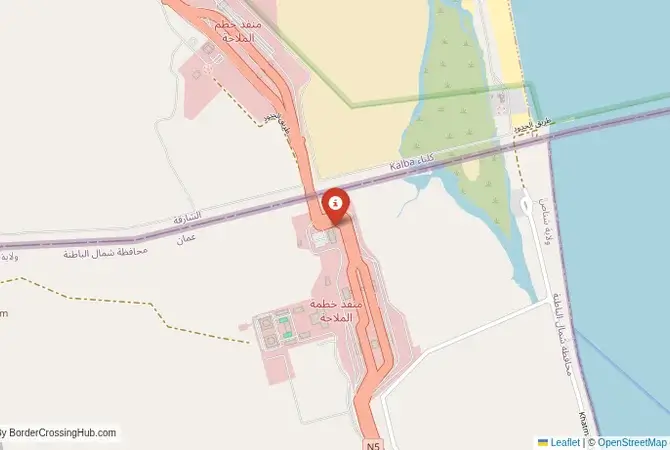
The crossing consists of two separate posts, one for the UAE and one for Oman, located a short distance from each other. The process is generally straightforward and can be quicker than at Hatta, though delays are still possible during weekends or holidays. Expect the process to take between 30 and 90 minutes. Operating Hours: The border is open 24/7.Exiting the UAE (Khatmat Malaha, Sharjah): The UAE post is a modern, purpose-built facility. You will proceed to a drive-thru booth or be directed to park and enter the main building. An immigration officer will check your passport and stamp you out of the UAE. If you are a UAE resident, you will also need to present your Emirates ID. A customs check may be performed, but it is usually a brief inspection for private cars. Entering Oman (Wajajah, Al Batinah): After leaving the UAE post, you will drive a few hundred meters to the Omani facility. This is where most of the processing takes place.1. Visa Check: The first step is to ensure you have a valid visa for Oman. Many nationalities are eligible for a visa on arrival (typically 14 days, fee around 5 OMR payable in Omani Rials or by credit card), available at land borders. However, it is highly recommended to apply for an e-visa in advance through the Royal Oman Police website (evisa.rop.gov.om) to expedite the process and avoid queues, especially for longer stays up to 30 days.2. Vehicle Insurance: It is mandatory to have Omani insurance for your vehicle. You must purchase a temporary insurance policy from one of the small insurance offices located at the border complex. Your UAE insurance is not valid in Oman.3. Immigration and Customs: With your visa and insurance in hand, you will proceed to the immigration counter to have your passport stamped. Afterwards, your vehicle and luggage may be inspected by Omani customs before you are cleared to enter the country.
Nearby Border Crossings



Route Details and Scenery
The roads on both sides of the border are in excellent condition. On the UAE side, you will be on the E99 coastal highway. On the Omani side, the road becomes the Batinah Coastal Road (part of the Route 1 highway), which leads south towards Sohar and Muscat. The scenery is a pleasant change from the interior desert, with the deep blue of the Gulf of Oman on one side and the jagged peaks of the Hajar Mountains on the other. The route is dotted with small towns, fishing villages, and date palm groves. The driving is generally relaxed, but you should be mindful of speed cameras on both sides of the border. Ensure your vehicle is in good condition, as the summer heat can be intense.
Final Planning Advice
The Khatmat Malaha crossing is an excellent option for those traveling along the coast or looking for a potentially faster alternative to Hatta. The key to a smooth process is preparation. Have your Omani e-visa sorted out before you arrive, and have all your vehicle documents (registration and a no-objection letter if the car is not in your name) ready for inspection. Having some Omani Rials in cash can be useful, although credit cards are widely accepted for visa and insurance payments. This crossing offers a scenic and relatively relaxed entry into the Sultanate of Oman, setting the stage for an exploration of its beautiful northern coastline.
View all border crossings between United Arab Emirates and OmanPractical information
Fuel
United Arab Emirates: 500 m - Oman: 500 m
Currency
Near crossing; AED, OMR
Safety information
Stable; desert hazards
Connectivity
Wi-Fi, 4G/5G
Have you crossed here?
Help other travelers by sharing your experience, wait times, and any updates.