Monthly Update (September 2026):
Dashoguz & Shavat remains one of the main overland routes between Uzbekistan and Turkmenistan, particularly for travelers coming from Khiva. The Shavat-Dashoguz cross-border trade zone, launched in late 2025, has added customs, banking, medical, hotel and retail facilities around the crossing and is designed to increase movement between the two regions. For foreign travelers, the bigger practical issue remains Turkmenistan's visa and invitation requirements rather than the border queue; organized 2026 tours are continuing to use Shavat-Dashoguz.
About this crossing
Operational Details
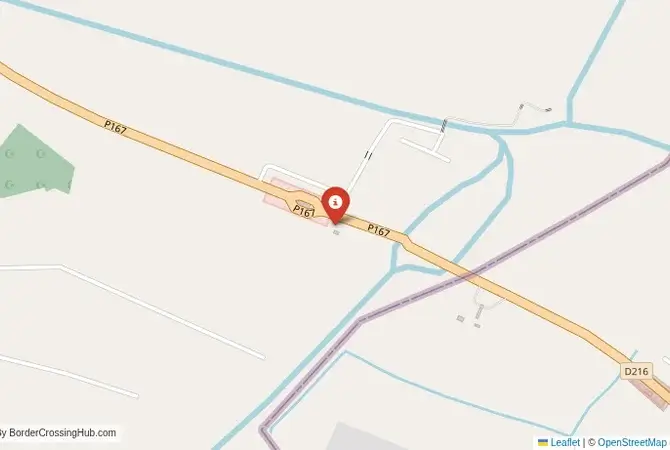
This checkpoint connects Turkmenistan's Daşoguz Province with the Xorazm Region of Uzbekistan. It is a major international crossing, open during daylight hours (typically 8:00 AM to 5:00 PM local time), but it is crucial to check the current schedule as it is not a 24/7 facility. The crossing is a vital link for trade and for the limited number of tourists who travel overland between the two countries. The facility is large, but the procedures, especially on the Turkmen side, are notoriously slow. The crossing involves a long walk (about 1.5 kilometers) through a "no man's land" between the two checkpoints, and travelers often have to hire local taxis to bridge the gap.
A History of the Khorezmian Empire
The history of this region is the history of the Khorezmian Empire, a powerful medieval state that controlled a vast territory in Central Asia. The ancient capital, Gurganj (now Konye-Urgench), was a major center of science and culture, a city that rivaled Baghdad and Samarkand. In the 13th century, it was utterly destroyed by the Mongol armies of Genghis Khan in one of the most brutal sieges in history. The nearby city of Khiva later rose to prominence as the capital of a local khanate. The modern border is a legacy of the Soviet administrative divisions. After independence, the border became a hard frontier, dividing the historic land of Khorezm.
Nearby Border Crossings

The Border Crossing Procedure
The border crossing procedure is a complex, multi-stage, and often extremely slow process, particularly on the Turkmen side. You will need a valid passport and valid visas for both countries, which must be obtained well in advance. A Letter of Invitation (LOI) is typically required for a Turkmen visa. Upon entering Turkmenistan, you will be required to pay numerous taxes and fees. The customs inspection is extremely thorough, with detailed searches of luggage and electronic devices. After clearing one side, you must cross the long neutral zone to the other checkpoint. The entire process can take many hours, and a great deal of patience is required.
The Surrounding Region: Turkmenistan Side
On the Turkmen side, the crossing is near the city of Dashoguz, a modern Soviet-era city. The main attraction is the magnificent ruins of ancient Konye-Urgench, a UNESCO World Heritage site, which is about an hour and a half's drive away. The site features some of the most impressive monuments in Central Asia, including the towering Kutlug-Timur Minaret and the beautiful Turabek-Khanym Mausoleum. The road from the border also leads towards the capital city, Ashgabat, a long journey across the Karakum Desert.
The Surrounding Region: Uzbekistan Side
On the Uzbek side, the crossing is the gateway to the magnificent, walled inner city (the Itchan Kala) of Khiva, a UNESCO World Heritage site. Khiva is a perfectly preserved desert oasis city, a labyrinth of narrow alleyways, turquoise-tiled minarets, and stunning madrasas. It is one of the most atmospheric and beautiful cities on the entire Silk Road. The nearby city of Urgench is the modern administrative center and has the main airport for the region.
Practical Travel Information
Practical planning is absolutely essential for this route. You must have all your documents in perfect order. The official currencies are the Turkmen Manat (TMT) in Turkmenistan and the Uzbekistani Som (UZS) in Uzbekistan. Be prepared for the long walk between the checkpoints. The climate is one of extreme heat in the summer and cold in the winter. Services are limited at the border. Ensure you have a clear plan for your onward transport from the border, as it is located in a rural area.
Final Considerations
The Dashoguz–Shavat border crossing is a journey into the heart of the Silk Road. It is a challenging, bureaucratic, but ultimately rewarding passage for the well-prepared and patient traveler. It is a gateway to two of the most magnificent UNESCO World Heritage sites in Central Asia. It is a border that is a testament to the enduring legacy of the ancient empires and a powerful symbol of the unique and enigmatic character of modern Turkmenistan. It is a crossing that is a necessary and memorable part of any overland journey through the historic land of Khorezm.
View all border crossings between Turkmenistan and UzbekistanPractical information
Fuel
Turkmenistan: <1 km - Uzbekistan: <1 km
Currency
Local exchange; TMT, UZS
Safety information
Low crime; light congestion
Connectivity
Basic 3G signal
Have you crossed here?
Help other travelers by sharing your experience, wait times, and any updates.