Staying near the crossing? Places to stay around Poldasht & Shahtakhti on Booking.com Partner link: we may earn a commission, at no extra cost to you.
Monthly Update (October 2026):
Poldasht & Shahtakhti remains an active Iran–Nakhchivan connection, with the crossing continuing to handle authorized movements across the Aras River. Current transport information confirms that the Poldasht route is open and freight traffic is continuing, despite the wider regional security pressures affecting overland travel. For travelers, the practical point is that this remains an operating connection rather than a closed border, but procedures can be lengthy.
Driving there, or sending a driver? Send them this guide.
For reports and websites
Cite this page
Border Crossing Hub (2026). Poldasht & Shahtakhti Border Crossing. Updated October 2026. https://bordercrossinghub.com/poldasht-shahtakhti-ferry-bridge-border-crossing/<a href="https://bordercrossinghub.com/poldasht-shahtakhti-ferry-bridge-border-crossing/">Poldasht & Shahtakhti Border Crossing (Border Crossing Hub)</a>Put this crossing's card on your website
Free. It updates on its own when our information changes.
<iframe data-bch-card src="https://bordercrossinghub.com/poldasht-shahtakhti-ferry-bridge-border-crossing/?bch_view=card" width="100%" height="980" scrolling="no" style="border:0;max-width:480px;display:block" loading="lazy" title="Poldasht & Shahtakhti border crossing information"></iframe>
<p style="font-size:12px;margin:4px 0 0">Crossing information: <a href="https://bordercrossinghub.com/poldasht-shahtakhti-ferry-bridge-border-crossing/">Border Crossing Hub</a></p>
<script src="https://bordercrossinghub.com/?bch_embed_js=1" async></script>Paste it where you want the card. The last line (a script) only adjusts the height and can be left out.
About this crossing
Operational Details
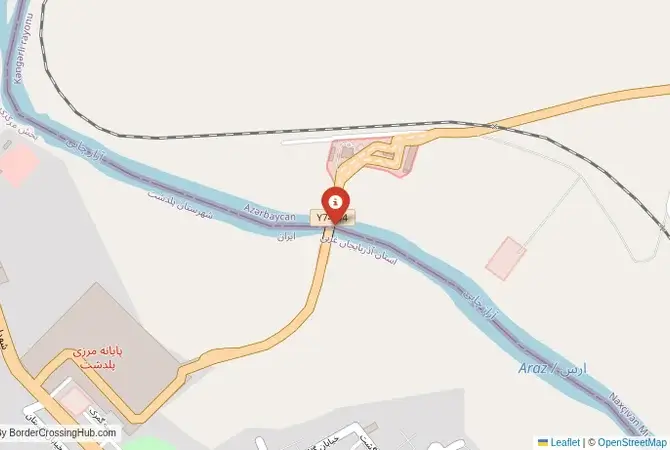
This checkpoint connects Iran's West Azerbaijan Province with the Kangarli District of the Nakhchivan Autonomous Republic. It is a major international crossing, open 24/7 to all passenger cars, buses, and commercial freight. The new bridge and the modern checkpoint facilities were opened in 2007 to provide a second, reliable connection for the exclave and to boost regional trade. The crossing is a vital link for goods moving between Iran and Nakhchivan, and onwards to Turkey. While it is a major crossing, the traffic is generally lighter than at Jolfa, which can sometimes make it a faster option.
A History of an Exclave
The history of this crossing is the history of Nakhchivan. This ancient land has been part of numerous empires. The modern exclave was created in the 1920s by the Soviet Union. The border on the Aras River was established by the Treaty of Turkmenchay in 1828 between the Russian and Persian Empires. During the Soviet era, Nakhchivan was connected to the rest of the Azerbaijan SSR by rail through Armenia. After the collapse of the Soviet Union and the First Nagorno-Karabakh War, Armenia closed the border, completely isolating Nakhchivan. The crossings with Iran and a small border with Turkey became the exclave's only links to the outside world. The opening of this second crossing at Poldasht was a major strategic development, reducing the exclave's reliance on a single point of entry.
Nearby Border Crossings
Border Crossing Procedure
The border crossing procedure is a complex and often very slow process. You will first complete exit formalities at one country's checkpoint and then proceed across the bridge to the other country's checkpoint for entry inspection. You will need a valid passport and a visa for Iran (which must be obtained in advance for most nationalities). Entry to Nakhchivan follows Azerbaijan visa rules, with no separate visa typically required if holding valid authorization. A "Carnet de Passages en Douane" is typically required for taking your own vehicle into Iran. The customs procedures on both sides are very thorough and can take many hours. Be prepared for detailed inspections.
The Surrounding Region: Iran Side
On the Iranian side, the crossing is in the West Azerbaijan Province. The nearby town of Poldasht is a small, agricultural settlement. The region is known for the magnificent St. Thaddeus Monastery (the "Black Church"), a very ancient Armenian monastery that is a UNESCO World Heritage site and a major pilgrimage destination. The crossing is a gateway to the historic cities of Khoy and Maku, with its unique cliff-side setting.
The Surrounding Region: Nakhchivan Side
On the Nakhchivan side, the crossing is in the Kangarli District. The exclave of Nakhchivan is a land of stunning, arid landscapes and incredible historical treasures. The capital, Nakhchivan City, is home to the magnificent 12th-century Momine Khatun Mausoleum and the Alinja Fortress, often called the "Machu Picchu of the Caucasus." The region is also famous for the Ashab-i-Kahf caves, a sacred site mentioned in the Quran. The entire exclave is a unique and fascinating destination for the adventurous traveler.
Practical Travel Information
Practical planning is absolutely essential for this route. You must have all your documents, including visas and carnet, in perfect order. The official currencies are the Iranian Rial (IRR) in Iran and the Azerbaijani Manat (AZN) in Nakhchivan. Currency exchange facilities are available. Ensure your vehicle's Green Card insurance is valid, though you will likely need to purchase separate insurance for Iran. Be aware of the strict laws and customs of the Islamic Republic of Iran. The political situation can be tense, so it is wise to check for any travel advisories.
Final Considerations
The Poldasht–Shahtakhti border crossing is more than just a checkpoint; it is a geopolitical lifeline. It is a journey into a unique and isolated land with a deep and rich history. For the adventurous and well-prepared traveler, it offers an unforgettable experience, a passage between two fascinating cultures. It is a border that is defined by its strategic importance, a testament to the enduring power of geography and history in shaping the destiny of nations. It is the second gate to the remarkable and little-visited land of Nakhchivan.
View all border crossings between Azerbaijan and Nakhchivan (Az exclave)Heading to Poldasht & Shahtakhti? Take this with you.
One page with the hours, waits, emergency numbers and coordinates. Works without signal.
Practical information
Fuel
Iran: <1 km - Azerbaijan: <1 km
Currency
Exchange nearby; AZN, IRR
Safety information
Moderate traffic
Connectivity
Wi-Fi, 4G/5G
Have you crossed here?
Help other travelers by sharing your experience, wait times, and any updates.