Monthly Update (September 2026):
Iordan & Jolfa remains part of the Azerbaijan-Nakhchivan–Iran border system, but foreign overland travel is subject to Azerbaijan's broader land-entry restrictions. Azerbaijan continues to require special permission for foreigners entering through land borders, while the country's customs authority lists Julfa as an international 24-hour checkpoint. This means the checkpoint can remain operational for authorized traffic without being a normal tourist gateway. Travelers planning an Iran-Nakhchivan-Azerbaijan itinerary should confirm their specific authorization before traveling to the border.
About this crossing
Operational Details
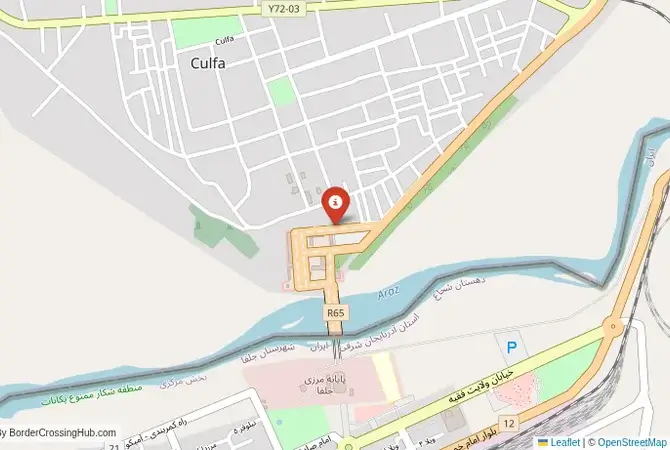
This checkpoint connects the Julfa District of the Nakhchivan Autonomous Republic with the East Azerbaijan Province of Iran. It is a major international crossing, open to passenger cars, buses, and commercial freight, with the parallel railway bridge equally important. This facility is the main conduit for almost all goods entering and leaving Nakhchivan, making it a bustling hub of activity. The crossing can be very busy, and the procedures can be slow and meticulous, reflecting the strategic importance of the location. It remains active for cross-border movements, including shopper traffic from Nakhchivan side.
A History of an Exclave
The history of this crossing is the history of Nakhchivan. This ancient land, mentioned in the works of Ptolemy and said to be the resting place of Noah, has been part of numerous empires. The modern exclave was created in the 1920s by the Soviet Union. The border on the Aras River was established by the Treaty of Turkmenchay in 1828 between the Russian and Persian Empires. During the Soviet era, Nakhchivan was connected to the rest of the Azerbaijan SSR by rail through Armenia. After the collapse of the Soviet Union and the First Nagorno-Karabakh War, Armenia closed the border, completely isolating Nakhchivan. The crossings with Iran and a small border with Turkey became the exclave's only links to the outside world. This crossing at Jolfa is the most important of these lifelines.
Nearby Border Crossings
Border Crossing Procedure
The border crossing procedure is a complex and often very slow process. You will first complete exit formalities at one country's checkpoint and then proceed across the bridge to the other country's checkpoint for entry inspection. You will need a valid passport and a visa for Iran (which must be obtained in advance for most nationalities). Entry to Nakhchivan follows Azerbaijan visa rules, with no separate visa typically required if holding valid Azerbaijan authorization. A "Carnet de Passages en Douane" is typically required for taking your own vehicle into Iran. The customs procedures on both sides are very thorough and can take many hours. Be prepared for detailed inspections.
The Surrounding Region: Nakhchivan Side
On the Nakhchivan side, the crossing is in the city of Jolfa. The exclave of Nakhchivan is a land of stunning, arid landscapes and incredible historical treasures. The capital, Nakhchivan City, is home to the magnificent 12th-century Momine Khatun Mausoleum and the Alinja Fortress, often called the "Machu Picchu of the Caucasus." The region is also famous for the Ashab-i-Kahf caves, a sacred site mentioned in the Quran. The entire exclave is a unique and fascinating destination for the adventurous traveler.
The Surrounding Region: Iran Side
On the Iranian side, the crossing is in the city of Jolfa. It is a historic trading center and is located near the beautiful St. Stepanos Monastery, a magnificent Armenian monastery that is a UNESCO World Heritage site. The crossing is a gateway to the historic city of Tabriz, with its own UNESCO-listed historic bazaar complex, and to the wider wonders of Iran. The Aras River valley itself is a place of great natural beauty.
Practical Travel Information
Practical planning is absolutely essential for this route. You must have all your documents, including visas and carnet, in perfect order. The official currencies are the Azerbaijani Manat (AZN) in Nakhchivan and the Iranian Rial (IRR) in Iran. Currency exchange facilities are available, with decent rates often at the border area. Ensure your vehicle's Green Card insurance is valid, though you will likely need to purchase separate insurance for Iran. Be aware of the strict laws and customs of the Islamic Republic of Iran. The political situation can be tense, so it is wise to check for any travel advisories.
Final Considerations
The Jolfa–Jolfa border crossing is more than just a checkpoint; it is a geopolitical lifeline. It is a journey into a unique and isolated land with a deep and rich history. For the adventurous and well-prepared traveler, it offers an unforgettable experience, a passage between two fascinating cultures. It is a border that is defined by its strategic importance, a testament to the enduring power of geography and history in shaping the destiny of nations. It is the main gate to the remarkable and little-visited land of Nakhchivan.
View all border crossings between Azerbaijan and Nakhchivan (Az exclave)Practical information
Fuel
Iran: 500 m - Azerbaijan (Nakhchivan): 500 m
Currency
Small kiosks; AZN, IRR
Safety information
Low congestion
Connectivity
Basic data
Have you crossed here?
Help other travelers by sharing your experience, wait times, and any updates.