Monthly Update (October 2026):
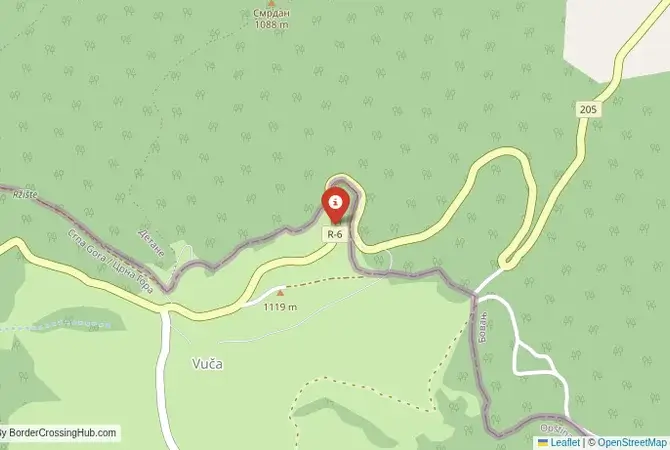
Godovo & Vuča remains a quiet local crossing in the Sandžak, with no significant October disruption reported. The latest Serbian road information puts the passenger wait at around 30 minutes, while the remote approach toward the Pešter Plateau is still the bigger practical consideration. With Jabuka and the main Montenegro–Serbia routes carrying more through traffic, Vuča is mainly useful for travelers whose route already takes them through this part of the mountains.
About this crossing
Operational Details
This checkpoint connects the Rožaje Municipality of Montenegro with the Tutin Municipality of Serbia. It is a smaller international crossing, and its most critical feature is its potential for limited operating hours or seasonal closures due to heavy snow. It is intended for passenger cars and local traffic. The exclusion of heavy freight preserves the tranquility of this beautiful and remote area. The road leading to the crossing can be narrow and winding, demanding a cautious and unhurried driving pace. Its primary purpose is not to serve international transit, but the daily lives of the local population.
A History of the Sandžak Region
The history of this region is the history of the Sandžak, a historic geopolitical region that was part of the Ottoman Empire. The Pešter Plateau is the heart of the Sandžak, a high-altitude karst plateau known for its harsh climate and its resilient people. It has long been a multicultural area, with a majority Bosniak Muslim population living alongside Serbs and Montenegrins. The modern border, established after the breakup of Yugoslavia, divided this historically integrated region. The Vuča-Godovo crossing is one of the small, local links that helps to maintain the family, cultural, and economic ties that span this border.
Nearby Border Crossings
Border Crossing Procedure
The border crossing procedure is a standard two-part process. You will first complete exit formalities at one country's checkpoint and then proceed to the other country's checkpoint for entry inspection. You will need a valid passport or, for citizens of many European countries, a national ID card. Vehicle registration and international insurance (Green Card) are also necessary. As a small, local crossing, the process is usually very quick and personal, with none of the queues that can form at the main crossings. The guards are stationed in small, simple buildings, in keeping with the remote character of the location.
The Surrounding Region: Montenegro Side
On the Montenegrin side, the crossing is in the Rožaje municipality, in the heart of the Montenegrin Sandžak. The area is known for its beautiful mountain scenery, with the Hajla mountain being a popular destination for hiking and skiing. The road from the crossing leads towards the town of Rožaje. This is a region of stunning natural beauty, a paradise for those who love wild, open landscapes.
The Surrounding Region: Serbia Side
On the Serbian side, the crossing is the gateway to the Pešter Plateau, the largest plateau in the Balkans. The area is known for its unique landscape, its harsh climate, and its traditional products, particularly the Sjenički sir (Sjenica cheese). The nearby town of Sjenica is one of the main centers of the region. The Uvac River Canyon, famous for its meandering curves and its large colony of griffon vultures, is also in this region and is a major natural attraction.
Practical Travel Information
Practical planning is absolutely essential for this route. You must have a suitable vehicle and be comfortable with narrow, winding mountain roads. Check the weather and road conditions before you set out, especially outside of the summer months. The official currencies are the Euro (EUR) in Montenegro and the Serbian Dinar (RSD) in Serbia. There are no services at the border itself. You must be self-sufficient with fuel, food, and water. Ensure your vehicle's Green Card insurance is valid for both countries.
Final Considerations
The Vuča–Godovo border crossing is a route for the adventurous traveler seeking to get off the beaten path. It is a journey through a landscape of raw, stunning beauty and a region with a deep and proud history. It is not the fastest or the easiest way to cross the border, but it offers a unique and authentic experience of the Sandžak highlands. It is a passage that connects two parts of a shared cultural landscape, a journey into the wild heart of the Pešter Plateau, and a testament to the enduring spirit of the people who call this beautiful but challenging land home.
View all border crossings between Montenegro and SerbiaPractical information
Fuel
Montenegro: 18 km - Serbia: 15 km
Currency
Limited exchange; EUR, RSD
Safety information
Low crime; light traffic
Connectivity
3G coverage
Have you crossed here?
Help other travelers by sharing your experience, wait times, and any updates.