Monthly Update (September 2026):
Bërnjak & Brnjak remains an operating Kosovo-Serbia crossing in the north, with no significant September closure identified. Its location in the politically sensitive northern Kosovo area means that local demonstrations, roadblocks or security incidents can affect access with relatively little warning. There is no new September restriction specifically affecting ordinary passenger vehicles. Travelers using the crossing should therefore check both the border status and the condition of the approach roads shortly before departure.
About this crossing
Operational Details
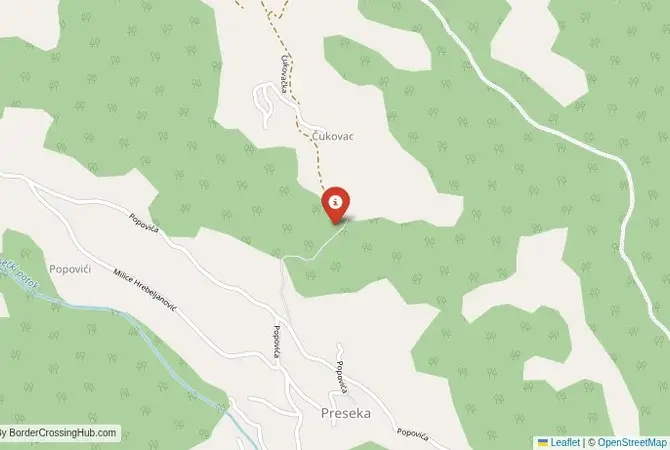
This checkpoint connects the North Kosovo region with the Raška District of Serbia. It is a major crossing, open 24/7 to both passenger cars and commercial freight. The facility has been built and is managed under the framework of the EU-facilitated Brussels Agreement between Belgrade and Pristina. The crossing is staffed by Kosovo Border Police and Serbian Police, with an observational role for the EU's Rule of Law Mission (EULEX) and the NATO-led Kosovo Force (KFOR). Despite this, the crossing is frequently the target of protests and blockades by local Serbs, which can shut it down for days or weeks at a time; in early 2026, short waits (around 5-10 minutes) are reported in stable periods amid the ongoing crisis.
A History of a Contested Frontier
The history of this crossing is the history of the Kosovo conflict and its unresolved aftermath. After Kosovo's declaration of independence in 2008, the Serb-majority municipalities in the north rejected the authority of Pristina. The border crossings at Bërnjak and Jarinjë became major points of contention. In 2011, attempts by the Kosovo government to assert control over the crossings led to violent clashes. For years, the area was a lawless gray zone. The 2013 Brussels Agreement aimed to normalize the situation by establishing integrated border management, but the underlying political tensions remain extremely high. The issue of vehicle license plates has been a frequent trigger for major crises at this crossing; plates integrated in 2024, with continued sporadic tensions through 2025-2026.
Nearby Border Crossings
The Complex Border Procedure
The border crossing procedure is complex and politically charged. You will pass through two separate checkpoints. The key issue is entry and exit stamps. If you enter Kosovo from a third country (like Albania or North Macedonia) and then try to exit into Serbia via this crossing, Serbian authorities will consider you to have entered Serbia illegally. The only officially sanctioned way to do this route is to enter Serbia first, then enter Kosovo, and then exit back into Serbia. You will need a valid passport or, for some nationalities, a national ID card. Vehicle registration and insurance are essential. Be prepared for a potentially slow and meticulous process, and a tense atmosphere; monitor live sources for any sudden changes.
The Surrounding Region: Kosovo Side
On the Kosovar side, the crossing is in the municipality of Zubin Potok, part of the Serb-majority North Kosovo. The area is mountainous and scenic, dominated by the large, artificial Gazivoda Lake, which is itself a major point of political dispute as it is a key source of water and hydroelectric power. The region is economically depressed and politically tense. The main city of the region is North Mitrovica, a city divided by the Ibar River into a southern Albanian part and a northern Serbian part. The bridge over the Ibar is another major symbol of the division.
The Surrounding Region: Serbia Side
On the Serbian side, the crossing leads into the Raška District of southwestern Serbia. The road connects to the major town of Novi Pazar, the cultural center of the Sandžak region, with a large Bosniak population and a rich Ottoman heritage, including mosques, a fortress, and an old bazaar. The region is also known for its magnificent medieval monasteries, including Studenica and Sopoćani, which are UNESCO World Heritage sites, and are considered the cradle of the medieval Serbian state.
Practical Travel Information
Practical planning is absolutely critical for this route. You must understand the political situation and the rules regarding entry and exit stamps. The security situation can change rapidly, so you must monitor official travel advisories. The official currencies are the Euro (EUR) in Kosovo and the Serbian Dinar (RSD) in Serbia (though the Dinar is also widely used in North Kosovo). Ensure your vehicle's Green Card insurance is valid, or be prepared to purchase insurance at the border. Be prepared for sudden closures and long delays; check BorderAlarm or similar for real-time wait times and status.
Final Considerations
The Bërnjak border crossing is one of the most sensitive and volatile checkpoints in Europe. It is a vital link for the Serb community of North Kosovo, but also a constant symbol of the unresolved political dispute between Kosovo and Serbia. The journey through it is a direct encounter with the complexities of post-conflict state-building and international diplomacy. For the traveler, it is a route that must be approached with extreme caution and a deep understanding of the political context. It is a border that is not just a line on a map; it is an active and unpredictable political fault line.
View all border crossings between Kosovo and SerbiaPractical information
Fuel
Kosovo: 2 km - Serbia: 2 km
Currency
Available nearby (EUR, RSD)
Safety information
Security presence noted
Connectivity
4G/5G, checkpoint Wi-Fi
Have you crossed here?
Help other travelers by sharing your experience, wait times, and any updates.