Monthly Update (September 2026):
Kumanovo & Sopot remains a small North Macedonia-Serbia crossing with no significant September closure identified. It is considerably quieter than the main Tabanovce-Preševo corridor and is primarily useful for local and regional travel. One important September difference is that travelers using the main Tabanovce route can now face additional checks for unpaid traffic fines before leaving North Macedonia, with the new system already producing queues of up to an hour or two at busy periods. Sopot therefore remains an interesting quieter alternative for eligible travelers.
About this crossing
Operational Details
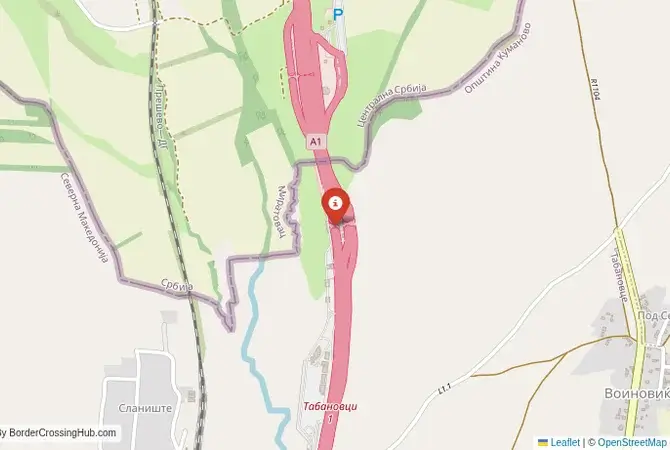
This checkpoint connected the Pčinja District of Serbia with the Northeastern Statistical Region of North Macedonia. It was a minor crossing with limited daylight operating hours and was restricted to passenger cars and local traffic. This ensured that the crossing remained a tranquil point of passage, in harmony with its peaceful, rural surroundings. Its existence was a practical solution to the challenges posed by a border that cut through a historically cohesive area, allowing for a degree of normalcy and convenience for the local population who would otherwise face long detours to the main highway at Tabanovce-Preševo.
A History of a Shared Borderland
The history of this region is one of a shared Slavic heartland, a borderland between the historic territories of Serbia and Macedonia. The area has been part of various larger states over the centuries, but the local population has always maintained close ties. The modern border, established after the breakup of Yugoslavia, formalized the division. The Sopot crossing was one of the small links that helped to mitigate this division, allowing people to visit relatives, access markets, or work on land that was now in another country. It was a place that helped to soften the impact of the new international frontier.
Nearby Border Crossings

Former Border Procedure
The border crossing procedure, when it was operational, was a standard two-part process. Travelers would first complete exit formalities at the Serbian checkpoint at Sopot. They would then proceed to the Macedonian entry checkpoint for inspection. A valid passport and vehicle documents were required. Given the very low volume of traffic, the process was typically very fast and personal, with none of the queues or impersonal nature of the major international posts. It was a border crossing on a human scale, where the guards were often familiar with the local residents.
The Surrounding Region
The surrounding area is a rural landscape of hills and agricultural land. On the Serbian side, the crossing is in the Preševo Valley region. The nearest major Serbian town is Bujanovac. On the North Macedonian side, the crossing leads into the Kumanovo region. The city of Kumanovo, the third-largest in the country, is the main regional center. The entire area is dotted with villages and towns that share a common history and cultural heritage, with both Serbian and Macedonian populations living throughout the region.
Closure and Legacy
The closure of this local crossing is part of a broader trend in modern border management, which favors channeling traffic through a smaller number of large, well-equipped, and easily controlled checkpoints. Smaller crossings like Sopot are often seen as a security and customs risk and are expensive to maintain. While their closure improves state control, it often comes at a high cost to the local communities, who lose their most convenient connection to their neighbors. The road now leads to a dead end, a concrete barrier replacing what was once a bridge between communities.
Final Considerations
The Sopot border crossing was a small but vital link for the local communities of the Serbian-Macedonian borderland. It was a testament to a time when border policy could accommodate the simple, everyday needs of people's lives. Its closure is a poignant symbol of how the modern emphasis on security and centralization can impact local life. The quiet country road that once connected neighbors now stands as a stark symbol of a hardened border, a reminder that for the people who live on a frontier, the smallest crossing can often be the most important.
View all border crossings between North Macedonia and SerbiaPractical information
Fuel
North Macedonia: 2 km - Serbia: 2 km
Currency
Limited locally (MKD, RSD)
Safety information
Rural setting, calm
Connectivity
Basic 3G mobile
Have you crossed here?
Help other travelers by sharing your experience, wait times, and any updates.