Monthly Update (October 2026):
The Kolotilovka & Pokrovka humanitarian corridor remains closed to ordinary movement this October. Although it was previously used for humanitarian returns between Ukraine and Russia, the route is not functioning as a normal passenger border crossing, and there is no October announcement of a reopening. Travelers should not plan an international journey around this checkpoint.
About this crossing
Operational Details
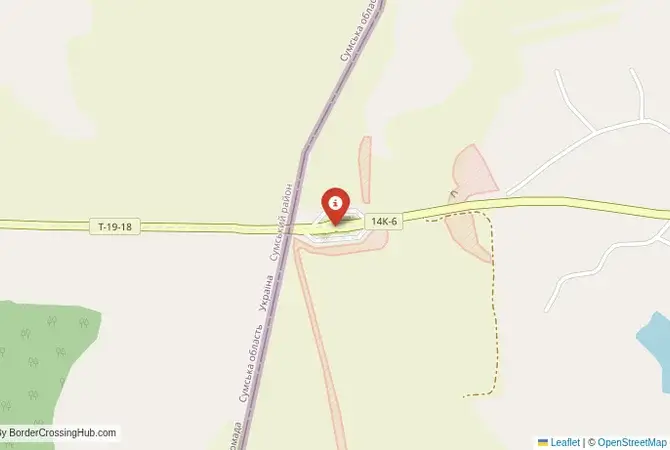
This checkpoint connects Ukraine's Sumy Oblast with Russia's Belgorod Oblast. Its operation is unique. It is a designated humanitarian corridor. Ukrainian citizens from occupied territories like Donetsk, Luhansk, Kherson, and Zaporizhzhia must first travel deep into Russia and then approach the Kolotilovka checkpoint. They undergo Russian exit checks and then must cross a two-kilometer "gray zone" on foot, often carrying all their belongings, to the Ukrainian checkpoint at Pokrovka. Here, they are met by Ukrainian authorities and humanitarian organizations who provide assistance, medical care, and transport to other parts of Ukraine.
A History of a Lifeline
The history of this crossing as a humanitarian corridor is a recent one, born out of the necessities of the 2022 invasion. As Russia occupied large parts of Ukraine, millions of citizens were trapped. Many were forcibly deported to Russia or found it impossible to cross the active frontlines into Ukrainian-controlled territory. After a long period with no official way to return, this corridor was established through difficult negotiations. It has since become the only officially sanctioned route for these returns. Its operation is often precarious, with the Russian side sometimes closing it without warning, leaving people stranded.
Nearby Border Crossings
The Arduous Border Procedure
The border crossing procedure is a grueling ordeal. On the Russian side at Kolotilovka, Ukrainian citizens are subjected to intensive and often intimidating interrogations and checks by Russian security services (FSB). This process, known as "filtration," can take many hours. Their documents and electronic devices are scrutinized. Once they are cleared to exit, they face the long walk across the gray zone. The road is often in poor condition, and the journey is particularly difficult for the elderly, the infirm, and families with small children. At the Ukrainian checkpoint at Pokrovka, the process is one of welcome. They are registered, vetted by Ukrainian security services, and then given immediate humanitarian aid.
The Surrounding Region
The surrounding area is a rural landscape that has become a frontline of the war. On the Ukrainian side, the Sumy Oblast has been subject to constant shelling and military incursions from Russia. The humanitarian reception point at Pokrovka is a place of intense activity, with volunteers, medics, and government officials working to help the steady stream of arrivals. On the Russian side, the Belgorod Oblast has also become a zone of conflict, with cross-border raids and drone attacks. The crossing is situated in a dangerous and militarized environment.
Practical Travel Information
This crossing is not for travelers. It is exclusively for Ukrainian citizens returning from occupied territories. The journey to the crossing is complex and often requires the help of volunteer networks who provide information and sometimes transport within Russia. The process is fraught with risk. The official currencies are the Ukrainian Hryvnia (UAH) and the Russian Ruble (RUB). The humanitarian hub on the Ukrainian side provides all immediate necessities for the arrivals.
Final Considerations
The Pokrovka–Kolotilovka border crossing is a place of profound human significance. It is not a border in the traditional sense, but a one-way gate to freedom. It is a symbol of both the cruelty of the occupation and the incredible resilience of the Ukrainian people. Each person who makes the long journey and walks across the gray zone is a testament to the enduring desire for home and liberty. It is a place of immense sadness for what has been lost, but also a place of immense hope for every life that is reclaimed from the darkness of occupation.
View all border crossings between Ukraine and RussiaPractical information
Currency
No formal exchange
Safety information
Active security limits
Connectivity
Weak mobile coverage
Have you crossed here?
Help other travelers by sharing your experience, wait times, and any updates.