Monthly Update (September 2026):
Létavértes & Săcuieni remains a quiet local crossing between Hungary and Romania. September 4 monitoring showed only a few cars at the Săcuieni route, with no indication of a significant queue or closure. The disappearance of systematic border controls since Romania entered Schengen has made these smaller crossings much easier to use. Travelers should nevertheless remember that the surrounding roads are rural and slower than the main motorway corridor.
About this crossing
Historical and Geopolitical Context
The story of this region is one of wine, nobility, and geopolitical upheaval. For centuries, the area around Săcuieni was the center of the famed Érmellék wine-producing district, one of the most important in the Kingdom of Hungary. The local economy and culture were built on viticulture, controlled by powerful Hungarian noble families whose castles and estates dotted the landscape. Létavértes and Săcuieni were part of a single, integrated economic and social fabric. The border imposed by the Treaty of Trianon in 1920 was a cataclysmic event, severing Săcuieni from its traditional markets and administrative centers. The new frontier cut through vineyards and communities, turning a once-thriving region into a peripheral borderland. The Cold War era cemented this division, with strict controls stifling what little cross-border interaction remained. The opening of this crossing point in the post-1989 era was a critical step in healing these wounds, allowing for the renewal of family ties and local trade. Despite both nations being EU members, the persistence of land border checks (as Romania is not a full Schengen member for land travel) means that a formal procedure is still in place, a constant echo of the 20th century's transformative impact.
Crossing Procedures and Wait Times
The Létavértes-Săcuieni border crossing operates 24 hours a day, 7 days a week, a status that reflects its importance as a regional link. It accommodates passenger vehicles and commercial freight up to a specified weight limit. The process is orderly and typically handled from your car. You will first present your travel documents (passport or EU/EEA/Swiss ID card) to the Hungarian Police for the Schengen exit check. After a short drive, you will undergo an entry check by the Romanian Border Police (Poliția de Frontieră). Non-EU citizens must use a passport, which will be stamped upon entry and exit. The officials here manage a consistent flow of local and regional traffic. Wait times are generally shorter than at the main motorway crossings, usually under 20-30 minutes. However, you may encounter longer queues during peak travel times, such as summer holiday weekends and major Christian holidays (Easter, Christmas), when many Romanians working in Western Europe travel home. You can consult the official websites of the Hungarian or Romanian border police for real-time traffic information before you travel.
Nearby Border Crossings


Scams & Warnings
This is a standard, professional border crossing where overt, aggressive scams are not a common problem. Your primary focus should be on adhering to official regulations to avoid fines. The most important of these is the road vignette. Both Hungary and Romania mandate the purchase of a vignette ('e-vinjeta' and 'rovinietă', respectively) for using their national road networks. You should purchase these only from official vendors. Large petrol stations are the safest and most convenient option. Ignore anyone attempting to sell you one from the roadside, as you risk buying an invalid document or paying an inflated price. Secondly, exercise caution with currency exchange. You will not find official exchange bureaus at the crossing itself. Instead of using informal money changers you might encounter in nearby towns, it is far better to withdraw local currency (HUF or RON) from a bank ATM in Létavértes or Săcuieni to get a fair rate. Lastly, if you need a taxi, especially for a longer journey, confirm the price with the driver before you depart.
Transportation Options
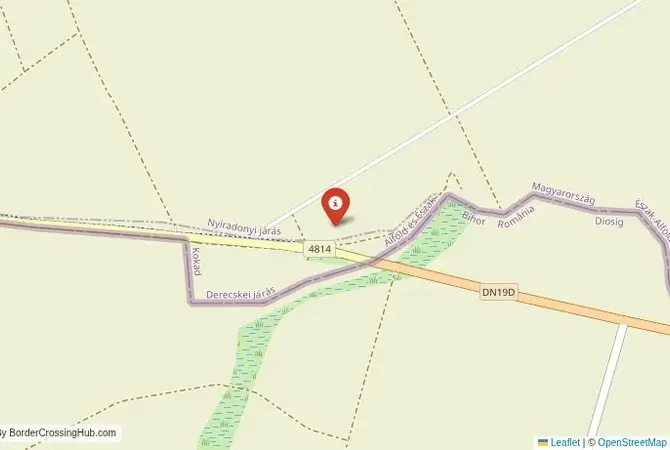
Traveling by car is the most practical way to use this crossing. In Hungary, Létavértes is accessible via Route 4814, which connects to the national road network leading to Debrecen (approximately 25 kilometers away). On the Romanian side, Săcuieni is situated on road DN19B, which provides a direct link to the city of Marghita and connects to the main DN19 road leading to Oradea and Satu Mare. The roads are paved two-lane highways that traverse a predominantly flat, agricultural landscape. There are no direct cross-border public bus or train services. While both Létavértes and Săcuieni are part of their respective national transportation networks, these services do not connect at the border. Therefore, relying on public transport would require complex and likely unreliable arrangements involving taxis on both sides of the frontier. The drive itself is pleasant, offering a view of rural life in this part of the Great Plain.
Nearby Attractions and Tips
The region surrounding the crossing offers several points of interest for the curious traveler. The Hungarian town of Létavértes is close to the Erdőspuszta (Forest Steppe) recreational area, offering hiking, fishing, and a glimpse into the traditional Puszta landscape. On the Romanian side, Săcuieni is the gateway to the historic Érmellék (Valea Ierului) region. While the wine industry is not what it once was, you can still find local cellars and vineyards continuing the tradition. The town of Săcuieni itself has a notable historic building: the Stubenberg Castle, though it may not always be open to the public. A short drive away is the city of Marghita, and further south lies the magnificent city of Oradea, renowned for its stunning Art Nouveau architecture, the Oradea Fortress, and its lively riverside atmosphere. A useful tip: this area of Romania has a significant Hungarian-speaking population. While Romanian is the official language, you will find that Hungarian is widely spoken in Săcuieni and the surrounding villages.
Seasonal and Weather Considerations
The climate is continental, characterized by hot summers and cold winters. From June to August, temperatures often climb to 30°C (86°F) or higher, with occasional summer storms. Winter months, from December to February, are cold, with temperatures often falling below freezing, bringing frost and sometimes snow. While the crossing remains open, be prepared for potentially icy conditions on local roads. The most pleasant times to travel are spring (April-May), when the landscape is green and blooming, and autumn (September-October), during the grape harvest season. Fog can be an issue in the mornings, especially in autumn, so exercise caution and allow for extra travel time if you are driving early in the day.
Planning Your Crossing
Before your journey, confirm you have your valid passport or ID card, vehicle registration, and insurance. As this is a 24/7 crossing, it offers flexibility, but checking online for potential holiday traffic is still a good practice. Plan to purchase your road vignettes for both countries as soon as you can at a major petrol station. The Létavértes-Săcuieni crossing is an excellent choice for those traveling between Debrecen and the Oradea/Marghita region who prefer to avoid the larger, more truck-heavy crossing at Ártánd-Borș. It provides a direct and scenic route into the heart of Romania's historic Partium, offering a more intimate travel experience.
View all border crossings between Hungary and RomaniaPractical information
Fuel
Hungary: <1 km - Romania: <1 km
Currency
Near Létavértes (HUF, RON)
Safety information
Remote, rural area
Connectivity
4G/5G coverage
Have you crossed here?
Help other travelers by sharing your experience, wait times, and any updates.