Monthly Update (September 2026):
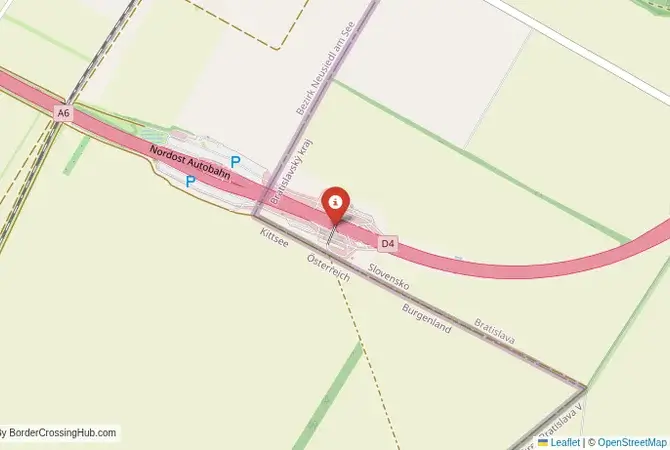
Bratislava & Kittsee Border Crossing remains an important Slovakia-Austria route with no significant September border closure identified. Austria's temporary controls with Slovakia remain relevant during September, so travelers can encounter selective checks even though the crossing itself remains open. The main route can also become congested during Bratislava commuter periods, particularly on the motorway approaching Kittsee.
About this crossing
Historical and Geopolitical Context
The border was defined by the 1920 Treaty of Trianon, which transferred Bratislava (then Pressburg) to Czechoslovakia, leaving Kittsee in Austria. During the Cold War, the Iron Curtain sealed this crossing with barbed wire until 1989’s democratic reforms. The 1991 Velvet Divorce created Slovakia, placing Bratislava on the border. Today, it supports daily commuters, many in tech, finance, or tourism. Schengen agreements since 2007 minimize controls, but Austria’s ongoing controls through June 2026 due to migration and security concerns may apply, including on river borders. Check border status to avoid delays.
Crossing Procedures and Wait Times
No passport checks are required for Schengen nationals, but carry a valid ID, as Slovak police may conduct random checks on buses, trains, or the D4 highway, especially during evening commutes, with Austria’s controls through June 2026 prompting spot inspections. Non-Schengen travelers need a passport or visa. Customs inspections target alcohol (1L spirits) or tobacco (200 cigarettes), with Austrian officers vigilant for tax evasion. Pedestrians and cyclists cross in 5-10 minutes via the Danube Bridge or cycle paths, while vehicles wait 15-45 minutes during peak hours (7-9 AM, 5-7 PM). The border operates 24/7, with delays up to 45 minutes during summer tourist peaks (July-August) or Bratislava’s Christmas markets. Early crossings or midweek travel reduce congestion.
Nearby Border Crossings

Routes and Transportation
From Kittsee, Slovak Lines buses or ÖBB trains (10 minutes, €2-€4) reach Bratislava’s main station. By car, the D4/E58 crosses in 10 minutes (5km). Cyclists can follow the EuroVelo 6 Danube Cycle Route, a 20km path with river views and wetlands. From Bratislava, trains connect to Vienna (1 hour, €10) or Košice (5 hours, €20). Roads are well-paved, offering scenic Danube vistas. Winter snow may slow cycle paths or rural roads, so stick to main routes. Avoid unofficial taxis at Bratislava station, as travelers report €50 overcharges for short trips to Kittsee.
Scams & Warnings
Always carry ID for spot checks, particularly on cross-border buses or trains. Bratislava’s shops advertise “deals” on crystal, wine, or souvenirs, but prices may be inflated; compare at Kittsee’s local markets. Use ATMs in Kittsee or Bratislava for EUR to avoid poor exchange rates at kiosks. Pickpocketing is rare but reported at Bratislava’s station during festivals like the Bratislava Music Festival. Fake “tour guides” may charge €20 for city tours; stick to official tourist offices. Declare goods when entering Austria to avoid fines up to €150.
Cultural and Economic Significance
The region supports daily commuters, thriving on tech, finance, and tourism. German and Slovak languages blend, with bilingual menus in cafes. Kittsee’s markets sell Austrian strudel and schnitzel, while Bratislava’s offer halušky and Slovak wines. The Danube Festival unites both sides with music, dance, and crafts. Economic differences fuel shopping, with Austrians favoring Bratislava’s lower prices on electronics and clothing.
Nearby Attractions
Kittsee’s Schloss Kittsee and Lake Neusiedl, a UNESCO site, offer historic and scenic charm. Bratislava’s Old Town, Castle, and UFO Bridge are must-sees. For a detour, Devin Castle (20 minutes) boasts riverside ruins. Visit Bratislava’s markets for bryndza cheese or Kittsee’s heurigers for Austrian wine.
Seasonal and Weather Considerations
Summer (June-August) brings 20-30°C weather, ideal for cycling or walking, but crowds peak during Bratislava’s festivals. Winter (December-February) sees -5-5°C and snow, slowing rural roads. Spring and fall offer mild 10-20°C weather, though rain or Danube fog may reduce visibility. Check forecasts before traveling.
Planning Recommendations
Cross early to avoid peak delays and carry EUR for convenience. Book tickets via ÖBB or Slovak Lines apps for savings. Check border status for customs patrols, especially during holidays. Visit Bratislava’s tourist office for cycling maps or event schedules. Pack rain gear for spring. With preparation, this crossing connects you to the Danube’s cultural and scenic allure seamlessly.
View all border crossings between Austria and SlovakiaPractical information
Fuel
Austria: 500 m - Slovakia: 500 m
Currency
Not required (both sides use EUR)
Safety information
Safe, urban proximity
Connectivity
Wi-Fi at site, 4G/5G
Have you crossed here?
Help other travelers by sharing your experience, wait times, and any updates.