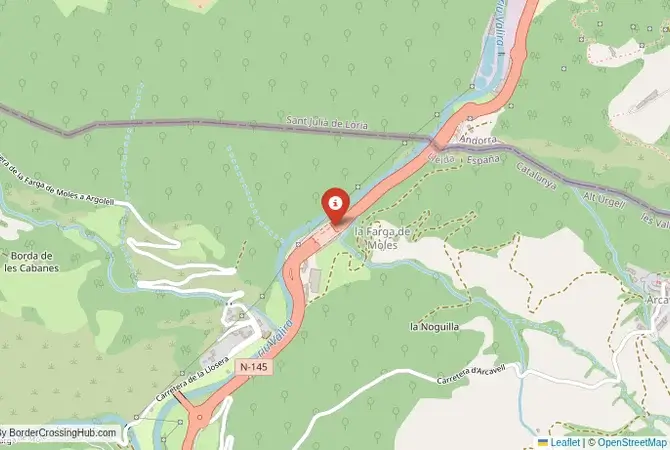
Monthly Update (September 2026):
La Farga de Moles & Sant Julià de Lòria Border Crossing remains the main road gateway between Spain and Andorra, with no significant September closure identified. The crossing can become congested because it funnels traffic between Andorra and the Spanish N-145, particularly during busy travel periods. September generally brings less holiday traffic than August, but travelers should still allow extra time on the approach into Andorra.
About this crossing
Historical and Geopolitical Context
The border dates to the 1278 Pareage of Andorra, establishing Andorra as a co-principality under French and Spanish oversight, with La Farga as a historic trade post. During the Spanish Civil War, the crossing was a refugee route to Andorra’s neutrality. In World War II, it facilitated smuggling of goods and people escaping occupied France. Today, it supports daily crossings, driven by Andorra’s tax-free shopping and ski resorts. Andorra’s non-Schengen status means customs checks are routine, with Spain enforcing limits on goods returning from Andorra. Verify border status to avoid delays.
Crossing Procedures and Wait Times
Schengen nationals need no passport checks entering Andorra, but carry a valid ID, as Andorran or Spanish police may conduct random checks. Non-Schengen travelers require a passport and possibly a multiple-entry Schengen visa to return to Spain. Customs focus on Andorra’s tax-free goods, limiting tobacco (300 cigarettes or equivalents) or alcohol (1.5L spirits >22% or 3L ≤22% plus 5L wine). Pedestrians cross in 10-15 minutes, vehicles wait 20-40 minutes during peak hours (8-10 AM, 4-7 PM). The border operates 24/7, with delays up to 60 minutes during ski season (December-March) or summer holidays. Early mornings or late evenings minimize waits.
Nearby Border Crossings

Routes and Transportation
From La Farga de Moles, ALSA buses (15 minutes, €2-€4) or taxis (€10-€15) reach Sant Julià de Lòria. By car, the N-145 crosses in 10 minutes (5km). No trains serve Andorra, but buses connect to Lleida (2 hours, €15). Cyclists can use the CG-1 route, a steep 15km path with mountain views. From Sant Julià, buses reach Andorra la Vella (10 minutes, €2). Roads are winding but paved, with Pyrenean peaks as a backdrop. Winter snow may close secondary roads, so use chains. Avoid unofficial taxis at La Farga, as travelers report €50 overcharges for short trips.
Scams & Warnings
Carry ID and a multiple-entry Schengen visa if non-Schengen, as re-entry to Spain is required. Andorra’s duty-free shops tempt with electronics or tobacco, but prices may be inflated; compare at local stores. Use ATMs in Sant Julià for EUR to avoid poor exchange rates. Pickpocketing is rare but reported at border bus stops during ski season. Some travelers have encountered fake “customs helpers” charging €20 for paperwork; deal only with officials. Declare goods when returning to Spain to avoid fines up to €200.
Cultural and Economic Significance
With daily crossings, the border thrives on Andorra’s tax-free economy and ski tourism. Catalan dominates, but French and Spanish are common, with trilingual signs in shops. La Farga’s markets sell Spanish cheeses, while Sant Julià’s stores offer Andorran liqueurs. The Pyrenees Festival unites both sides with music and crafts. Andorra’s low taxes draw Spanish shoppers, boosting Sant Julià’s retail, while Spanish agriculture supports La Farga’s markets.
Nearby Attractions
La Farga’s Pyrenean trails offer hiking, and nearby Seu d’Urgell’s cathedral is a Gothic gem. Sant Julià’s Sant Esteve Church and Naturlandia park provide cultural and outdoor fun. Andorra la Vella, 10 minutes away, boasts shopping and Casa de la Vall. For winter, Grandvalira ski resort is a 30-minute drive.
Seasonal and Weather Considerations
Winter (December-March) brings 0-5°C and snow, ideal for skiing but slowing roads. Summer (June-August) offers 20-25°C weather, perfect for hiking, but crowds peak. Spring and fall have mild 10-15°C weather, though rain may affect mountain roads. Check forecasts for Pyrenean snow or fog, which can reduce visibility.
Planning Recommendations
Cross early to avoid peak delays and carry EUR. Book bus tickets via ALSA apps for savings. Check border status for customs patrols, especially during ski season or holidays. Visit Sant Julià’s tourist office for hiking maps or ski passes. Pack snow chains for winter or rain gear for spring. With preparation, this crossing connects you to Andorra’s alpine allure and Catalonia’s charm seamlessly.
View all border crossings between Spain and AndorraPractical information
Fuel
Spain: <1 km - Andorra: <1 km
Currency
Near La Farga (EUR)
Safety information
Safe, mountain area
Connectivity
Wi-Fi zones, 4G
Have you crossed here?
Help other travelers by sharing your experience, wait times, and any updates.