Monthly Update (October 2026):
Basel's eastern approaches have been affected by a major roadworks program on the A2 Osttangente. The resurfacing project ran through five weekends from September into early October and reduced motorway capacity around the Bäumlihof and Schwarzwald tunnel areas, with additional traffic expected on city streets. The main works are now reaching their end, but travelers crossing around Basel should still check the road situation before departure.
About this crossing
Historical and Geopolitical Context
Basel’s border has shaped trade and culture since medieval times, with the Rhine as a natural divide. The Swabian War of 1499-1501 solidified the river as a boundary when Basel joined the Swiss Confederacy. The 1648 Peace of Westphalia formalized it as an international border. During World War II, Switzerland’s strict refugee policies at this crossing, particularly toward Jewish escapees, remain a point of historical scrutiny. Since Switzerland joined the Schengen Area in 2008, passport controls are minimal, but goods checks persist due to non-EU status, reflecting ongoing economic distinctions.
Crossing Procedures and Wait Times
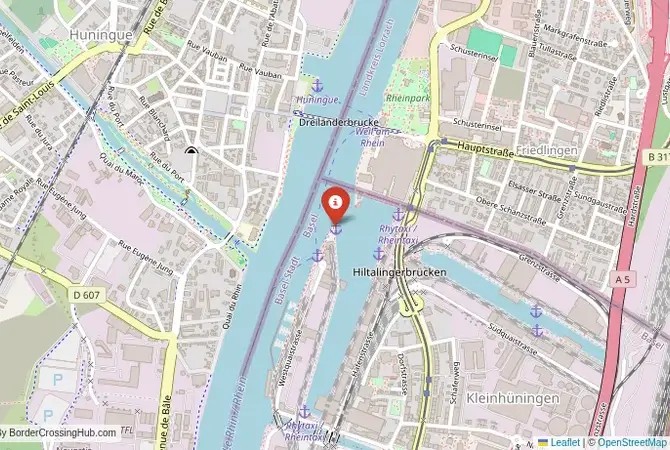
Pedestrians, cyclists, and drivers cross easily at Basel Badischer Bahnhof, a German-operated station on Swiss soil, or via the Weil am Rhein Grenze tram stop (Basel tram line 8). Schengen nationals need no passport checks, but non-Schengen travelers require a valid ID or visa. Wait times average under 10 minutes for pedestrians and 15-30 minutes for vehicles, though peak hours (7-9 AM, 5-7 PM) or holidays may extend to 45 minutes due to occasional German spot checks. The crossing operates 24/7 for major routes, but smaller posts may close overnight. Declare goods over CHF 150 per person per day (updated Swiss limit since 2025), as Swiss customs enforce limits on items like 1kg of meat or 200 cigarettes.
Nearby Border Crossings



Routes and Transportation
From Germany, access Weil am Rhein via the A5/E35 highway or regional trains (RB27, ICE) to Basel Badischer Bahnhof (20 minutes from Freiburg, €5-€10). From Switzerland, Basel SBB station offers S5/S6 trains or tram line 8 (€2.50, 10 minutes to Weil am Rhein). Südbadenbus line 55 also crosses the border. Roads are smooth, with scenic Rhine Valley views of hills and vineyards. Winter ice on smaller roads may slow travel, so check conditions. Post-crossing, trams connect to Basel’s center or Lörrach for shopping. Avoid unofficial taxis, which may overcharge.
Scams & Warnings
Always carry a valid ID, as random checks occur, especially for non-EU nationals. Avoid unofficial currency exchange booths near the border due to poor rates; use Basel ATMs for CHF or EUR. Pickpocketing is rare but reported at crowded tram stops, so secure bags. Drivers need a Swiss vignette (€40 annually) for highways, available at border posts to avoid fines. Declare purchases when shopping in Germany to avoid penalties. Some travelers report confusion with tram tickets; ensure yours is valid for cross-border routes to avoid €60 fines.
Cultural and Economic Significance
With high daily commuters, the Basel region thrives on cross-border activity. Many work at Basel’s Novartis campus or German retail hubs. The area blends Swiss, German, and French cultures, seen in trilingual signage and markets offering Alsatian cheeses and Swiss chocolate. The Dreiländerbrücke, a pedestrian bridge, symbolizes this unity. Economically, Basel’s high incomes contrast with cheaper German goods, drawing Swiss shoppers to Weil am Rhein.
Nearby Attractions
Basel’s Altstadt offers historic charm, while the Kunstmuseum showcases world-class art. The Dreiländerbrücke provides a unique walk across three countries. In Weil am Rhein, the Vitra Design Museum features architectural exhibits, and Rhein Center offers shopping. Lörrach’s weekly market is a budget-friendly stop, and Rhytaxi water taxis provide a scenic Rhine experience.
Seasonal and Weather Considerations
Summer (June-August) brings 20-25°C weather, perfect for cycling or walking, though Basel’s Art Fair draws crowds. Winter (December-February) sees 0-5°C and occasional snow, potentially delaying trams or buses. Spring and fall are quieter, with mild weather, but rain may slow road crossings. Fog along the Rhine can reduce visibility, so check forecasts.
Planning Recommendations
Cross early to avoid peak-hour delays and carry CHF or EUR. Purchase a Swiss vignette if driving, and validate tram tickets for cross-border routes. Check border status for rare security checks. Use the SBB Mobile app for real-time train schedules. With preparation, this crossing connects you to the vibrant tri-national region seamlessly.
View all border crossings between Germany and SwitzerlandPractical information
Fuel
Germany: 300 m - Switzerland: 300 m
Currency
Basel area: EUR, CHF
Safety information
Urban congestion at peaks
Connectivity
4G/5G, public Wi-Fi
Have you crossed here?
Help other travelers by sharing your experience, wait times, and any updates.