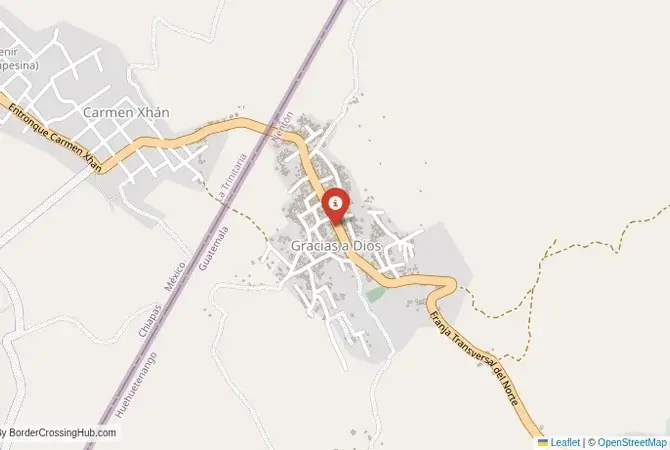
Monthly Update (October 2026):
Carmen Xhán & Gracias a Dios remains a quiet, remote crossing, and there is no significant new October closure reported. The wider Mexico–Guatemala frontier is receiving renewed attention from both governments this month, with officials meeting on October 5 to discuss infrastructure, border operations and a pilot for joint cargo clearance. That broader cooperation is unlikely to change this small crossing immediately, but it is relevant to the region's longer-term border development.
Driving there, or sending a driver? Send them this guide.
For reports and websites
Cite this page
Border Crossing Hub (2026). Carmen Xhán & Gracias a Dios Border Crossing. Updated October 2026. https://bordercrossinghub.com/carmen-xhan-gracias-a-dios-border-crossing/<a href="https://bordercrossinghub.com/carmen-xhan-gracias-a-dios-border-crossing/">Carmen Xhán & Gracias a Dios Border Crossing (Border Crossing Hub)</a>Put this crossing's card on your website
Free. It updates on its own when our information changes.
<iframe data-bch-card src="https://bordercrossinghub.com/carmen-xhan-gracias-a-dios-border-crossing/?bch_view=card" width="100%" height="980" scrolling="no" style="border:0;max-width:480px;display:block" loading="lazy" title="Carmen Xhán & Gracias a Dios border crossing information"></iframe>
<p style="font-size:12px;margin:4px 0 0">Crossing information: <a href="https://bordercrossinghub.com/carmen-xhan-gracias-a-dios-border-crossing/">Border Crossing Hub</a></p>
<script src="https://bordercrossinghub.com/?bch_embed_js=1" async></script>Paste it where you want the card. The last line (a script) only adjusts the height and can be left out.
About this crossing
Historical Background
Established in the 20th century, this crossing supported Chiapas’s agricultural trade and Huehuetenango’s coffee commerce. Named for local geography, it facilitated cross-border movement of goods like corn and textiles. In the 1930s, smugglers used jungle paths, with a 1935 coffee smuggling tale becoming local lore. The 1990s saw minor upgrades, but it remains a low-key port. Occasional disputes over migration or goods occur, yet its role as a cultural link between Chiapas and Guatemala endures, fostering community ties.
Crossing Details and Wait Times
Southbound, you’ll reach Guatemala’s immigration office in Gracias a Dios; travelers need appropriate entry documents such as passport, visa, or equivalent as required. Northbound, INM requires a passport. Open 24/7, vehicle waits are 10–30 minutes, peaking at 45 minutes during mornings (7–10 AM). Pedestrian lanes take 5–15 minutes. Check INM or Guatemala’s immigration sites for updates. No SENTRI lanes exist, and oversight is minimal, so ensure proper stamping.
Nearby Border Crossings


Scams & Warnings
Scams are rare but present, with “visa guides” charging $10–$30 for fake services. Bogus “immigration offices” may overcharge for FMM forms. Use only INM or Guatemalan official channels and apply online. Currency exchange scams offer poor rates; carry MXN/GTQ or use Comitán ATMs. Pickpocketing risks increase during festivals, so secure valuables. Avoid “expedited crossing” offers, as they’re scams targeting travelers at this remote port. Verify documents with officials to avoid fines. Recent reports confirm these continue without significant changes.
Transportation Options
From Comitán, it’s a 45-minute drive to Carmen Xhán via Highway 307. From Gracias a Dios, roads reach Huehuetenango in 1 hour. No public transit serves the crossing, so drive or rent a car. Taxis and colectivos are scarce. Confirm fares upfront. Gas and services are in Comitán or Huehuetenango, 30–60 minutes away. Pedestrians use basic lanes; vehicles face light traffic. Cyclists should stick to main roads for safety due to rugged terrain.
Road Conditions and Views
Highway 307 is paved but narrow, with jungle overgrowth in spots. Summer (June–August) hits 35°C, requiring AC; winter (November–March) is mild at 10–20°C. The lush jungle and Sierra Madre hills offer stunning views. Check Mexico’s (800) 990-3900 or Guatemala’s road updates for conditions. The crossing’s greenery and distant mountains create a serene backdrop, especially at sunrise, making it a scenic route for travelers.
Local Sights
Comitán’s Parque Central, 45 minutes north, features colonial architecture. Gracias a Dios’s markets, 10 minutes south, offer local crafts. Try Comitán’s tacos at Taquería El Norteno or Huehuetenango’s tamales at Comedor Doña María. Lagos de Montebello, 1 hour north, is great for nature, while Huehuetenango’s Zaculeu ruins, 1 hour south, provide Mayan history. These spots highlight the region’s cultural richness.
Cultural and Economic Role
This crossing blends Chiapas’s indigenous heritage with Huehuetenango’s Mayan culture, seen in shared festivals like the Huehuetenango Coffee Fair, showcasing music and crafts. It supports trade in coffee and textiles, fueling both economies. Local markets thrive on cross-border visitors. Community events, markets, and traditional dances foster a strong binational bond, with locals sharing a love for spicy cuisine and vibrant traditions.
Travel Tips
Open 24/7, but check INM or Guatemala’s immigration for schedules. Carry MXN/GTQ for tolls ($1–$3) or small shops. Appropriate entry documents save time for travelers. Summer drivers need hydration; check Mexico’s (800) 990-3900 for road updates. Declare all goods. Agents are strict on produce and alcohol. Secure valuables and pack snacks for waits, as facilities are limited at this remote crossing.
Extra Tips for Visitors
Cell service is spotty in rural areas. Download maps ahead. Summer humidity is high; winter is cool but rainy. Locals are friendly. Ask about coffee trade stories for insights. Try Comitán’s La Cabaña for enchiladas or Gracias a Dios’s street tamales. Photographers, catch sunrise over the Sierra Madre for dramatic shots. This crossing’s tranquil jungle setting and cultural depth make it a unique stop for adventurers.
View all border crossings between Mexico and GuatemalaHeading to Carmen Xhán & Gracias a Dios? Take this with you.
One page with the hours, waits, emergency numbers and coordinates. Works without signal.
Practical information
Fuel
Mexico: 2 km - Guatemala: 2 km
Currency
Limited near Carmen Xhán (MXN, GTQ)
Safety information
Remote, rural hazards
Connectivity
Basic 3G coverage
Have you crossed here?
Help other travelers by sharing your experience, wait times, and any updates.